Categories
Thought

Charles Ives

Stand up and take your dissonance like a man.

American composer and insurance innovator Charles Ives, as quoted in “Charles Ives’ Rambunctious ‘Fourth Of July,’ NPR Music (July 3, 2008).

Categories
Today

Religious Freedom

On January 16, 1786, Virginia enacted the Statute for Religious Freedom authored by Thomas Jefferson.

The day is also noted in the title of Ayn Rand’s hit play, Night of January 16th. First performed in 1934 as Woman on Trial, it continued on over the next few years under the title with which it is now famous, and (with the addition of the definite article before “Night”) under which it was filmed in 1941.

Categories
First Amendment rights Internet controversy social media too much government

When Is Censorship Not Censorship?

Mark Zuckerberg says Facebook is returning to its free speech roots.

Can we believe him?

While the restrictions on what you can talk about on Facebook are still pretty extensive, Zuckerberg’s outfit, Meta, is apparently ending the reign of “fact-checkers” on Facebook and Instagram, as well as the platforms’ collusion with federal government “fact-checkers.”

On Monday, I discussed the federal government’s screaming fits that led Facebook to ramp up “content moderation,” which I identified with a less euphemistic c-word. But that word choice remains controversial. For example, a “global network of fact-checking organizations,” the International Fact-Checking Network, which includes Agence France Presse, objects to Zuckerberg’s assumption that Meta helped impose censorship.

“This is false, and we want to set the record straight, both for today’s context and for the historical record,” announced IFCN. The Network then “warned of the potentially devastating impact if the group were to end its worldwide programs. . . .”

If censoring in obedience to government demands is not censorship, what could be? The article doesn’t explain. AFP and IFCN are simply saying that they don’t want freedom of speech; it’s dangerous.

Of course, free speech can have costs. 

But censorship does too: suppression of truth and impeding the means of learning truth. 

The article doesn’t report on the costs of suppressing facts about, say, COVID-19, vaccines, U.S. policy, UFOs, or Hunter Biden’s laptop.

AFP and IFCN simply assume that gatekeepers like themselves, with a vested interest in excluding divergent reports and viewpoints, must be allowed to keep excluding differing views and inconvenient facts from the “safe spaces” that apparently include all the very biggest spaces on the Internet.

This is Common Sense. I’m Paul Jacob.


PDF for printing

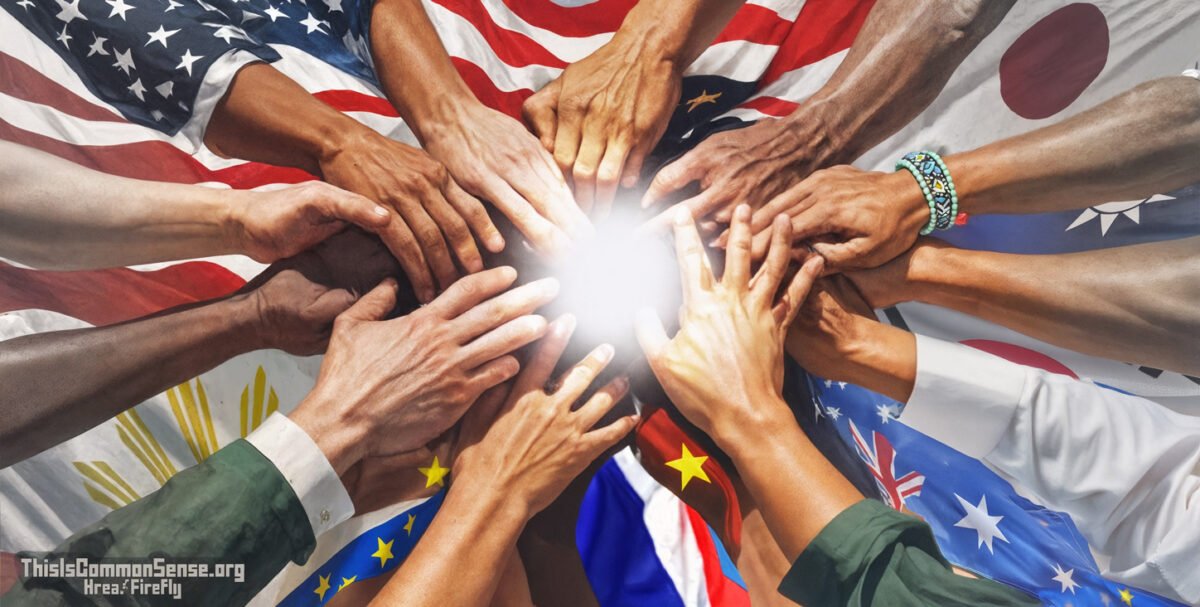
Illustration created with Flux and Fireflly

See all recent commentary
(simplified and organized)
See recent popular posts

Categories
Thought

Igor Stravinsky

Too many pieces of music finish too long after the end.

Categories
Today

Coins of a New State

On January 15, 1777, New Connecticut declared independence from the crown of Great Britain and the colony of New York.

Delegates first named the independent state New Connecticut and, in June 1777, finally settled on the name Vermaont, an imperfect translation of the French for Green Mountain.

This new “Vermont Republic” minted copper coins, starting in 1785. The people of Vermont took part in the American Revolution although the Continental Congress did not recognize the jurisdiction, because of vehement objections from New York, which had conflicting property claims.

In 1791, Vermont was admitted to the United States as the 14th state, upon which its minting of coins ceased.

Categories
Fifth Amendment rights property rights

Forfeiture Gang Foiled

The Institute for Justice has won a major civil forfeiture case in Nevada.

A district court ruled that the Nevada Highway Patrol — which had grabbed a man’s life savings despite no legitimate suspicion of wrongdoing — can’t try to circumvent state law against arbitrary civil forfeiture (stealing) via a loophole called “federal equitable sharing.”

Even when states reform their laws to prevent police from robbing innocent people, the “equitable sharing” program often “lets them give the forfeiture to a federal agency in exchange for a kickback,” IJ reports.

Gangsterish.

The victim in the present case was Stephen Lara. In February 2021, officers pulled Lara over, detained him for more than an hour, then confiscated the $86,900 in life savings that he happened to have with him, cash that he had saved to buy a house. (He didn’t trust banks.) The Patrol never accused him of any crime. But they tried to keep his money.

With the help of Institute for Justice, Lara got it back — six months later, soon after his case received major publicity. But he and IJ continued to pursue the case, hoping to obtain a ruling that the state constitution prohibits anyone from using the federal program to evade state law.

They have now obtained such a ruling.

If it is allowed to stand, the nightmare of civil forfeiture is over for innocent Nevadans. But the state may appeal. Then it’s up to the Nevada Supreme Court to affirm the obvious.

This is Common Sense. I’m Paul Jacob.


PDF for printing

See all recent commentary
(simplified and organized)
See recent popular posts

Categories
Thought

Hubert H. Humphrey

To err is human. To blame someone else is politics.

Oft attributed to Hubert Horatio Humphrey, Jr., 38th Vice President of the United States.
Categories
Today

Against Slavery

On January 14, 1514, Pope Leo X issued a papal bull against slavery.

On the same date in 1639, the first written constitution to create a government, the “Fundamental Orders,” was adopted in Connecticut.

Categories
First Amendment rights Internet controversy social media

The Defi(l)ers of the First Amendment

Early on, we carefully phrased our objections to the suppressions of dissident opinion on Facebook and Twitter and YouTube. 

We knew (because we had been making the distinction for years) that when companies and private parties engaged in discrimination on the basis of opinion, including “de-platforming” of opinion-mongers, these weren’t, at least on the face of it, First Amendment violations. The First Amendment’s guarantees of free speech apply to the federal government and, by the stretch of the 14th Amendment, to state and local governments.

These were corporations.

Sure, corporations thriving under government liability rules, and with sometimes-cushy contracts with government.

And social media companies’ actions were clearly partisan, obviously opposing Donald Trump. The dreaded Orange Man had used social media to get elected in 2016, running rings around the gatekeepers of Accepted Opinion; the ultra-partisan censorship a reaction.

Only with the release of the Twitter Files, after Elon Musk bought Twitter, did we get the crucial facts in the case: Agents of the U.S. government (many of them eerily in the Deep State nexus) pushed the censorship.

Now, with Mark Zuckerberg’s very recent and very public pulling back from the excesses of DEI as well as government-coerced content moderation, we’ve learned more of the manner of the duress in which his companies caved to censorship demands. Government agents called up Facebook managers and content moderators and screamed at them to suppress certain stories and “memes.”

The sharing of visual memes really, really bugged the Deep State, which was hell bent on delivering to everybody a jab in the muscle with gene therapeutics allegedly to “vaccinate” us against a disease that . . . well, their buddies in the Deep State helped China, it just so happened, create

Worldwide, millions died in a pandemic whose origin was actively covered up through violations of the First Amendment in America

Defend free speech to defend life itself. 

This is Common Sense. I’m Paul Jacob.


PDF for printing

Illustration created with Flux and Firefly

See all recent commentary
(simplified and organized)
See recent popular posts

Categories
Thought

Bob Novak

I am proud of my journalistic philosophy — to tell the world things people do not want me to reveal, to advocate limited government, economic freedom, and a strong, prudent America — and to have fun doing it. For the sober-sided younger generations of journalists, having fun may seem unserious. But it was the kind of journalism that prevailed when I started.

Robert D. Novak, The Prince of Darkness (2007), p. 14.