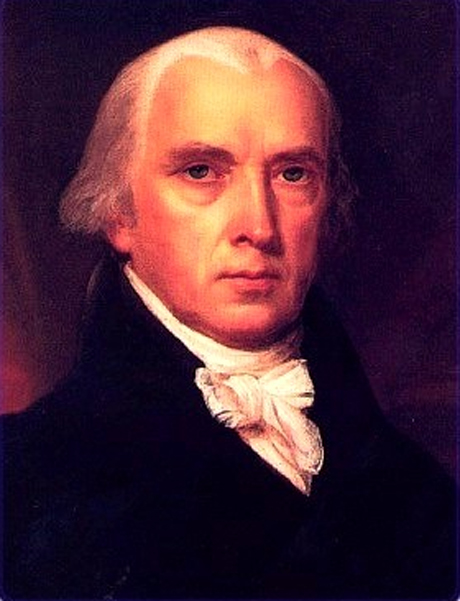
 I believe there are more instances of the abridgement of the freedom of the people by gradual and silent encroachments of those in power than by violent and sudden usurpations.
Categories
I believe there are more instances of the abridgement of the freedom of the people by gradual and silent encroachments of those in power than by violent and sudden usurpations.
Fascinating interview:
Ambition must be made to counteract ambition.
After an election in Idaho wherein legislators saw three of their laws rejected by citizen-initiated referendums, Senate Bill 1108 passed the senate and headed its way to the House. It would impose draconian new requirements to qualify a referendum or citizen initiative.
“There’s a perception that this relates to Props 1, 2 and 3,” explained the bill’s author, Sen. Curtis McKenzie (R-Nampa). “This doesn’t have anything to do with that.”
Voters in Maryland approved the three legislative enactments petitioned to statewide referendum votes last November. But why risk a veto from the people, eh? Legislation has been introduced to dramatically increase signature requirements, restrict pay for petition circulators, and block websites from providing online help to those wishing to sign referendum petitions.
Sadly, the federal government’s executive branch seems no fonder of citizen input than do state legislators. The White House petition website recently hiked the signature requirement up four-fold to get an official response — from 25,000 people to 100,000 folks.
“Raising the threshold so steeply and so suddenly,” Rachael Larimore wrote in Slate, “sends the message that maybe the White House doesn’t really want to be bothered with the problems of the people.”
Obviously, the White Houses isn’t alone among political power centers in opposing citizen involvement. To keep track of assaults on the initiative, referendum and recall, please consult Citizens in Charge’s 2013 Legislative Tracker.
I’ll keep it updated; you keep your local “representatives” checked.
This is Common Sense. I’m Paul Jacob.
If men were angels, no government would be necessary. If angels were to govern men, neither external nor internal controls on government would be necessary. In framing a government which is to be administered by men over men, the great difficulty lies in this: you must first enable the government to control the governed; and in the next place oblige it to control itself. A dependence on the people is, no doubt, the primary control on the government; but experience has taught mankind the necessity of auxiliary precautions.
Should we surrender our industrially fueled civilization the better to fuel fantasies of appeasing Gaia, goddess of the Earth?
The New York Times urges the Obama administration to block a much-needed oil pipeline from Canada as a gesture toward deflecting the purported threat of anthropogenic global warming.
“In itself, the Keystone pipeline will not push the world into a climate apocalypse,” admits the editorial. “But it will continue to fuel our appetite for oil and add to the carbon load in the atmosphere. There is no need to accept it.” The oil drops add up. “At the very least, saying no to the Keystone XL will slow down plans to triple tar sands production from just under two million barrels a day now to six million barrels a day by 2030.”
That’s what we want, right? Less and less of the fuel we need to go places and do things?
But if government is justified in blocking the Keystone pipeline on such a basis, isn’t it also warranted in stopping existing oil production?
What offends the “greens” is every form of “raping of the earth” for mere human survival and comfort — including to protect ourselves against weather that has always been variable, often extremely so. By their logic, the only moral way to defend against the elements is to surrender to them. No more building houses, wearing coats, adding gas to heater tanks and car tanks. Shut everything down.
I can’t say I’m persuaded.
This is Common Sense. I’m Paul Jacob.
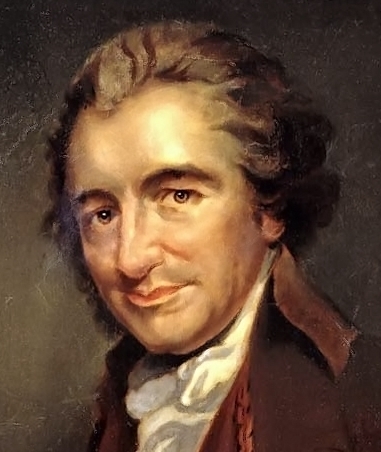 Those who expect to reap the blessings of freedom must, like men, undergo the fatigue of supporting it.
Hostess is dead. The bakery company stopped production in November, and has been trying to sell off its divisions since. Lucky for folks like Twinkie-obsessed Tallahassee, played by Woody Harrelson in Zombieland (2009), the much-beloved synthetic pastries may again appear in stores this summer.
And not as a zombie product, but as the real, edible confection we’ve known all our lives.
How? Not through any demented reanimation or infection process. This has nothing to do with zombies.
Instead, it has everything to do with the normal workings of capitalism:
In a joint bid, Metropoulos & Co and Apollo Global Management are paying $410m (£275m) for the bankrupt company.
The offer had originally been planned to set the floor for an auction, which Hostess boss Greg Rayburn had predicted would be “wild and woolly.”
In fact, a court filing showed that no other offers were submitted.
In America, today, it’s still possible for bankrupt companies to sell off their productive capacity — including names, recipes, logos and the like — to meet the debts prioritized by the courts.
The latter is entirely natural, not Zombieland-horrific.
Much of the hysteria over “too big to fail” comes from misunderstanding the nature of the deaths of once-successful businesses. Laid-off workers can and do find new work as more efficient companies step in, and the capital goods of a bankrupt company can still have value, and can be bought and re-employed more efficiently in other companies.
Indeed, keeping inefficient firms going by subsidy and special favor puts them into a zombielike existence — not the Zombieland re-animated dead kind, but pre-Romero, old-fashioned voodoo zombies. These sluggards serve slowly and creepily.
Better acclimate ourselves to capitalism’s “circle of life” than the horrorshow that is “too big to fail” in the United States of Zombiel… Bailouts.
This is Common Sense. I’m Paul Jacob.
Those who expect to reap the blessings of freedom must, like men, undergo the fatigue of supporting it.
New York City Mayor Michael Bloomberg’s much-talked-about prohibition of large-size sugary drinks, like Coke and Pepsi, set to have gone into effect today, has been over-ruled. At least temporarily. New York Supreme Court Judge Milton Tingling put the kibosh on the law, on Monday, enjoining and restraining the city “from implementing or enforcing the new regulations.”
Mayor Bloomberg promises to appeal the ruling. Apparently, he sees this as such an important policy move that spending taxpayers’ money on legal fees is another great thing he can do for the people he’s supposed to serve.
But, until his next assault, let’s appreciate the judge’s ruling:
In halting the drink rules, Judge Tingling noted that the incoming sugary drink regulations were “fraught with arbitrary and capricious consequences” that would be difficult to enforce with consistency “even within a particular city block, much less the city as a whole.”
“The loopholes in this rule effectively defeat the stated purpose of the rule,” the judge wrote.
The judge also censured Bloomberg for overstepping his bounds by cooking up the regs not via the City Council — the city’s legislative body — but from the Board of Health, which just happens to have been appointed by . . . Michael Bloomberg.
The prohibition of larger-sized soft drinks never made much sense. Add onto its limited scope (applying to some vendors, not others) and its core notion (prohibiting sale by dosage, when consumers could with only marginal inconvenience get around the rules) Bloomberg’s legislative hanky panky, and it wasn’t just any Nanny State horror.
It was an autocratic move.
Nicely stopped. For now.
This is COmmon Sense. I’m Paul Jacob.