After more than a year of big labor throwing industrial-size kitchen sinks at Scott Walker, Wisconsin’s Republican governor became the first of the three governors in U.S. history to face recall and retain the office.
Walker more than survived; he prevailed, beating his Democratic rival by seven percentage points, 53 to 46. In a light blue state, it was a thorough thwacking of the public employee unions, the biggest, bluest special interest.
According to exit polls, Walker even won better than a third of union households.
The man had kept his word not to raise taxes. Further, ending collective bargaining for most government employee unions, along with other reforms, saved lots of money for state and local governments and school districts. This, it turns out, prevented public sector layoffs and helped secure future health and pension benefits.
Walker’s success will be repeated elsewhere.
Hey, already happened! On Tuesday, in San Diego and San Jose, California, voters overwhelmingly passed measures to get a handle on out-of-control public employee pension costs. These measures were, of course, fiercely opposed by government unions.
As cities are cutting programs to pay pension benefits for retirees, a post on the Calpensions blog explains, “Public pension amounts in California are based on what unions are able to obtain through collective bargaining, not what is needed for a reasonable retirement.”
Among Tuesday’s many treats, there was one really rotten trick. California’s Prop 28 passed, weakening the state’s legislative term limits. Most voters, misled by the official ballot summary, thought the measure would result in tougher term limits.
Can’t wait until the next election, which falls nearer Halloween. Hope for more treats than tricks.
This is Common Sense. I’m Paul Jacob.
 On June 8, 1972, a 9-year-old girl heard a soldier scream — a warning to run — and a few seconds later she saw the village temple her family had sought refuge in engulfed in flames. It was napalm. American and North Vietnamese forces, fighting over the village, sent her running screaming, her clothes burned off, her skin melting.
 In this character of the Americans, a love of freedom is the predominating feature which marks and distinguishes the whole: and as an ardent is always a jealous affection, your colonies become suspicious, restive, and untractable, whenever they see the least attempt to wrest from them by force, or shuffle from them by chicane, what they think the only advantage worth living for. This fierce spirit of liberty is stronger in the English colonies probably than in any other people of the earth. . . .
 The first official move towards secession from the British Empire occurs on June 7, 1776, when Richard Henry Lee presents a resolution to the Continental Congress, which is seconded by John Adams.
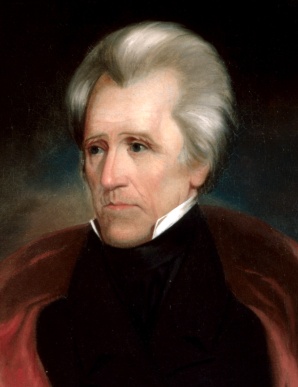 In 1883, Andy Jackson becomes the first U.S. president to ride on a train.
  [E]very individual spontaneously tries to find the place and the trade in which he can best increase National gain, if laws do not prevent him from doing so.
 The problem with socialism is that you eventually run out of other people’s money.
 Harriett Beecher Stowe’s “Uncle Tom’s Cabin” begins its ten-month serialization in the National Era, an abolitionist publication, on this date in 1851.