Categories
free trade & free markets national politics & policies too much government

Panel Decides “Death”

The practice of medicine historically straddled between being a business profession and a charitable endeavor. When government took it over — nearly in one big gulp, in Great Britain— that uneasy mix mutated, leaving us with the occasional bout of stark horror.

A British woman suffering from cystic fibrosis has been denied a new wonder drug that the manufacturer has agreed to provide for free, while the National Health Service gets around to approving it. But NHS says no.
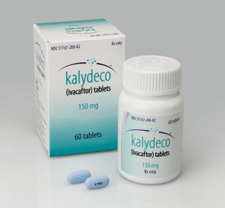
Her family say she will die soon without it, yet managers at Heartlands Hospital in Birmingham say it would be unethical to provide the drug under the deal, only for it to be withdrawn later.

The drug, Kalydeco also known as ivacaftor, costs £182,000 per patient per year, and works for five per cent of people with CF who have a certain defective gene, around 270 people in England.

It corrects a malfunctioning protein which causes the characteristic build-up of fluid and mucus in the lungs that causes devastating damage.

A long shot, apparently. But is that any reason to deny a charitable offer?

These kinds of deals get offered and accepted in America all the time.

But then, when a private insurance company here decides not to cover some drug or treatment, that’s an excuse to excoriate American capitalism — while forgetting about all the characteristically American workarounds. But in “single-payer” Britain we see the state acting as a proverbial “death panel.” The outcry against socialism should be just as loud, if not louder.

This is Common Sense. I’m Paul Jacob.

Categories
Thought

Comte de Volney

Yes, creative man, receive my homage! Thou hast measured the span of the heavens, calculated the volume of the stars, arrested the lightning in its clouds, subdued seas and storms, subjected all the elements. Ah! how are so many sublime energies allied to so many errors?
Categories
ideological culture

Munch on This

Self-righteousness is not new. But it hasn’t gone out of style, either — at least regarding moralistic dieters.

There’s even a study on it. In an article by Diane Mapes in Today’s Health, we learn “that organic food may just make people act a bit like jerks.”

Mapes focuses on the work of psychologist Kendall Eskine, who “noticed a lot of organic foods are marketed with moral terminology, like Honest Tea, and wondered if you exposed people to organic food, if it would make them pat themselves on the back for their moral and environmental choices. I wondered if they would be more altruistic or not.”

To find out, Eskine and his team divided 60 people into three groups. One group was shown pictures of clearly labeled organic food, like apples and spinach. Another group was shown comfort foods such as brownies and cookies. And a third group — the controls — were shown non-organic, non-comfort foods like rice, mustard and oatmeal. After viewing the pictures, each person was then asked to read a series of vignettes describing moral transgressions.

The results? Those merely exposed to organic foods judged moral transgressors more harshly, and, when it came to helping strangers, “the organic people also proved to be more selfish, volunteering” much less time than the control and comfort food groups offered.

According to the oft-cited “happiness paradox,” the more you fixate on happiness the less happy you become. With moral smugness, the more you fixate on the rightness of your choices, the less moral you become.

A general principle? A one-shot study that will gain no reproducible results?

In either case, it may be worth keeping an eye on . . . ourselves.

This is Common Sense. I’m Paul Jacob.

Categories
Thought

Comte de Volney

Politics is like the human body, beautiful when viewed from the outside, but if you open it up and look inside, it’s disgusting.

Categories
Thought

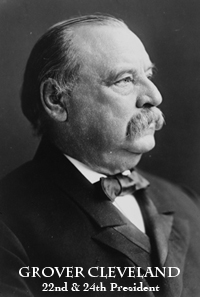
Grover Cleveland

Public officers are the servants and agents of the people, to execute the laws which the people have made.
Categories
links

Townhall: Over the Cliff?

Sometimes it seems that politicians have set up for us a Looming Financial Doom.

Why would they do that? And how do we avoid it?

Expanding on the subject of Friday’s Common Sense, I try to tackle both questions in this weekend’s Townhall column, “Over the Cliff.”

The column takes a few long quotations from The Washington Post article, and one short quotation from the actual study. Also linked in the column is a Common Sense from some time back, about public employees gaming the public employee pension system. It’s worth noting that the chief problem with the system is that it is badly rigged. But the gaming doesn’t help.

I use the phrase “cordon off” — it is interesting to remember that “cordon” basically means “rope off,” but that “cordon” doesn’t mean “rope.”

For a previous discussion of the metaphor of the “fiscal cliff,” see “Cliff Notes.”

Categories
video

Video: The Futility of “Tax the Rich!” Mantra

The “tax the rich” mantra “wastes our time and diverts our attention” from real fixes for the fiscal solution. Here’s why:

Categories
Thought

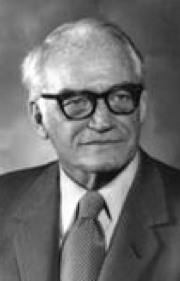
Barry Goldwater

Those who seek absolute power, even though they seek it to do what they regard as good, are simply demanding the right to enforce their own version of heaven on earth. And let me remind you, they are the very ones who always create the most hellish tyrannies. Absolute power does corrupt, and those who seek it must be suspect and must be opposed.
Categories
national politics & policies too much government

Cliff Dwellers

When you hear talk about “the fiscal cliff,” ask, “Which one?”

This coming January, if Congress and the president fail to take action, every American who pays income taxes will pay more. Also set to increase? Payroll taxes, which every worker pays.

But even if we can avoid falling off those cliffs, another threatens.

It has been identified by finance professors Robert Novy-Marx at the University of Rochester and Joshua Rauh at the Stanford Graduate School of Business, who summarized their recent research paper, “The Revenue Demands of Public Employee Pension Promises.”

The bottom-line? Looking at the pension commitments state and local governments have already made to public employees, the professors “found that, on average, a tax increase of $1,385 per U.S. household per year would be required, starting immediately and growing with the size of the public sector.”

That’s only the average. “New York taxpayers would need to contribute more than $2,250 per household per year over the next 30 years,” according to their analysis. “In Oregon, the amount is $2,140; in Ohio, it is $2,051; in New Jersey, $2,000.”

Politicians have promised lavish pension benefits. And then not funded them. Plus, employees often outrageously game the system, spiking their benefits to the tune of millions over decades of retirement — like the Illinois teacher’s union lobbyist did by teaching a single day in the classroom.

If we don’t get the problem under control, this cliff keeps getting higher, making, as the professors put it, “the $1,385 per-household increase required today seem cheap.”

This is Common Sense. I’m Paul Jacob.

Categories
Thought

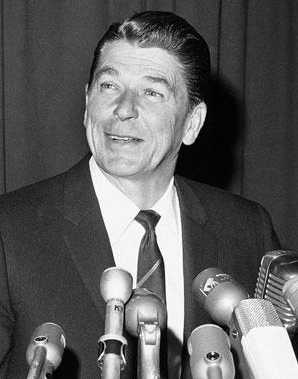
Ronald Reagan

If we lose freedom here, there is no place to escape to. This is the last stand on Earth.