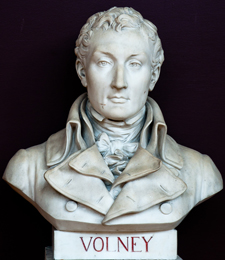
 Can liberty be born from the bosom of despots? and shall justice be rendered by the hands of piracy and avarice?
Categories
Can liberty be born from the bosom of despots? and shall justice be rendered by the hands of piracy and avarice?
Washington State’s TVW channel, a cable channel covering government and public issues, here takes up the issues behind I-517:
An old thought: Were we all angels, we wouldn’t need government. Indeed, were we angels, it wouldn’t matter what kind of government we had.
But we’re not angels. We have limitations. Each one of us judges according to our own context-ridden conception of advantage and value, bound by our differing perspectives and situations. Despite our love for others, that love isn’t infinite and it doesn’t often trump our perceived self-interests, and it certainly isn’t angelically unlimited.
So we need something very much like government, and that government needs limits.
We need protection from criminals, but we also need protection from those who would protect us, who can — with “government power” — usurp their roles and become criminal themselves.
This is, I repeat, a very old thought.
Yet it seemed new when James Buchanan and Gordon Tullock advanced something very much like it with their book The Calculus of Consent, and in the many great contributions of their separate careers.
James M. Buchanan died this Wednesday. Before his contributions, economists typically assumed that public servants would swoop in like saving angels, setting the world aright according to the latest mathematical models, disinterestedly, without partisan passion or individual error.
Naive in the extreme.
Thanks to Buchanan, economists today occasionally go so far to confess that though markets often “fail,” merely appointing government to “fix” markets can put us in a bigger fix, since government failure is rampant. Government isn’t magic. It doesn’t change our natures for the better merely by being instituted, or by being called “government.” Power still corrupts, and economists now have to deal with that ugly but unavoidable fact.
By showing us that we’re no angels, Buchanan put himself on the side of the angels.
This is Common Sense. I’m Paul Jacob.
On January 11, 1571, the freedom of religion is granted to . . . Austrian nobility.
Society in every state is a blessing, but government even in its best state is but a necessary evil; in its worst state an intolerable one; for when we suffer, or are exposed to the same miseries BY A GOVERNMENT, which we might expect in a country WITHOUT GOVERNMENT, our calamity is heightened by reflecting that we furnish the means by which we suffer.
From the earliest moments of the current, ongoing economic depression, our leaders signaled their fear by hastily concocting programs that postponed the reckoning that had to come.
Douglas French, writing about housing finance today, says a lot simply with his title: “Markets Stagnate Until They Clear.” Government policy has kept mortgages in a weird limbo, and market prices at unnatural highs. Our geniuses in power have even moved heaven and earth to reinflate the old housing boom.
Better to have let it crash and recover rather than keep it unworkably hobbling along.
But the clearing of markets scares politicians silly.
Right after the 2008 implosion, our leaders increased unemployment insurance and offered many new cushions for workers. Humanitarian? Or just another way to avoid new, lower wage rates to match the monetary collapse? I’m not sure about the latter, since the “wages” of not working proved so effective that many workers stayed unemployed voluntarily.
The cost? An extended, lengthy depression.
But that’s not all, of course. By putting more people onto the rolls of the federal government’s dependents list, the burden on taxpayers and on the debt system increases.
Meanwhile, politicians still cannot imagine a way to do what a few other countries, including Canada, have done: cut back on spending and balance budgets.
Our politicians will do anything to avoid that!
Some folks are calling the current period “The Great Recession.” I suggest a better term: “The Great Evasion.” And what’s being evaded is responsibility.
This is Common Sense. I’m Paul Jacob.
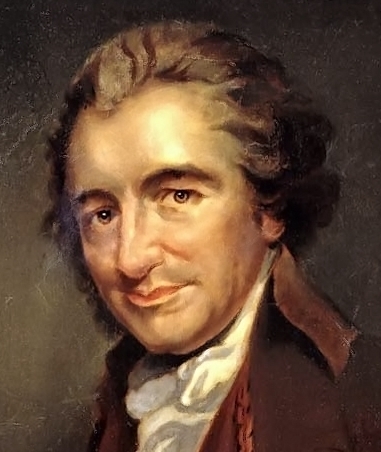 The supposed quietude of a good man allures the ruffian; while on the other hand, arms, like law, discourage and keep the invader and the plunderer in awe, and preserve order in the world as well as property. The balance of power is the scale of peace. The same balance would be preserved were all the world destitute of arms, for all would be alike; but since some will not, others dare not lay them aside. Horrid mischief would ensue were one-half the world deprived of the use of them; for while avarice and ambition have a place in the heart of man, the weak will become a prey to the strong.
“Gun violence” is supposed to be bad. Right?
Not long after the New Year, a woman in Loganville, Georgia, was working in the upstairs office of her home when she spied someone lurking outside.
The suspicious man, Paul Slater, was about to break into her home with a crowbar. Fortunately, before he could do that, the woman hid herself and her two nine-year-old twins in an attic crawlspace. Unfortunately, Slater found out where they were hiding. Fortunately, the woman had a gun; as soon as the intruder menacingly presented himself, she shot him.
Alas, after shooting six times and hitting Slater five, the woman ran out of bullets. But she had the presence of mind to tell the would-be assailant that she would fire again if he moved. Then she took the kids to a neighbor. The thug tried to escape in his car, but was too seriously injured to get far.
“My wife is a hero,” her husband told WSB-TV. “She protected her kids. She did what she was supposed to do as a responsible, prepared gun owner.”
Responding to the fact that the invader was only partly subdued before the gun owner ran out of bullets, Glenn Reynolds (“InstaPundit”) says: “See, this is where one of those ‘assault weapons’ might have come in handy.”
An InstaPundit reader expands upon the point: “What if there had been multiple attackers? Then that 30-round clip suddenly seems appropriate.”
Indeed. And disarming the just sure seems like a poor way to reduce gun violence.
This is Common Sense. I’m Paul Jacob.
 The legal right of a taxpayer to decrease the amount of what otherwise would be his taxes, or altogether avoid them, by means which the law permits, cannot be doubted.
If the provisions of the constitution be not upheld when they pinch as well as when they comfort, they may as well be abandoned.