 Both oligarch and tyrant mistrust the people, and therefore deprive them of their arms.
This weekend at Townhall, another foray into the big issue of the day, what to do about preventing gun massacres. Click on over to Townhall.com — actually, here precisely — then come back here to consider the sources, and a few more notions:
- “The Great American Gun Frenzy,” Paul Jacob, Townhall.com, January 13, 2013
- “Let Teachers Bear Arms,” Paul Jacob, Common Sense, December 20, 2012
- “Newtown Votes for Armed Guards in Elementary Schools,” by Alexander Abad-Santos, The Atlantic Wire, February 1, 2013
- “Newtown Sides With NRA – Votes for Armed Guards in Schools,” by John Nolte, Breitbard.com, February 1, 2013
- Wikipedia entry
And this:
The law is reason unaffected by desire.
Who has benefited?
America’s bailout economy started many administrations ago, but really went Big Time under President George W. Bush . . . and then went Enormity Time with President Barack Obama.
The Washington Post provides the latest in bailout news by noting an inter-departmental squabble:
The Special Inspector General for the Troubled Asset Relief Program said Treasury approved all 18 requests it received last year to raise pay for executives at American International Group Inc., General Motors Corp. and Ally Financial Inc. Of those requests, 14 were for $100,000 or more; the largest raise was $1 million.
Though this is all quite scandalous, don’t expect policies to change or heads to roll — barring a joint Tea Party/Occupy uprising. The nature of the modern “regulatory” state is clear: government bureaus are quickly captured by the industries they aim to regulate. It’s an old story. The revolving door between business and bureaucracy is as well-established as between journalism and politics.
So why do we have bailouts?
- They show that politicians are “doing something”;
- They mimic the welfare state logic of “helping the poor” (if, with caustic irony, by stuffing the wallets of the rich);
- They aggrandize the showy machinations of the legislative and executive branches at the expense of the branch of government designed to handle massive business failure, the courts.
Perhaps Americans shouldn’t have voted in either an MBA grad (Bush) or a constitutional lawyer (Obama). Maybe what the country needs is a bankruptcy lawyer in the White House.
This is Common Sense. I’m Paul Jacob.
A recent court decision has slowed—dare we hope, stopped?—the erosion of an important check on executive power. This is the constitutional provision that the president’s appointment of certain high officials be subject to Senate approval.
Trevor Burrus of the Cato Institute reminds us that presidents have sought to circumvent the advise and consent requirement since the days of Warren Harding.
The Constitution enables the president to make appointments when the Senate is in recess, i.e., between sessions. (In the days of the Founders, that hiatus lasted many months.) Starting with Harding, though, presidents began making appointments during so-called intra-session “recesses,” or breaks within a regular session. These “recesses” were as brief as ten days by the time we got to Clinton and Bush II.
In 2007, the Senate began conducting brief pro forma sessions within these “recesses” to prevent appointments from being made without its consent. Last year, President Obama counter-moved by declaring that he had authority to determine what constitutes a session. On this basis he made several appointments sans the Senate’s consent.
The DC Court of Appeals has now ruled the maneuver unconstitutional. “The power of a written constitution lies in its words,” writes Chief Judge David Sentelle. “When those words speak clearly, it is not up to us to depart from their meaning in favor of our own concept of efficiency, convenience, or facilitation of the functions of government.”
Do presidents sometimes find the Constitution inconvenient? Too bad.
This is Common Sense. I’m Paul Jacob.
Categories
John Bright
 The corn law was intended to keep wheat at the price of 80s. the quarter; it is now under 40s. the quarter.
Categories
Ray Bradbury
 There is more than one way to burn a book. And the world is full of people running about with lit matches.
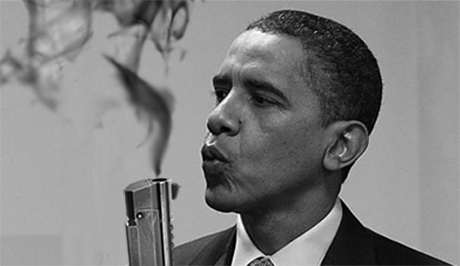
During the presidential campaign, Barack Obama was criticized for telling business folks “You didn’t get there on your own. . . . You didn’t build that.”
He meant something more than the truism that a successful businessperson functions not in splendid isolation but in cooperation with others, like employees and vendors (presumably compensated). He meant that successful people shouldn’t be so proud of their virtues. Also they must pay more taxes.
Surrogates yipped that Obama’s denigration of individual achievement wasn’t what it sounded like. But his inaugural address was more of the same. Charles Krauthammer calls the speech “an ode to collectivity,” with its stress not on voluntary associations but on coercive orchestration by the state. According to Obama, for example, “No single person can” do all the good things like build research labs and train teachers that we supposedly must do “as one people.”
Sounds like a glaring false alternative. David Boaz observes that “property rights, limited government and the rule of law”—under assault by Obama—are what we need to safeguard the voluntary cooperation critical to our progress and individual flourishing. I would add that we necessarily pay our own way as we engage in voluntary trade. We do “build that,” and so does the other guy.
Government can confine itself to protecting our rights in trade and otherwise leave us alone, or it can actively plunder our achievements. If the latter, we have less of what we built. Even though we did build that.
This is Common Sense. I’m Paul Jacob.
Categories
Albert Gallatin
 The whole of the Bill is a declaration of the right of the people at large or considered as individuals… It establishes some rights of the individual as unalienable and which consequently, no majority has a right to deprive them of.