 The obligations of our representatives in Washington are to protect our liberty, not coddle the world, precipitating no-win wars, while bringing bankruptcy and economic turmoil to our people.
Categories
December 03, end of Cold War
On December 3, 1989, the leaders of the two world superpowers, the United States of America and the Union of Soviet Socialist Republics, declared an end to the Cold War, at a summit in Malta. A little over two years later not only had the Cold War ended, the Soviet Union was itself dissolved.
Categories
Stop Digging
If you find yourself in a hole, stop digging.
When it comes to pension systems, the State of Illinois appears shovel in hand, digging to the bottom. The state’s five public employee retirement systems face a combined unfunded liability of $100 billion dollars; they have only 40 percent of what they need to pay the benefits politicians negotiated with public employee unions — the lowest funding level of any state.
The Daily Herald, a suburban Chicago-area paper, calls a spade a spade: “The shortfall is due largely to decades of legislators skipping or shorting the state’s pension payments — a practice that allowed them to spend that money elsewhere.”
Today, Illinois’ legislators will trudge into Springfield for an expected vote to fix the broken system.
“This deal was made by Speaker Madigan and other politicians behind closed doors,” charges Illinois Policy Institute CEO John Tillman, who fears it makes matters worse.
The bizarre attempt at a fix allows the Legislature to be sued before the Illinois Supreme Court if it fails to make its required ongoing contributions into the pension fund.
The legislation also contains a guarantee clause prioritizing pension payouts before most other state spending. As Tillman says, “Not caring for the poor. Not public safety. Not education.”
And a much ballyhooed option for employees to switch to a 401(k)-style plan turns out to allow only 5 percent of employees to so choose, blocking the rest.
Pay what was promised, but stop digging! Move new workers to 401(k) style plans they can own, with employer contributions handed over every pay period.
This is Common Sense. I’m Paul Jacob.
The good news? Federal Reserve Chair Ben Bernanke is getting the boot. The bad news? His replacement looks no better.
Last Thursday, the Senate Banking committee voted to place Janet Yellen as head of the Federal Reserve. The full body of august solons is expected to confirm this nomination, electing her as head honcho and chief cook (kook?) at the nation’s quasi-private/quasi-public central bank.
I am sure there are folks who look on this passing of the baton with a sort of patriotic piety. I know there are Democrats who rejoice in a banker referred to by Reuters as “a monetary policy dove who puts more weight on driving down high unemployment than the risk this will ignite future inflation. . . .”
Of course, the Fed has already pumped trillions into the system. A burgeoning employment boom has not resulted. To say the least.
Reviewing the current situation, and the likely appointment, economist Gerarld P. O’Driscoll, Jr., reminds us of the big truth about those who push at the Veil of Money: “the Fed is not capable of stimulating job creation, at least not in a sustained way over time.” What the Fed has succeeded in doing, in recent years, is prop up our benighted federal government’s continuing crisis of over-spending: “Congress and the president have been spared a fiscal crisis, and thus repeatedly punted on fiscal reform.”
Problem is, no one really believes debt accumulation or monetary back-up make for a sustainable policy: at some point, O’Driscoll tells us, rising interest rates will “precipitate a crisis.”
I wouldn’t want to be in charge at the Fed when that happens.
So, some sympathy for Ms. Yellen.
This is Common Sense. I’m Paul Jacob.
Categories
December 02, Monroe Doctrine
 On December 2, 1823, U.S. President James Monroe delivered a speech establishing American neutrality in future European conflicts. The policy became known as the Monroe Doctrine.
In 1930 on this date, Gary Becker was born. An American economist, in 1992 he was awarded the Bank of Sweden Prize in Economic Sciences in Memory of Alfred Nobel. His work on human capital, population theory, the theory of consumption, and much else put him at the top of the Chicago School in Economics.
Categories
C. S. Lewis
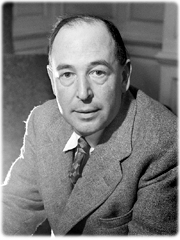 Don’t use words too big for the subject. Don’t say infinitely when you mean very; otherwise you’ll have no word left when you want to talk about something really infinite.
Categories
December 01, 2012, stolen election of 1824
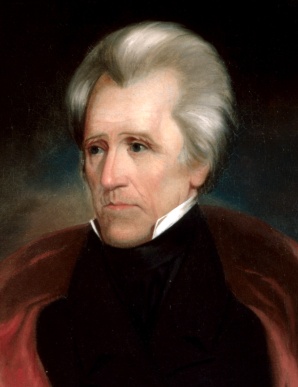 On December 1, 1824, with neither John Quincy Adams nor Andrew Jackson (pictured) receiving a majority of the total electoral college votes in the election, the United States House of Representatives was given the task of deciding the winner in accordance with the Twelfth Amendment to the United States Constitution. The House selected Adams.
Categories
C. S. Lewis
The task of the modern educator is not to cut down jungles, but to irrigate deserts.
Today’s moral scolds and Mrs. Grundys aren’t old-fashioned, they say, or conservative, they say.  They call themselves liberals or progressives and they think they know what’s best for you, your family, and the nation. This weekend’s Townhall column expands on Thursday’s Common Sense.
Here are the links to this week’s column:
- “Which stores are opened and which are closed on Thanksgiving?” Daily Kos
- “If you shop on Thanksgiving, you are part of the problem,” Matt Walsh Blog
- “Black Friday’s two-way war on the poor,” by Nicole Gelina, New York Post
Every week we archive Paul Jacob’s weekend Townhall column here on this site. Last week’s was “Who Is Eric O’Keefe?” If you missed it, please give it a look. It’s an important story.
Categories
Video: The War Against Work
Mike Rowe of the Discovery Channel’s “Dirty Jobs” show here talks to the designers and engineers and tech mavens of TED on the reality of work. Not the fantasy. Not the politics. The reality. Fascinating: