On May 13, 1888, Brazil abolished slavery with the passage of the Lei Áurea (“Golden Law”).
Categories
On May 13, 1888, Brazil abolished slavery with the passage of the Lei Áurea (“Golden Law”).
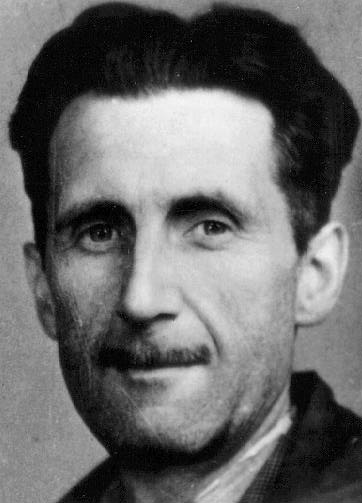 We have now sunk to a depth at which the restatement of the obvious is the first duty of intelligent men.
When I took up the Cliven Bundy story, just before Bundy spewed his racist farragoes, I concentrated not on him, but on the broader issue: too much federal government ownership of real property in “the tiny state of Nevada” and elsewhere.
Since then an expert has weighed in on my side: Terry Anderson of the Property and Environment Research Center.
Sorta.
I supported privatization of grazing lands. But I mentioned that forest land should “at least be ‘state-ized,’” that is, transferred to the states. And that, it turns out, is what the current crop of Sagebrush rebels want for grazing land.
But there’s a downside to such a transfer. Grazing fees would likely go up.
Anderson titles his piece “Careful What You Ask For.”
And that cuts both ways. The environmentalists who want to centralize even more control in Washington, D.C., think that booting out privately owned ungulates would accrue benefits to the ecosystems. They are wrong, Anderson explains:
But “no moo” may mean fewer tweets, clucks, and bugles from wildlife. As private ranchers demonstrate, good land management can control noxious weeds, improve water quality, sequester more carbon, and generate more wildlife habitat.
Yes, “cattle grazing has improved the ecosystem.”
Anderson prefers privatization.
But that remains politically unlikely. The Cato Institute’s Randal O’Toole suggests a compromise: fiduciary trusts, where the feds retain land title. Centuries of common law bolster the idea, says O’Toole, who assures us, under this form of oversight, “trustees preserve and protect the value of the resources they manage, keep them productive, and disclose the full costs and benefits of their management.”
Both of these alternates are better than current government mismanagement and overkill.
This is Common Sense. I’m Paul Jacob.
Apparently, economics is hard. But some things are pretty straightforward.
For example, both parties to a trade gain: it’s called “mutual benefit through exchange.”
Another basic principle? Employers hire labor expecting productivity. Businesses don’t hire workers who can’t produce enough to more than cover their wages — and managers fire workers when they prove they aren’t productive enough.
And yet another? Competition for trade increases the quality of products, reduces price, or both and tends to equalize prices for goods of the same quality.
An appreciation of late economist Gary Becker on reason.com shows the consequence of the latter principle in a perhaps unexpected area: discrimination.
A company that pays someone less than they are worth encourages worker flight, “jumping ship.” Companies that refuse to hire qualified women or minorities when they could underbid similarly productive workers (demanding higher wages) could find themselves out-competed by less discriminatory businesses. Indeed, studies suggest they could find themselves less profitable and even out of existence.
Nobel Laureate Gary Becker saw this, and realized that free markets impose a check upon bigotry. Regulations that limit competition in industry also stifle gender workforce participation and increase inequality. “[C]ountries such as Japan that have avoided deregulation, shareholder capitalism, and open markets,” summarizes Elizabeth Nolan Brown, “tend to lag in both productivity and workplace gender equality.”
There are many good reasons to favor free markets. They not only make us wealthier, they discourage prejudicial behavior. Competition punishes bad behavior even while it emphasizes win-win scenarios.
This is Common Sense. I’m Paul Jacob.
On May 12, 1943, during World War II, Axis forces in North Africa surrendered.
 I was not sympathetic to the assumption that criminals had radically different motivations from everyone else.
On May 11, 1858, Minnesota was admitted as the 32nd U.S. State. Other May 11th events include Luxembourg’s gaining independence in 1867, and Klaus Barbie going on trial in Lyon, 120 years later, for war crimes committed during World War II.
When politicians fail at the petition process, citizen activists can enjoy the last laugh. For the Conyers re-election campaign, call it a Detroit irony.
Rush on over to Townhall.com, then come back here for the full reading list:
Young Ms. Julie Borowski confronts a popular (and quite maddeningly ill-mannered) popular slogan — at least on campuses and in the blogosphere, “Check your privilege”:
Freedom battles tyranny across the globe, with the right to speak out politically essential for freedom to prevail.
A decision handed down this week by U.S. District Judge Rudolph T. Randa, in a case brought by Eric O’Keefe and Wisconsin Club for Growth, inspires much hope to protect speech and prevent tyranny here in America.
O’Keefe, the group and “all or nearly all right-of-center groups and individuals in Wisconsin who engaged in issue advocacy from 2010 to the present” were targeted by the Milwaukee County District Attorney and others in a bizarre, secretive politically-motivated criminal investigation. Armed agents raided homes at dawn, seizing computers, mailing lists, files, etc.
O’Keefe and conservative state leaders were then slapped with subpoenas (demanding all their documents) and a gag order. This effectively silenced them from talking about the investigation. Under the circumstances, these groups found themselves unable to raise funds or engage in political activity since.
The thrust of the case against them was the mere assertion that spending on TV ads about collective bargaining or other issues was campaign spending for Governor Scott Walker. Judge Randa found no evidence of express advocacy for Walker and, therefore, no lawful basis for the outrageous persecution.
“The plaintiffs have been shut out of the political process merely by association with conservative politicians,” his decision read, adding a warning that, historically, “attempts to purify the public square lead to places like the Guillotine and the Gulag.”
O’Keefe’s Wisconsin Club for Growth spends what some call “dark money” — donors are not disclosed — but the judge explained that our constitutional system cherishes and protects the free discussion of political ideas by groups like O’Keefe’s as possibly “the best way . . . to address problems of political corruption.”
This is Common Sense. I’m Paul Jacob.