Could any two men be more different than John Adams and Thomas Jefferson? And yet, I doubt if the United States would exist were it not for both. Somehow, they worked together when it counted. And worked against each other, when it seemed necessary.
Yet they respected each other (in their different ways), and before the end, after a long estrangement, became close friends.
The story is well known: on his deathbed on July 4, 1826, Adams whispered, “Thomas Jefferson survives!” He was wrong. Jefferson had died earlier that day, on the 50th anniversary of the Declaration of Independence.
Adams was also wrong about Independence Day. On July 2, 1776, after the Lee Resolution for independence passed the Continental Congress, he wrote that “the second day of July” would become the day of “a great anniversary festival.” But “by 1777,” Steve Tally noted in Bland Ambition, his jovial history of the vice presidency, “people were already celebrating the Fourth of July.”
 But give him his due: it was Adams who insisted that Jefferson write the Declaration, and it was indeed its words — especially that of its “mission statement” preamble — that resonate almost universally to this day. And gave birth to the annual festivities.
Adams, Tally tells us, was “short, round, peevish, a loudmouth, and frequently a bore.” Jefferson, on the other hand, was tall, handsome, polite, and much more popular. And a much better writer. Which is why he was given his great job, to produce the Declaration.
Great writer or no, it’s not as if the tall redhead’s initial draft was acceptable as it flowed from the pen. Adams, Franklin, and the whole congress got in on the editing job. “Jefferson liked to recall that his document survived further [extensive] editing,” Tally explains, “because of the meeting hall’s proximity to a livery stable.” Still, it’s obvious that Jefferson wasn’t the only genius in the room, and that without Adams’s tireless work, independence might not have gotten off the ground.
The later history of both men, in service to the country they helped found, is riddled with ambiguities and even horrible moral and political lapses. Adams was the kind of politician who not only opposed term limits, but opposed terms: he thought men raised to office should be kept there forever. Jefferson leaned not merely the other direction, but flirted with the notion of a revolution every generation.
I adhere to the anti-federalist slogan of their day, “that where annual elections end, tyranny begins.”
Between the two extremes of these two great men, somehow, the republic survived. And thrived. Their correspondence is a mine of great wisdom, their biographies well worth reading.
Most of all, their legacy — of July 2 and July 4, 1776, and the universal rights of man — remains worth fighting for.
This is Common Sense. I’m Paul Jacob.
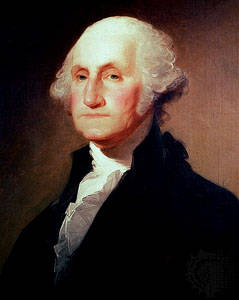 The common and continual mischiefs of the spirit of party are sufficient to make it the interest and duty of a wise people to discourage and restrain it.
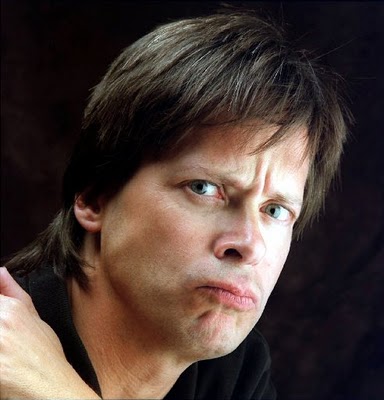 July 3 marks the 1947 birthday of Dave Barry, American columnist and author.
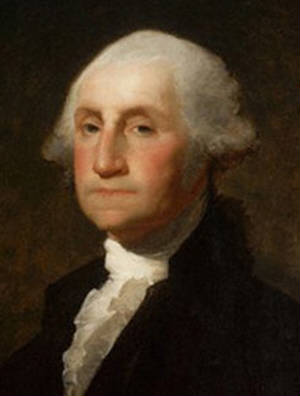 All see, and most admire, the glare which hovers round the external trappings of elevated office. To me there is nothing in it, beyond the lustre which may be reflected from its connection with a power of promoting human felicity.