State election laws don’t always make it easy for candidates, particularly challengers. Many of these laws are unduly restrictive, especially regarding ballot access.
But some “restrictions” are just what the people want.
Just ask Sen. Rand Paul of Kentucky.
Paul seems to have his sights set on the White House. But he’s a sitting senator, and 2016, the next presidential election outing, is when he would normally run for re-election. So he’s made it clear that he’d like to retain his spot in the Senate as well as run for the Top Banana position.
But there’s this snag. Kentucky (like some other states) does not allow for one person’s name to appear twice on the same ballot.
Is that a good law? I think so. It breaks up some of the power of incumbency.
And it seems a wrong that the election of a U.S. Senator could be moot and a new election be held when far fewer voters are likely to cast ballots.
Given that it is the voters who have most to lose, in a sense, you can see why Kentuckians like their law. According to a new poll, 54 percent of Republicans, 57 percent of independents, and 78 percent of Democrats oppose changing the law to allow for Rand Paul to run for both. A retired farmer seems to speak for a lot of Kentuckians: “I can see the dilemma,” the man is quoted in the Courier-Journal. “If you’re going to do it, go all the way.”
Of course, Sen. Paul will still be able to test the presidential waters before deciding to bite the bullet. But a time for choosing will come.
This is Common Sense. I’m Paul Jacob.
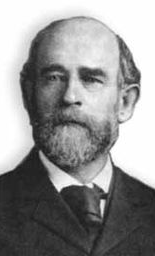 I am firmly convinced, as I have already said, that to effect any great social improvement, it is sympathy rather than self-interest, the sense of duty rather than the desire for self-advancement, that must be appealed to. Envy is akin to admiration, and it is the admiration that the rich and powerful excite which secures the perpetuation of aristocracies.
 The Law of Supply and demand was not promulgated in any code. Its power comes from elsewhere. It imposes itself upon mankind in as implacable a way as hunger and thirst. We furnish fresh demonstrations of its truth, whether willingly or not, even while we imagine ourselves to be violating it. If the Socialist excommunicates and abuses the economist, who formulates this law, he should also hold Newton responsible for all the tiles that fall on the heads of passers-by, and should declare that if some poor wretch, in throwing himself from a window, kills himself, it is the fault of those physicists who have discovered and taught the law of gravitation.


 Parents wonder why the streams are bitter, when they themselves poison the fountain.