The primary populist concern with “money in politics” is conspiratorial: “they” will grab total control because “they” buy the politicians.
The cries on the political left that The Evil Koch Brothers™ spend money, thereby “corrupting OUR democracy,” have become ubiquitous.
The fact that the left has its own billionaires, and that they give far more money to their causes than the Kochs do to theirs? Conveniently left out of the hysteria.
But the real case against money in politics has almost nothing to do with buying politicians.
Which leads us to the biggest problem with money in politics: most of it is a waste.
Binyamin Appelbaum, writing Tuesday in The New York Times, reports on the conclusion of a number of economists that “buying elections is economically inefficient.” Appelbaum quotes a major donor who posits why that’s the case: “politicians don’t stay bought.”
Yes indeed, politicians are a tricky investment.
Still, giving patterns suggest contributions are more often intended to advance one’s beliefs and values, than to purchase or rent the allegiance of (or protection from) an elected official.
When we switch from spending money on politicians to spending money on causes, especially initiative and referendum campaigns, the situation looks a bit different. You don’t buy anyone. You persuade voters. Or not.
I’ve seen many a well-funded initiative fall because citizens just wouldn’t have it. Businesses and lobbyists and unions all hate term limits, and have often outspent supporters. But, barring deception, term limits usually win with voters.
Who can’t be bought even for a while.
This is Common Sense. I’m Paul Jacob.
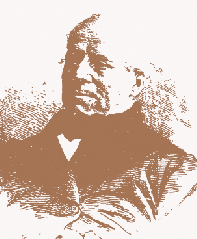 Man’s concern is not with government; he should look on government as no more than a very secondary thing — we might almost say a very minor thing. His goal is industry, labour and the production of everything needed for his happiness. In a well-ordered state, the government must only be an adjunct of production, an agency charged by the producers, who pay for it, with protecting their persons and their goods while they work. In a well-ordered state, the largest number of persons must work, and the smallest number must govern. The work of perfection would be reached if all the world worked and no one governed.
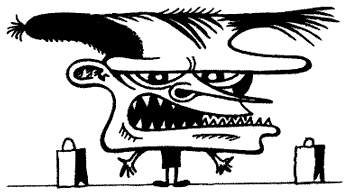 On December 11, 1957, American cartoonist and Reason magazine contributor Peter Bagge was born.
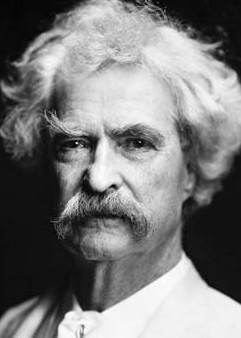 On December 10, 1884, Mark Twain’s “Adventures of Huckleberry Finn” was first published. This novel, narrated in the first person by the title character, is a dark comedy of the antebellum South and slavery, and has been considered by many American critics and writers to qualify as the “Great American Novel.”
 On this date in 1901, the first Nobel Peace Prizes are awarded, to French Liberal School economist Frédéric Passy, co-founder of the Inter-Parliamentary Union, and Henry Dunant the founder of the International Committee of the Red Cross. Passy was an admirer of Cobden, and an active member in the French Liberal School of Political Economy that developed in the tradition of J.B. Say, Destutt de Tracy, Charles Comte and Charles Dunoyer, and Frederic Bastiat. His published works include “De la Propriété Intellectuelle” (1859); “Leçons d’économie politique” (1860-61); “La Démocratie et l’Instruction” (1864); “L’Histoire du Travail” (1873); “Malthus et sa Doctrine” (1868); and “La Solidarité du Travail et du Capital” (1875).
