Back in August, the city council in Topeka, Kansas, voted to expand a redevelopment district and purchase Heartland Park Topeka, a “multi-purpose motorsports facility” featuring drag racing, dirt racing and more.
Chris Imming wasn’t keen on the notion. He put together an initiative petition calling for a public vote. Topeka townspeople eagerly signed it.
Taking this as a cue, did the city officialdom welcome this vibrant exercise of basic American democracy? Did they ready themselves for that election?
Instead, the city sued to block a vote on the issue.
A local judge sided with the insiders, ruling in the city’s favor. The development decision was administrative in nature, the Robed One determined, not legislative. That made it beyond reach of the citizen initiative process.
Both the judge’s designation of “administrative” and his rationale for exemption from a citizens’ veto seem more than dubious. Clearly, “the people” should be able to overrule any decision made by the city council, which is established for the express purpose of representing the views of “the people.”
Kudos to Mr. Imming for appealing that lower court decision. Thank goodness for folks like him, folks who stand up against the powerful public and private forces always looking for a bailout or a subsidy.
“We’re bailing out the city,” argues Doug Gerber, Topeka’s administrative and financial director. He cites the city’s previous redevelopment district, which annually costs a cool million dollars in bond service, while bringing in only a fifth of that in sales tax revenue.
So politicians want to double down, to cover their past rotten wheeling and dealing by . . . expanding it.
This is Common Sense. I’m Paul Jacob.
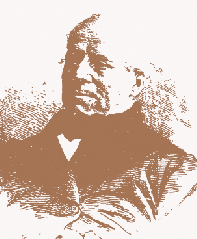 Man’s concern is not with government; he should look on government as no more than a very secondary thing — we might almost say a very minor thing. His goal is industry, labour and the production of everything needed for his happiness. In a well-ordered state, the government must only be an adjunct of production, an agency charged by the producers, who pay for it, with protecting their persons and their goods while they work. In a well-ordered state, the largest number of persons must work, and the smallest number must govern. The work of perfection would be reached if all the world worked and no one governed.
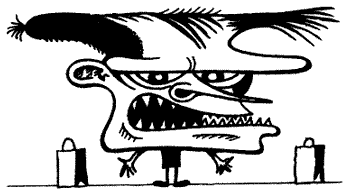 On December 11, 1957, American cartoonist and Reason magazine contributor Peter Bagge was born.
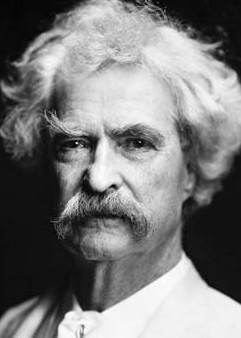 On December 10, 1884, Mark Twain’s “Adventures of Huckleberry Finn” was first published. This novel, narrated in the first person by the title character, is a dark comedy of the antebellum South and slavery, and has been considered by many American critics and writers to qualify as the “Great American Novel.”
 On this date in 1901, the first Nobel Peace Prizes are awarded, to French Liberal School economist Frédéric Passy, co-founder of the Inter-Parliamentary Union, and Henry Dunant the founder of the International Committee of the Red Cross. Passy was an admirer of Cobden, and an active member in the French Liberal School of Political Economy that developed in the tradition of J.B. Say, Destutt de Tracy, Charles Comte and Charles Dunoyer, and Frederic Bastiat. His published works include “De la Propriété Intellectuelle” (1859); “Leçons d’économie politique” (1860-61); “La Démocratie et l’Instruction” (1864); “L’Histoire du Travail” (1873); “Malthus et sa Doctrine” (1868); and “La Solidarité du Travail et du Capital” (1875).