The idea of a “Surveillance State,” where government watches and records our every move, is usually billed to us as a matter of protection.
That’s sure a good way to sell us tyranny.
True, we do sometimes receive protection from governments that keep tabs on us about what we do, where we go, who we see. But if this sort of thing doesn’t also give you the creeps, I am at a loss.
I hear from friends in the Libertarian Party of Virginia, where I live, that bills pending in the State House and Senate would limit the length of time state and local governments may keep data on citizens’ driving habits.
 Right now, governments collect a lot of information via license-plate reading cameras, and there are no legal limits on how long the information can be kept; some jurisdictions do keep data indefinitely. AAA Mid-Atlantic, an automobile service organization, is backing the legislation, pushing for a legal limit. “AAA believes that the retention period should be limited to the time necessary to compare it with local and national crime data banks,” a press release states, adding that the limit should reflect the rather short amount of time required, which is “a matter of hours or days, not months or years.”
We don’t advocate limits on this kind of data to protect criminals, but to reduce temptation to those folks in government who might abuse their positions for personal gain or bureaucratic mission creep.
Governments tracking and recording our every move just isn’t safe — even if our safety is the professed goal.
This is Common Sense. I’m Paul Jacob.
 A political country is like an American forest; you have only to cut down the old trees, and immediately new trees come up to replace them.
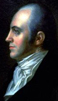 On February 6, 1756, Aaron Burr was born. Burr was an American politician who served as third Vice President of the United States, a man with a deeply ambiguous record. His popularity in his home state of New York, combined with the Slave Power vote, allowed for Thomas Jefferson’s victory in 1800 — and yet, another constitutional quirk, in addition to his apparent calculating ambition, precipitated a constitutional crisis in that election. He found a strong opponent in Federalist politician Alexander Hamilton, whom he later killed (in a duel, during his vice presidency). Out of office, Burr gathered an army west of the Appalachians, ostensibly to conquer Mexico. The army was captured, and Burr was put on trial for treason, with Thomas Jefferson moving heaven and earth to see a conviction. Burr was found not guilty, traveled to Europe, and then returned to America for a long life in the private sector.

 But what is that problem, at base? Those who fear a negative personal effect from vaccination (and there are some, though the “autism” charge
  On February 5, 1788, Robert Peel was born. He would become one of the most important of the United Kingdom’s prime ministers, ushering in some reforms that led to the liberalization of England in the 19th century.
 “Why was there racially segregated seating on public transportation in the first place?” he asked on the occasion of her death in 2005. “[T]here was certainly plenty of racism in the South, going back for centuries. But racially segregated seating” did not have the same unbroken history. Sowell pointed out that no matter what their own views, owners of the private transit lines of the 19th and early 20th century lacked motive to enforce segregation and thereby alienate many of their passengers.