“Oh eyes, no eyes, but fountains fraught with tears;
Oh life, no life, but lively form of death;
Oh world, no world, but mass of public wrongs,
Confused and filled with murder and misdeeds.”
Thomas Kyd, “The Spanish Tragedy” (1592)
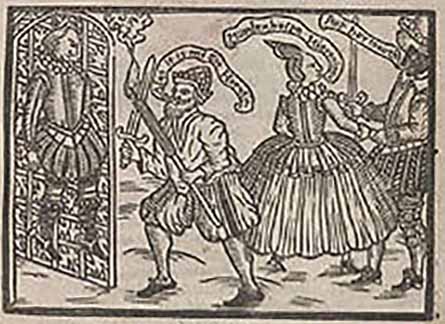
“Oh eyes, no eyes, but fountains fraught with tears;
Oh life, no life, but lively form of death;
Oh world, no world, but mass of public wrongs,
Confused and filled with murder and misdeeds.”
Thomas Kyd, “The Spanish Tragedy” (1592)
Insiders continue to chafe at the restraints imposed upon them by outsiders — that is, citizens. But citizens who keep their eyes on the prize can keep republican government democratic. Sometimes the outsiders just cave. Click on over to this weekend‘s Townhall column. And come back here for more information.
ERRATUM: The column incorrectly printed Mr. Ray Warrick’s name as “Ray Warren”; it has been corrected in the version that will be archived on this site in two days. Apologies to Mr. Warrick, and to our readers.
Oh, and did you catch last week’s Townhall column? Here it is on this site: “Minor Infraction, Felony Prosecution.”
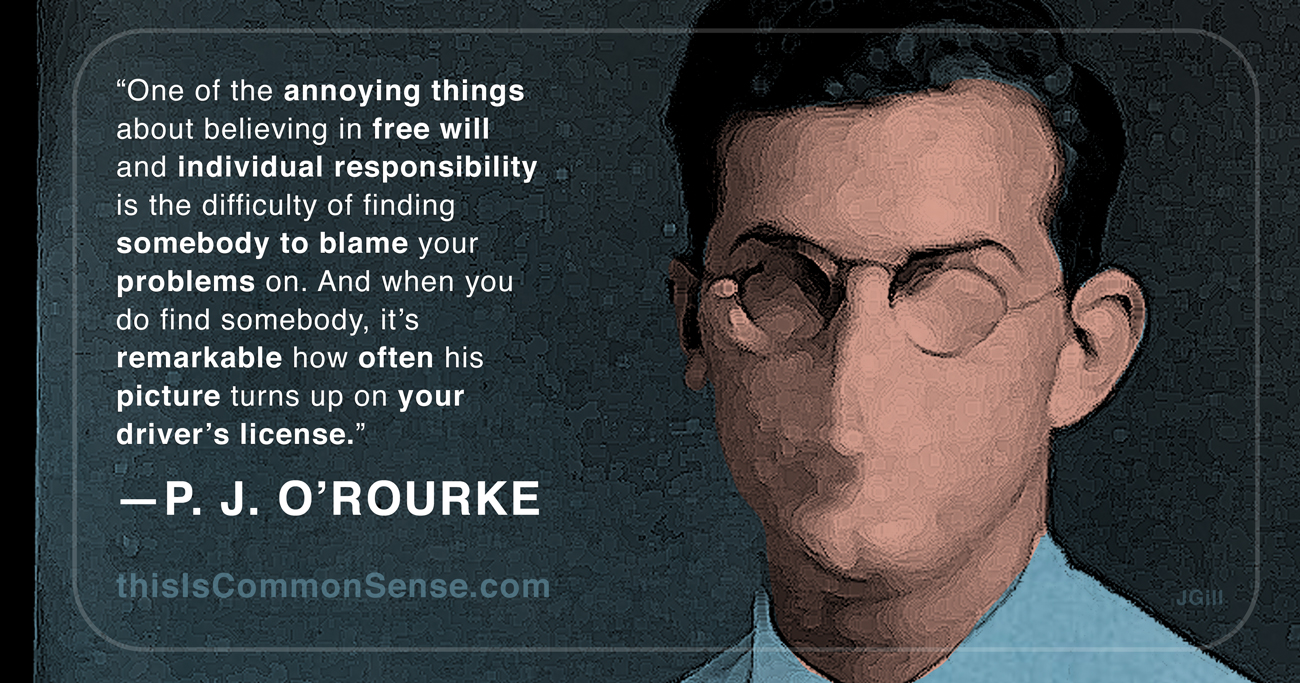
“One of the annoying things about believing in free will and individual responsibility is the difficulty of finding somebody to blame your problems on. And when you do find somebody, it’s remarkable how often his picture turns up on your driver’s license.”
Shared ideas matter. Please pass this along to friends.
Get a high-resolution screensaver of this image. Click on the thumbnail picture below to open a large version that you can download.
Morning Joe says that the Clinton Cash controversy is way bigger than the rather humble author of the book lets on. There is much more to uncover, and it is being uncovered.
More viewing:

Charles Murray, author of Losing Ground and other controversial books, has a suggestion. For business people. Pillars of the community. Fine, upstanding citizens.
Civil disobedience.
He’s suggesting, says John Stossel, that we ignore the parts of government that don’t make any sense, all the nonsense in the big books of the regulatory state.
Murray’s done this in his latest, intriguingly titled book, By the People: Rebuilding Liberty Without Permission. Stossel discusses it on reason.com:
Murray says, correctly, that no ordinary human being — not even a team of lawyers — can ever be sure how to obey the 810 pages of the Sarbanes-Oxley Act, 1,024 pages of the Affordable Care Act or 2,300 pages of Dodd-Frank.
What if we all stopped trying? The government can’t put everyone in jail.
This is a provocative idea, even if not new.
Henry David Thoreau spent a night in jail for not paying the poll tax, a tax that helped pay for the Mexican war he so despised (and was right to despise). Thoreau eloquently argued for civil disobedience in such cases; Herbert Spencer did something similar, in his 1851 Social Statics, with the chapter “The Right to Ignore the State.”
It is a risky tactic, of course. Thoreau was, after all, incarcerated for that night. You could wind up spending more time in the hoosegow.
Still, it could be worth it. Civil disobedience has good effects. Stossel cites “historian Thaddeus Russell [who] reminds us that many freedoms we take for granted exist not because the government graciously granted liberties to us but because of lawbreakers.”
It’s another path for citizen-initiated reform.
And it’s Common Sense. I’m Paul Jacob.
“Children learn the fundamental principles of natural law at a very early age. Thus they very early understand that one child must not, without just cause, strike or otherwise hurt, another; that one child must not assume any arbitrary control or domination over another; that one child must not, either by force, deceit, or stealth, obtain possession of anything that belongs to another; that if one child commits any of these wrongs against another, it is not only the right of the injured child to resist, and, if need be, punish the wrongdoer, and compel him to make reparation, but that it is also the right, and the moral duty, of all other children, and all other persons, to assist the injured party in defending his rights, and redressing his wrongs. These are fundamental principles of natural law, which govern the most important transactions of man with man. Yet children learn them earlier than they learn that three and three are six, or five and five ten. Their childish plays, even, could not be carried on without a constant regard to them; and it is equally impossible for persons of any age to live together in peace on any other conditions.”
Lysander Spooner, “Natural Law; or The Science of Justice” (1882)

The political class sings monotone, striking one note ad nauseam.
The song is “Money.”
One night an Amtrak train crashes, with fatalities; early the next morning a crowded chorus argues for amped-up spending on “infrastructure.”
Sen. Bill Nelson (D-Fla.) pled to the MSNBC lens, “Is it going to take more of these crashes and deaths to wake up the members of Congress who keep wanting to slim down the budgets going into infrastructure?”
Of course, no dollar amount is high enough that, if thrown at the problem, could guarantee no future accidents. Politicians want to toss the maximum moola at it, nonetheless.
Meanwhile, Baltimore smolders — and not because the Orioles won a World Series, but rather at the hands of rioters using protests sparked by the death of a man in police custody as their cover. To many, the tragic events call not so much for justice in court, or enacting law enforcement reforms, but for more “investment” in “urban areas” to solve the persistent problem of urban poverty.
“There’s been no effort to reinvest and rebuild in these communities,” President Obama claims.
Isn’t Obama the country’s head honcho? Did he not make any effort?
That’s funny, because an analysis by the Free Beacon finds that the City of Baltimore raked in $1.8 billion from the 2009 stimulus bill alone.
Doesn’t that count?
“Today, government spends 16 times more . . . than it did when the War on Poverty started,” wrote Robert Rector and Rachel Sheffield in their Heritage Foundation paper, The War on Poverty After 50 Years. “But as welfare spending soared, the decline in poverty came to a grinding halt.”
But why quibble about results?
Just send more money.
This is Common Sense. I’m Paul Jacob.

“The ancient maxim makes the sum of a man’s legal duty to his fellow men to be simply this: ‘To live honestly, to hurt no one, to give to every one his due.’”
Lysander Spooner, “Natural Law; or The Science of Justice” (1882)
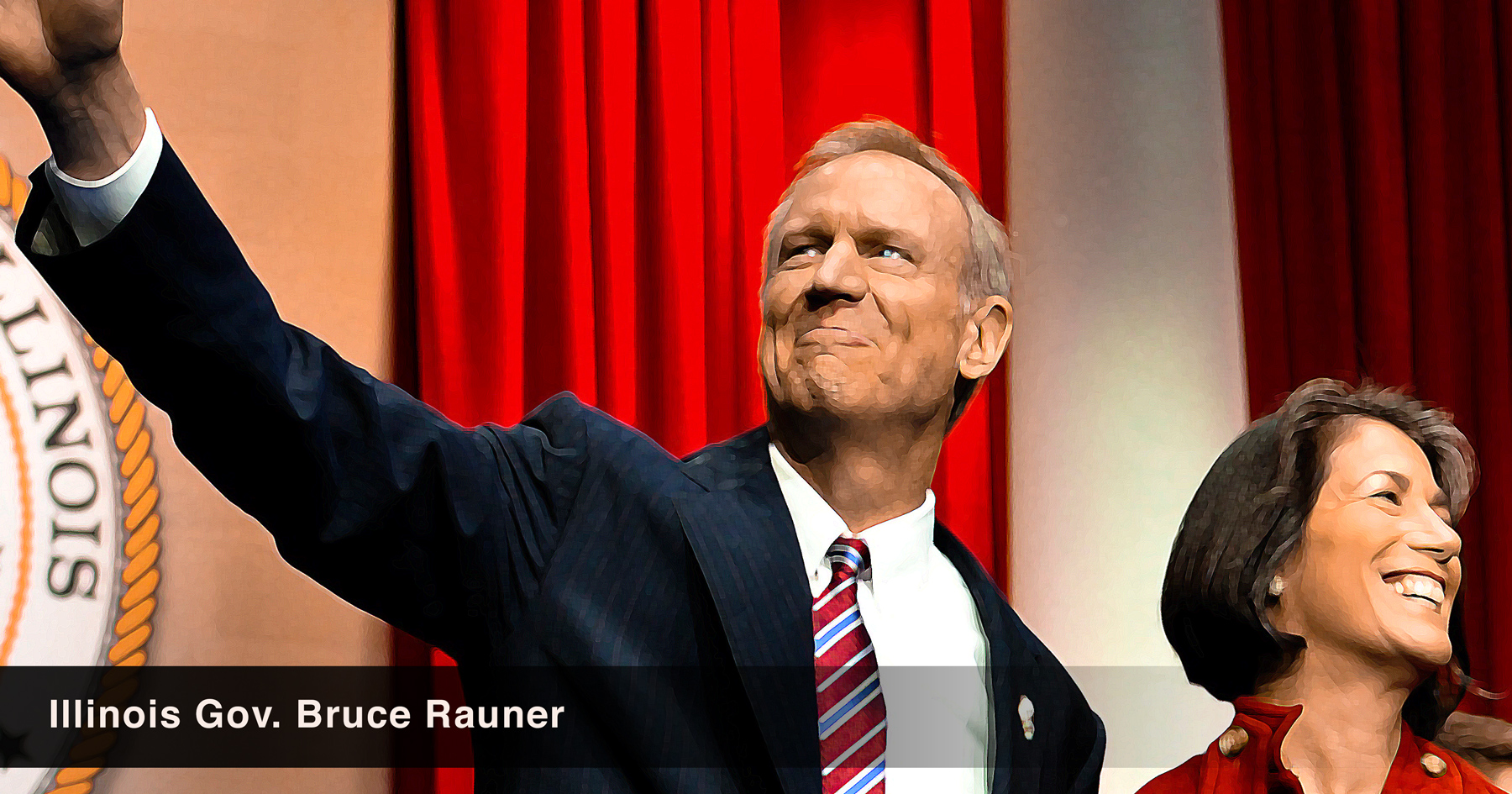
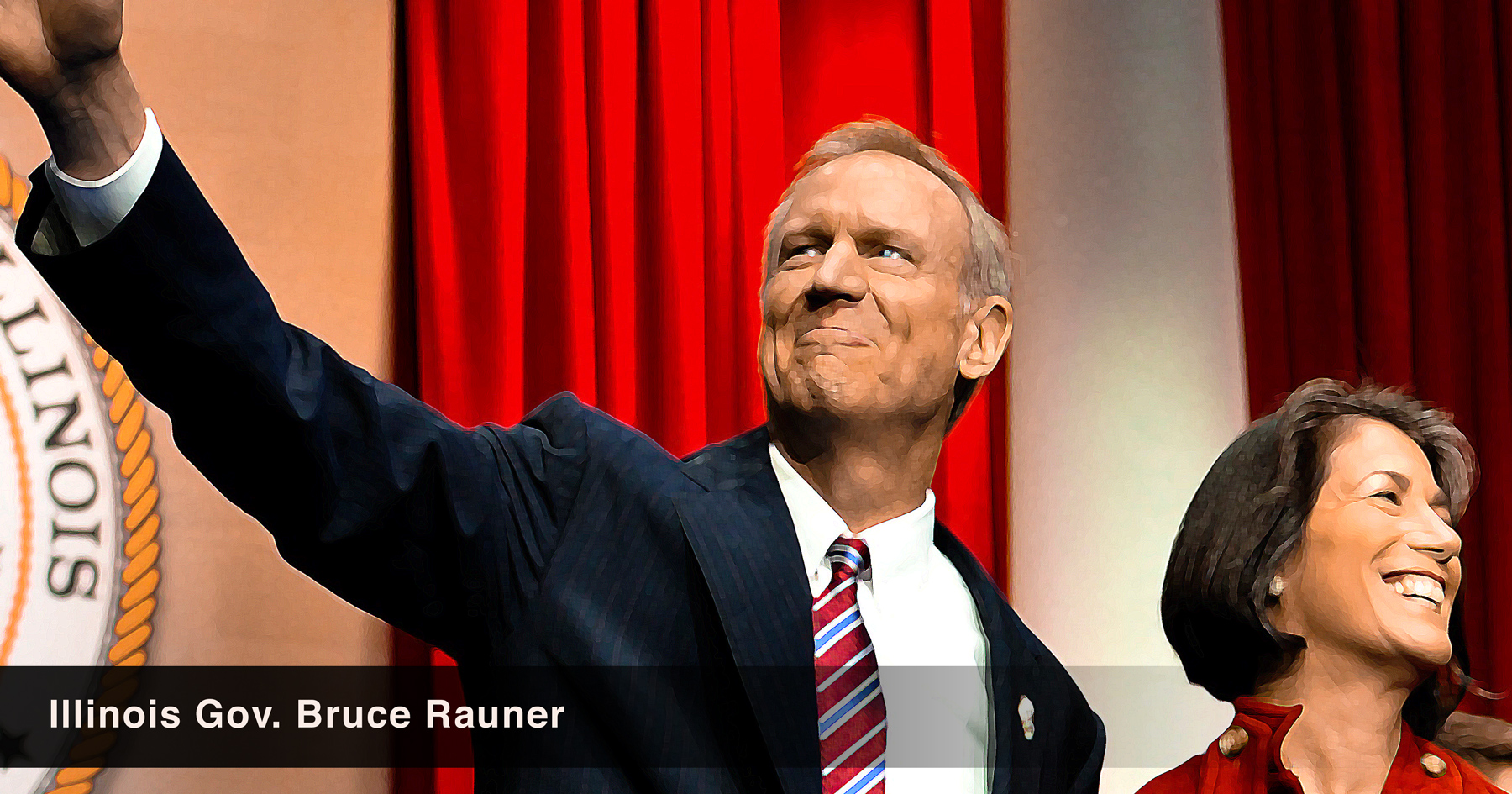
Illinois Gov. Bruce Rauner ran for his state’s highest office while simultaneously spearheading a wildly popular initiative — a proposed constitutional amendment to place state legislators under term limits.
Unfortunately, the amendment was blocked from voters. An appeals court ruled it outside the scope of the state’s initiative process, and the cowardly state supreme court dodged the case.
Meanwhile, Mr. Rauner’s campaign as an outsider — opposed to both Chicago and Springfield political machines — earned him the governorship.
Most politicians would cry crocodile tears for term limits and claim, aw shucks, there’s just no way to get them enacted . . . especially with the Malevolent Monarch, Mr. Michael Madigan, the state’s longest corruption-serving Speaker of the House, as term limits enemy #1.
But Rauner isn’t backing off. “Rauner has at least one non-negotiable item on his wish list for the spring legislative session,” writes Matthew Dietrich of Reboot Illinois in the Huffington Post: “passing legislative term limits.”
Rich Miller of Capitol Fax reports that “Democrats were shocked,” when an “administration official . . . more than implied that if the [term limits] constitutional amendment isn’t passed by May 31st, then the governor would not support any revenue increases to patch next fiscal year’s massive $6 billion hole.”
“Would the governor really threaten to crash the entire government over a term limits bill?” asks Miller . . . answering, “Yep.”
Goodness, Gov. Rauner is absolutely serious about enacting the reform the people of Illinois know is Step 1 in fighting the state’s rampant corruption: term limits.
This is Common Sense. I’m Paul Jacob.
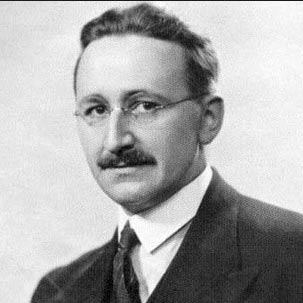
There is all the difference in the world between treating people equally and attempting to make them equal. While the first is the condition of a free society, the second means as De Tocqueville describes it, ‘a new form of servitude.’
F. A. Hayek, “Individualism: True and False” (1945), in Individualism and Economic Order (1948).