The flowing tide is with Socialism. But tides ebb as well as flow.
Earlier this week, Jeb Bush, former governor of the State of Florida, announced on Facebook that he is “exploring” a 2016 run for the Republican nomination for the presidency. I have mixed feelings, to say the least.
There’s the whole dynastic problem. Another Bush? Or, is Jeb the cost of finding a candidate to beat Hillary . . . who has her own dynastic baggage?
But the big story, here, is to watch the insiders scramble to keep out the outsiders.
The trouble with both Hillary and Jeb is that they are insiders. They represent where the leadership of both parties wants its representatives and front-men (and -women) to go: to the putative “center.”
By which they really mean: don’t disturb the bailout system in American finance or the Pentagon procurement system for the military-industrial complex.
While it might be fun to contemplate Bill Clinton as the First Gentleman, or pick at the two issues over which Gov. Bush seems not very conservative at all, the truth is that both have access to a lot of entrenched power and loose money. Both Jeb Bush and Hillary Clinton enjoy incumbent-like advantages.
If the near future does sport a Clinton-Bush battle for the presidency, we can be sure of only one thing: status quo vs. status quo.
Leaving the real work of reform to those of us at the grassroots, with state and local issues our preoccupation. As long as insiders occupy the White House, our choices will be limited.
This is Common Sense. I’m Paul Jacob.
J. H. Levy
[H]ow impossible is democracy save when the sphere of government is very limited.
December 18, Thanksgiving
On December 18, 1777, the United States celebrated its first official Thanksgiving, marking the recent October victory by the Americans over General John Burgoyne in the Battle of Saratoga.
Give New York Times reporter Robert Pear, or perhaps an editor, credit for a provocative headline: “In Final Spending Bill, Salty Food and Belching Cows Are Winners.” This to explain a $1.1 trillion dollar spending bill.
Where’s the money going?
Not to salty food or belching cows. The Times explains that, “like many of its predecessors,” the bill bulges with provisions “to satisfy special interests.” For example?
Pear quickly highlights how “ranchers were spared [from] having to report on pollution from manure,” schools from having to reduce salt or increase whole grain in their lunches, insurance companies from relinquishing tax breaks. These provisions, which incur no new spending, are lumped with one that does involve spending at taxpayer expense, a subsidy for promoting Nevada.
There’s something odd about this sampling of budgetary ingredients. Isn’t there a difference between being left alone and receiving a subsidy or other favor at the expense of others? Because that’s the kind of fundamental distinction blurred or obliterated when all budgetary things applying to particular groups are treated as “stuff to satisfy special interests.”
Politicians concoct zillions of ways to burden and bully people; proposed targets are, sure, “special interests” who may then beg for reprieves. But unlike the beneficiaries of specific subsidies or competitor-stomping regulations, we’ve all got a stake in not being harassed.
Protecting our lives and freedom is what government is properly for. And minding our own business is the opposite of interfering with somebody else’s.
This is Common Sense. I’m Paul Jacob.
J. H. Levy
[H]ow impossible is democracy save when the sphere of government is very limited.
December 17, Simon Bolivar, France recog
On December 17, 1777, France formally recognized the United States of America. The 17th of December, 1819, was the day Simon Bolivar declared the independence of the Republic of Gran Colombia in Angostura.
December 16, Convention Parliament
On December 16, 1689, the Convention Parliament began, not only transferring power from one king to another, but establishing procedures and rights into the British Constitution, both of which were copied in the United States of America a century later, with the Constitution’s Bill of Rights.
Freedom of speech is not the same as freedom from (disliked) speech. One contradicts the other.
Not that legal strictures against “offensive” speech would be consistently enforced even if the First Amendment were formally rescinded. In practice, whoever had the most political pull would be issuing the shut-up edicts. Although victims might well be offended by the uttering of those edicts, censors would be undeterred by the contradiction.
These thoughts are occasioned by Greg Lukianoff’s new book Freedom from Speech, and the review of same by Allen Mendenhall at Liberty. Lukianoff heads the Foundation for Individual Rights in Education (FIRE), which fights the good fight for civil rights on campus. His book, says Mendenhall, is “a vigorous and cogent refutation of the increasingly popular notion that people have a right not to be offended.”
Lukianoff agrees that hypersensitivity to controversial speech in private institutions, too often punished by private sanctions that are arbitrary and unjust, does not per se violate anyone’s First Amendment rights. It nonetheless undermines the cultural tolerance needed for open discussion. “Only through the rigorous filtering mechanisms of longstanding deliberation and civil confrontation can good ideas be sorted from the bad. Only by maintaining disagreement at a rhetorical and discursive level can we facilitate tolerance and understanding and prevent the imposition of ideas by brute force.”
That is to say, cultural values and political values are not two isolated realms. One influences the other.
Who can disagree? I wouldn’t dare.
This is Common Sense. I’m Paul Jacob.
J. H. Levy
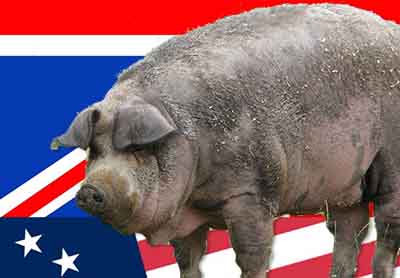
Cowper’s Mahometans ate up the hog while denouncing it as an unclean thing, by judging each piece — as the phrase of the empirical Socialist goes — ‘on its merits.’ So you are being made to swallow Socialism bit by bit.