This is one of the more amazing speeches of our time:
This is one of the more amazing speeches of our time:
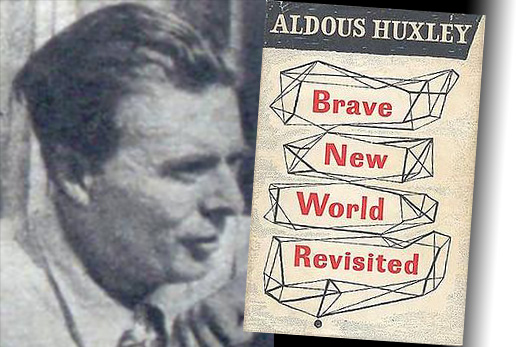
“However hard they try, men cannot create a social organism, they can only create an organization. In the process of trying to create an organism they will merely create a totalitarian despotism.”
Aldous Huxley, Brave New World Revisited (1958), chapter three, p. 24.
Some proposals are so shocking and not common that, no matter how rational or sensible, we cannot legitimately call them “common sense.”
Could this be one?
You tell me.
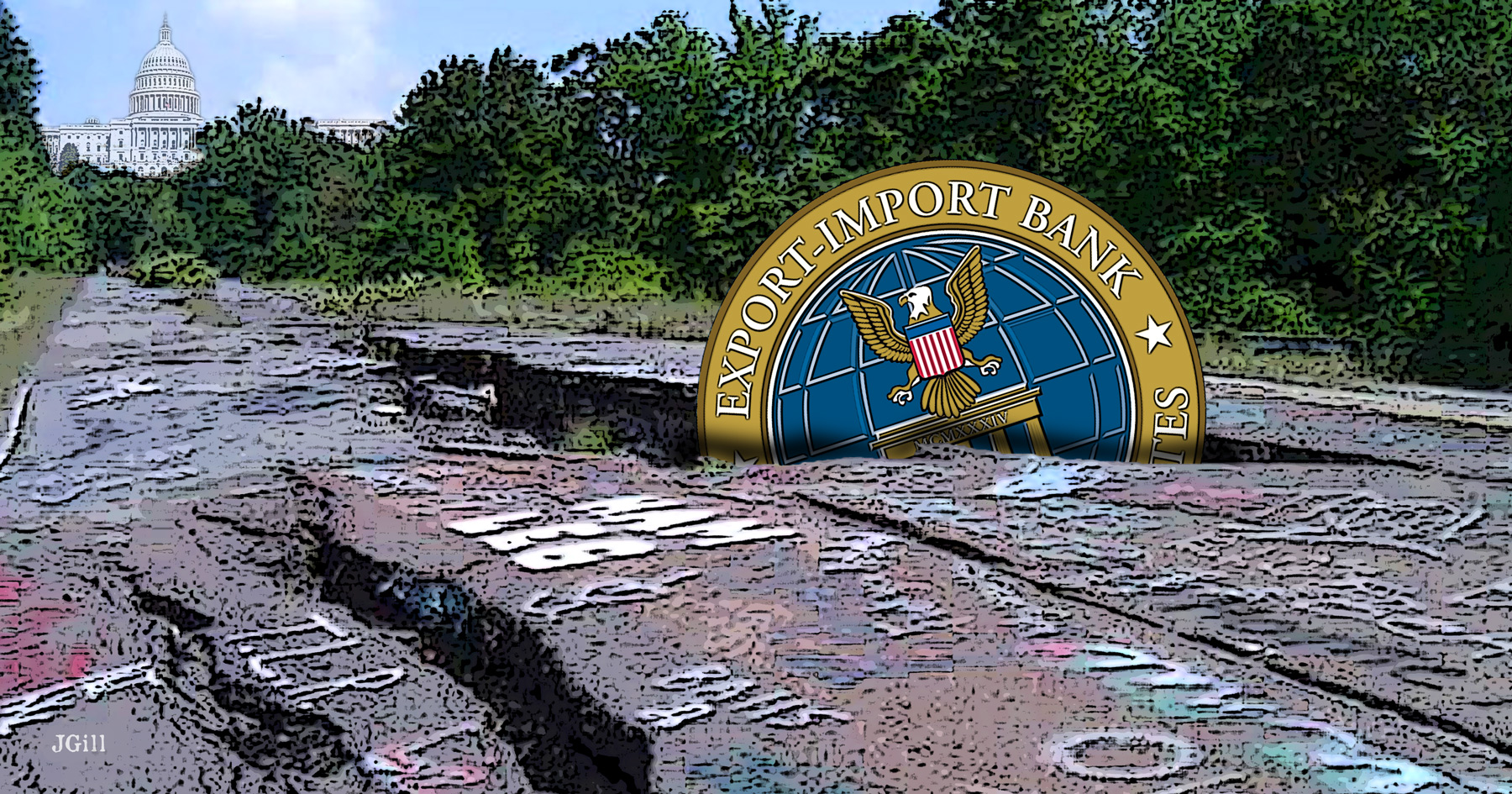
Congress is right now struggling to pass a highway funding bill. Authorized funding by the federal government on roads ends with the passing of this month, July. So, blogs Scott Shackford at Reason, “the legislature has to pass something. Because the legislature has to pass something, people are trying to squeeze everything into it.”
And our illustrious president wants to revive the recently dead, the Export-Import Bank. “When he was a senator, Barack Obama knew the program was nothing but corporate welfare,” writes Shackford. “But now as president, he has flip-flopped and is trying to keep the institution alive.”
I don’t know if the prez will ultimately succeed, cajoling Congress to revive the monster by stuffing it into the roads bill, but at least “Sen. Marco Rubio has introduced an amendment to the highway bill that would kill the bank and unload its assets to the treasury.”
Go, Rubio! Getting rid of the Ex-Im Bank is just anti-crony common sense.
So what’s the “uncommon” sense? This out-of-the-mainstream notion: We don’t need a federal transportation bill at all. It’s not as if states cannot secure funding for roads. (They already do.) Devolve the whole Interstate system back onto the states!
Radical? Maybe. But the federal government just spends and spends without much sense. Distribute the responsibility for roads to the states; let Congress figure out how to manage its remaining tasks.
For a change.
I think this is . . . Common Sense. I’m Paul Jacob.
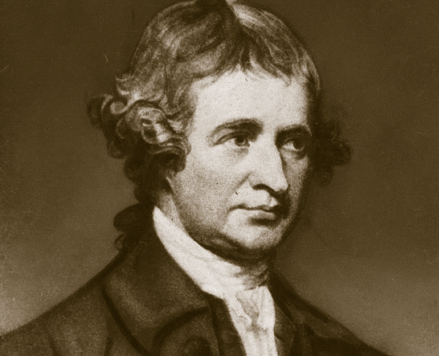
“The people never give up their liberties but under some delusion.”
Edmund Burke, speech in Buckinghamshire, England, 1784.

On July 24, 1823, Chile abolished slavery.
On this day in 1974, the U.S. Supreme Court told President Richard Nixon that he lacked constitutional authority to withhold the infamous “Nixon Tapes” from Congress.
July 24 is Pioneer Day in Utah, and Simón Bolívar Day in Bolivia, Ecuador, Colombia, and Venezuela.
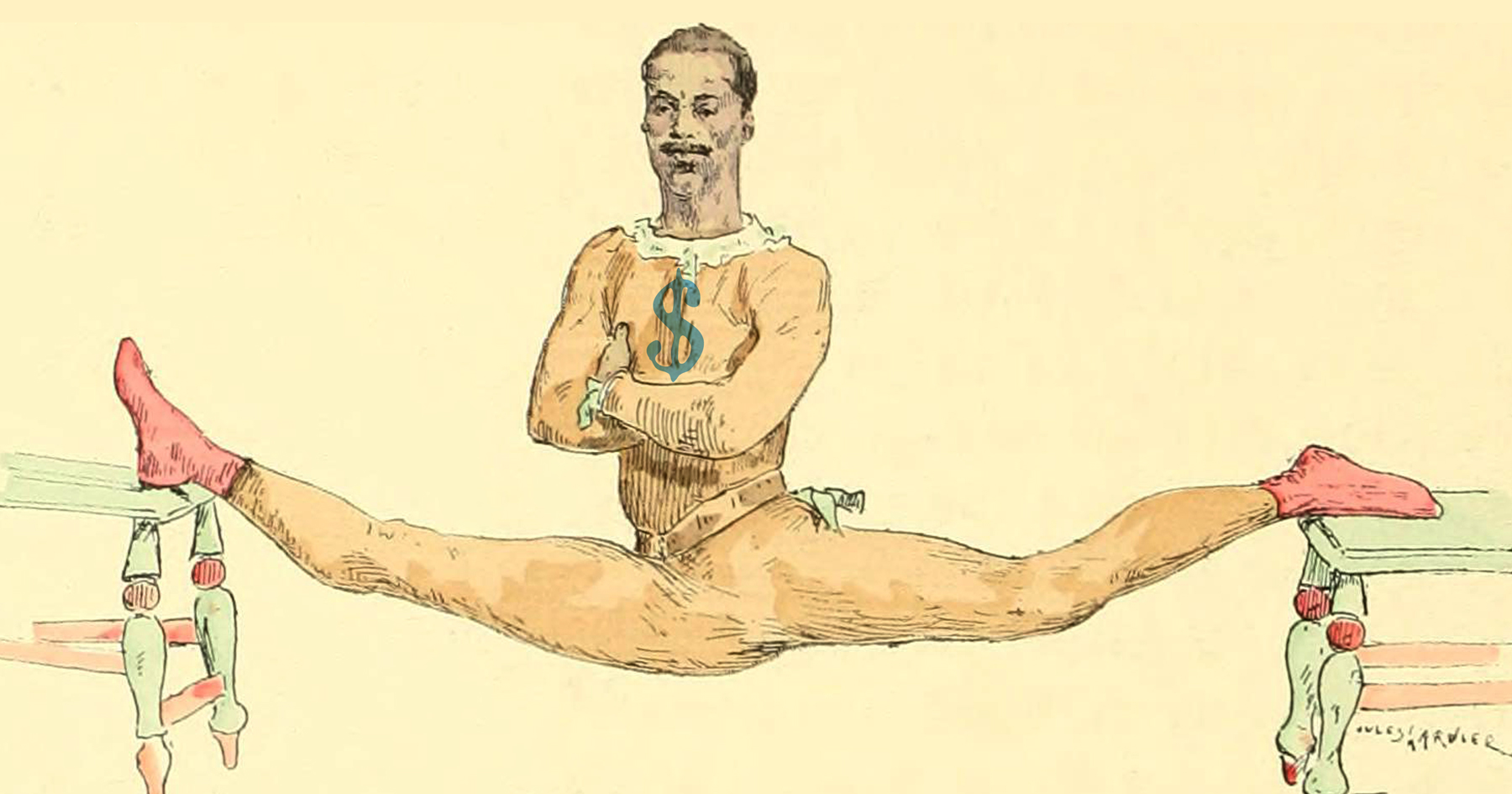
Washington Post columnist Catherine Rampell just stumbled into a truth. Raising minimum wages could be disastrous. Depending on the rate.
While “Bernie Sanders, Martin O’Malley and a host of other well-intentioned liberals want to hike the federal minimum wage to $15 an hour,” she calls the proposal “badly misguided.”
And yet she says that the current federal wage floor, at “just $7.25 an hour . . . is absurdly low.”
Why, this Friday, she notes, marks six years since the last minimum wage hike!
Rampell recognizes that raising the minimum wage to $50/hour would cause unemployment, massively. She also realizes that, in many low-wage states, the mere $15 rate would do the same. But raising “the federal minimum wage to $10.10”? Might work! “This is a trade-off . . .”
Yes. Stop right there. Trade-offs, indeed.
She wants us to think about getting the rates right.
Employers and job-seekers do that already, in the marketplace. If businesses don’t pay enough, the workers will move on to employers who will. Force businesses to hire workers for more than their productivity? Unemployment results.
A minimum wage rate helps some and hurts others. Rampell admits that, appearing to “accept” 500,000 people losing their jobs as collateral damage to boost wages for others.
Her proposed fine-tuning of rates supposes that politicians have greater knowledge about the “proper” price of labor than employers and job-seekers. Moreover, she ignores the inevitable political game, whereby politicians take credit for rewarding some, while hiding the costs imposed on others.
Finding the “right minimum wage” rate is mainly about hiding the victims . . . so voters won’t notice.
This is Common Sense. I’m Paul Jacob.
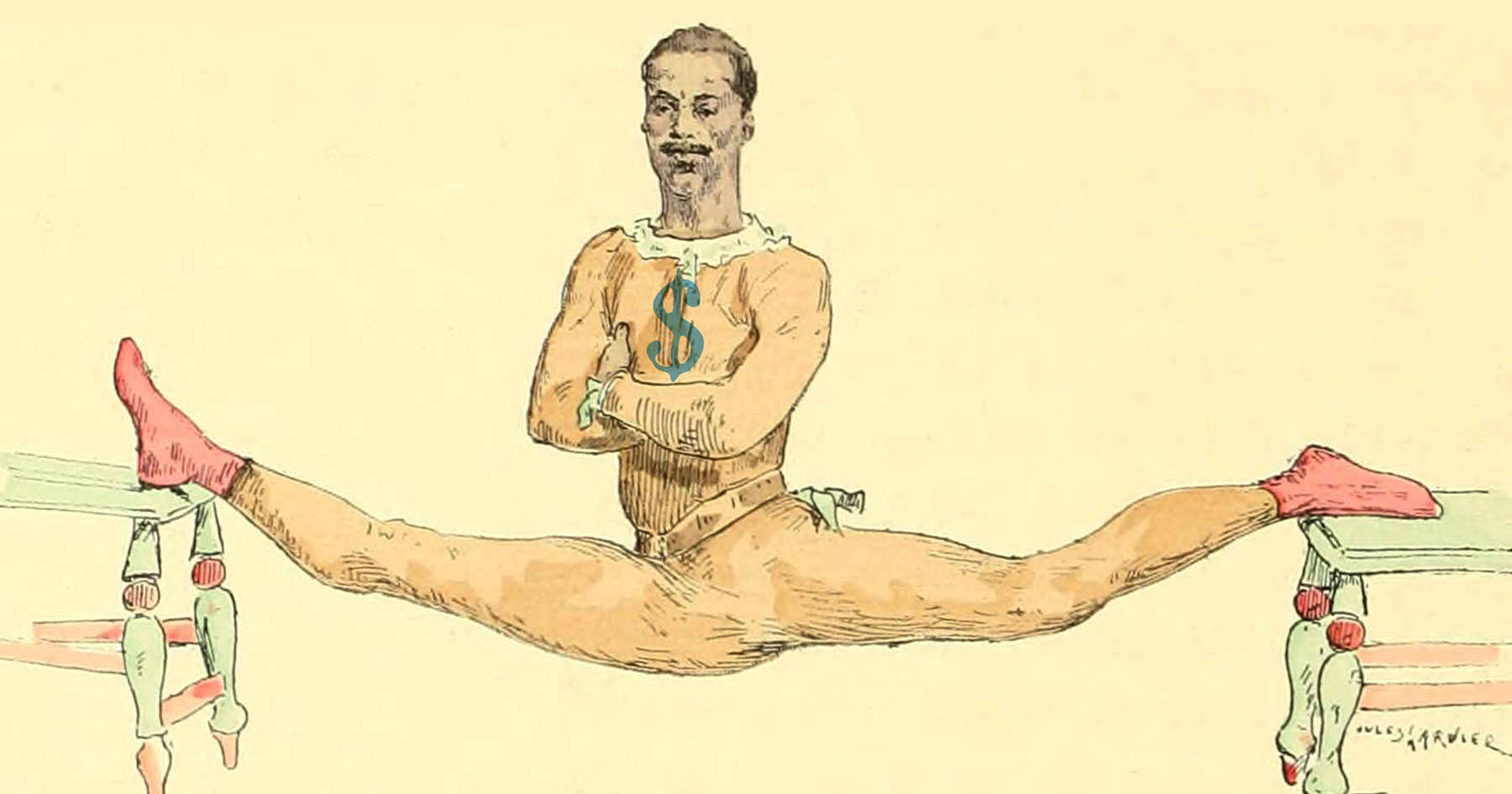
“Liberty, as we all know, cannot flourish in a country that is permanently on a war footing, or even a near war footing. Permanent crisis justifies permanent control of everybody and everything by the agencies of central government.”
Aldous Huxley, Brave New World Revisited (1958), chapter one, p. 14.
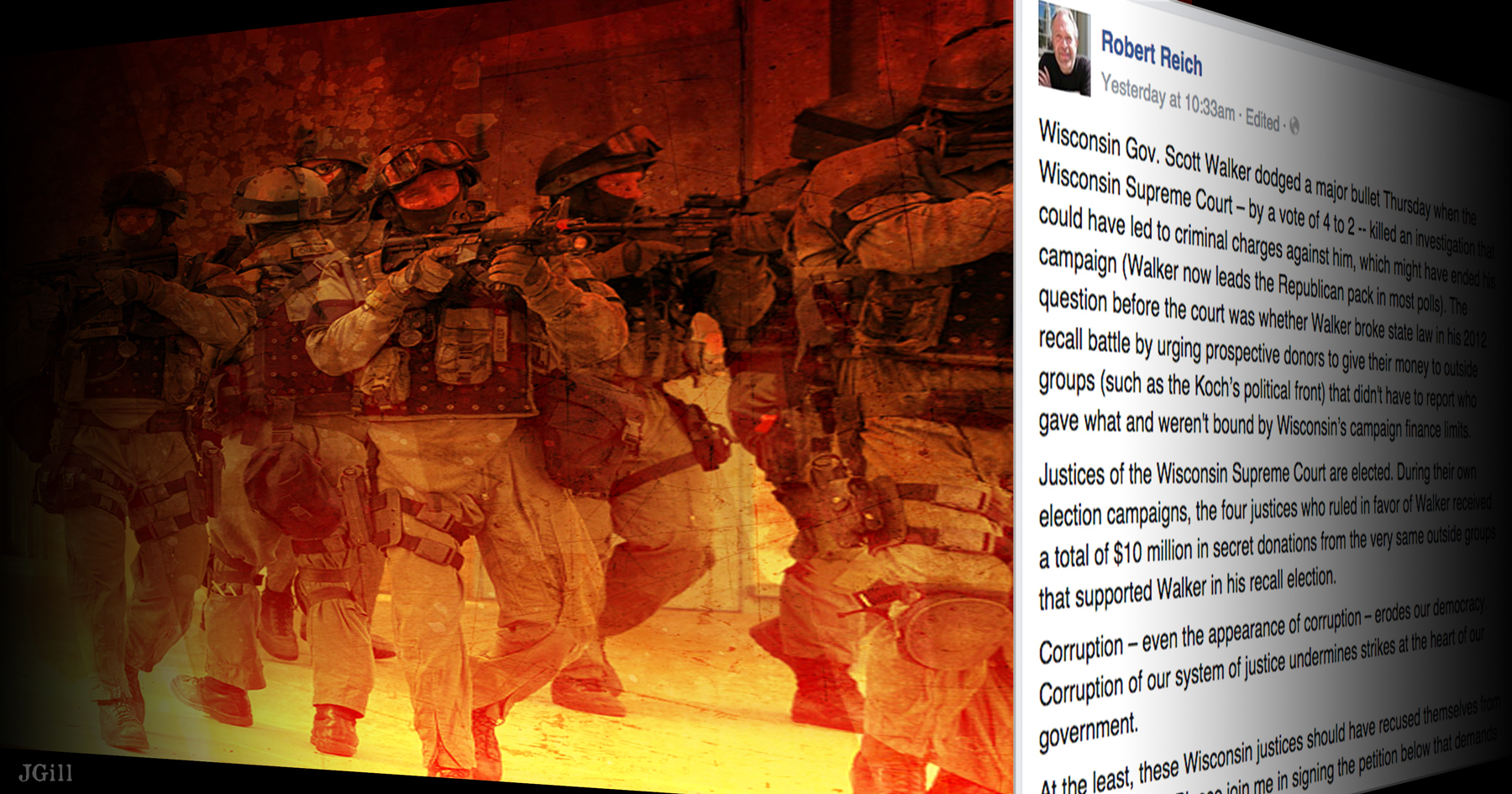
Common Cause says its job is “Holding Power Accountable.” Robert Reich is the pre-eminent “people’s progressive” propagandist of our time, promoting himself as on the side of underdogs and against corporate power structures.
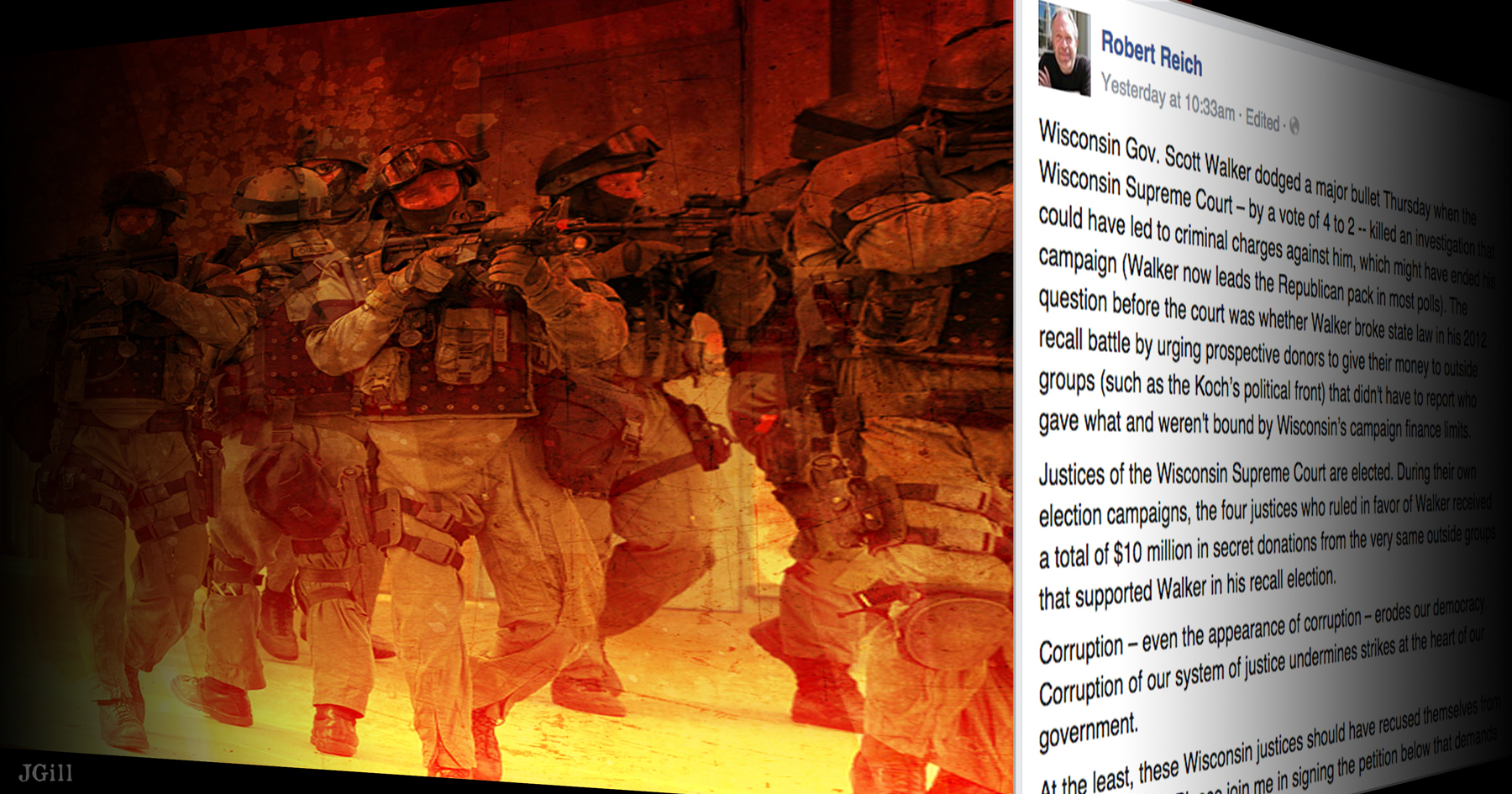
After the Wisconsin John Doe probe was judicially squelched, last week, Reich promoted Common Causes’s official reaction, insisting that “Corruption — even the appearance of corruption — erodes our democracy. Corruption of our system of justice undermines strikes at the heart of our government.”
This is the Common Cause take:
The Wisconsin Supreme Court recently ended the investigation of possible illegal activity between Scott Walker’s 2011-2012 recall campaign and outside special interest groups.
Four of the justices of the court were the beneficiaries of dark money spent in their behalf and which was the heart of this case. They should have recused themselves and did not.
Robert Reich enthusiastically reiterated Common Cause’s demand for adoption and practice of strict judicial “recusal rules.”
Hmmm. No mention that a federal judge had also ordered the investigation shut down, but that ruling was stayed awaiting state court resolution.
No mention, by either Reich or Common Cause, of the methods the prosecutors used in this case, the gag rules and secrecy, the official attempt to squelch public discussion.
Also no mention of the pre-dawn raids, complete with SWAT teams, barking dogs, and pointed guns, as if the political activists (targeted for unsubstantiated campaign finance rule breaches) were violent drug dealers or terrorists.
The lack of mention of those tactics suggests not merely a lack of interest in the real rule-of-law questions, but also an acceptance of those tactics . . . when applied to political enemies.
That is worse than mere corruption.
This is Common Sense. I’m Paul Jacob.
“The nature of power is such that even those who have not sought it, but have had it forced upon them, tend to acquire a taste for more.”
Aldous Huxley, Brave New World Revisited (1958), chapter one, p. 12.

“We’ve been there and done that and voted not to do it,” St. Tammany Parish Council Chairman Richard Tanner explained last week. “I don’t know why we’d do it again.”
There’s a lot Tanner doesn’t know.
Like that his job is representing the people. You see, Tanner wasn’t one of the three members of the 14-member council who favored a public vote on enacting term limits.
“What are the other 11 worried will happen?” asked a New Orleans Times-Picayune editorial. “They must be afraid that voters will like the idea. What reason other than self-preservation could they have for refusing to even put the question on the ballot?”
According to a 2014 poll commissioned by Concerned Citizens of St. Tammany, a group that has long urged the council to put a term limits measure on the ballot, just a mere 92 percent of residents favor term limits.
The Home Rule Charter Committee and the St. Tammany West Chamber of Commerce have also implored the parish council to permit a democratic vote.
“Our members believe firmly that voters should be allowed their constitutional right to vote on this issue, rather than have this right outright denied,” read the Chamber’s resolution.
The old Tammany Hall political machine that once ruled New York City was corrupt. Criminally so. No one has suggested criminal wrongdoing by the gang running St. Tammany Parish.
No, theirs is an intellectual corruption, an embracing of power and self-interest and a rejection of republican and democratic principles.
Either form of corruption makes a strong case for term limits.
This is Common Sense. I’m Paul Jacob.