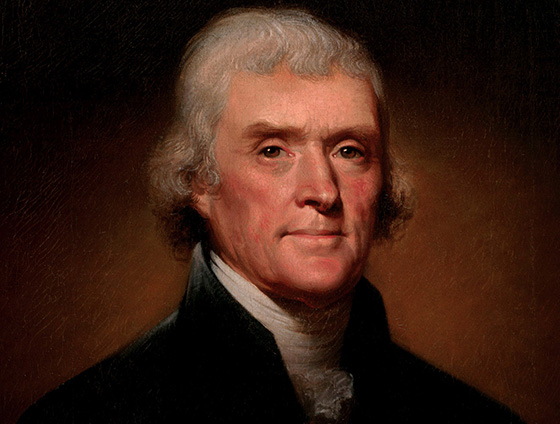
“I leave this rule for others when I’m dead
Be always sure you’re right — THEN GO AHEAD!”
David Crockett, personal motto.
“I leave this rule for others when I’m dead
Be always sure you’re right — THEN GO AHEAD!”
David Crockett, personal motto.
John Stossel, on his terrific Fox Business show, explains how and why switching to private security in airports would be an improvement over the intrusive, prurient, incompetent, wasteful Transportation Security Administration.
As the show explains, airport participation with TSA security is optional: San Francisco has a private service instead, and Orlando contemplates opting for that right now.
June 6 marks major life events of two eminent British philosophers, Jeremy Bentham’s death (1832) and Isaiah Berlin’s birth (1909). Bentham was known as a “philosophical radical” and a major influence on the British utilitarian tradition. He authored numerous books, including Defence of Usury and An Introduction to the Principles of Morals and Legislation. Berlin was best known for several brilliant essays, including the famous “Two Concepts of Liberty.”
“It is not unfrequent to hear men declaim loudly upon liberty, who, if we may judge by the whole tenor of their actions, mean nothing else by it but their own liberty, — to oppress without control or the restraint of laws all who are poorer or weaker than themselves.”
Samuel Adams, from an essay in The Advertiser (1748).
Our suspicions have been proved: the Transportation Security Administration (TSA) doesn’t secure much of anything; it is mere “security theater.”
After revelations that TSA screeners failed to find weapons and other deadly contraband in 96 percent of tests, David A. Graham, writing for The Atlantic, asked “what kind of theater this is. . . . A period drama, satirizing the 2000s? Vaudeville farce?”
Easy answer: the genre is “statism.”
Statism is the worship of government, or the reliance upon government to do many more than a few tasks. It is very old.
The ancient states arose from conquest, developing as a way to milk the masses for the benefit of the few. That’s what states traditionally do: use force to move wealth from one group to another.
Along the way, the states did do some good. Amidst all their horrors.
But mostly rulers just leveraged myth and bluster to cover crimes.
In more recent times, in this great country, the idea arose that the state should be limited to a few necessary jobs, tightly controlled by the people so that government might actually defend rights, not abridge them.
But this revolutionary democratic-republican ideology did not alter the basic nature of reality, turning the sow’s purse of the conquerors’ art into the gold of the Public Interest.
Without our vigilance, government always reverts back to its roots.
The TSA is simply the latest myth-and-bluster-backed scam aiding the ludicrous notion that government is all-powerful . . . while providing only faux security. Get rid of it; let its people go. Then watch airlines come up with more effective, less intrusive, more passenger-friendly security systems.
Want theater? Try “vigilance theater.”
This is Common Sense. I’m Paul Jacob.
“We have the right as individuals, to give away as much of our own money as we please in charity; but as members of Congress we have no right to appropriate a dollar of the public money.”
David Crockett, from a speech in the U.S. House of Representatives, as quoted in The Life of Colonel David Crockett (1884), by Edward Sylvester Ellis.
On June 5, 1851, Harriet Beecher Stowe’s anti-slavery serial, Uncle Tom’s Cabin, or Life Among the Lowly, started its ten-month run in the National Era abolitionist newspaper.
Bad ideas take a person only so far.
Proponents of a widely destructive policy may be loath to relinquish it altogether when destructive consequences loom. Yet they may also loathe to see it applied consistently — because of the pain it’ll cause their particular gang.
Harm to others inflicted by lousy ideas? Fine!
Harm to yourself? Not fine!
Hence the semi-reversal by Los Angeles union officials of their demand for a minimum wage of $15 an hour, recently approved by LA’s city council. Union leaders have been among the most ardent proponents of the new minimum, which until now they’ve insisted must be imposed equally, no exemptions for special hardship.
But now union reps like Rusty Hicks want exemptions for unionized companies so that unions are free to negotiate an agreement that, as Hicks puts it, “allows each party to prioritize what is important to them.” Wow! Sounds like he might favor free markets, in which parties to a trade participate, voluntarily, only when priorities are aligned and each expects to gain.
Many motives for Hicks’s contradictory stance are plausible. One is that the requested exception would encourage companies to unionize to escape burdensome new costs. Accept one burden to escape a worse one.
Instead of letting unions cripple all workplaces but their own, let’s “allow each party to prioritize what is important to them” across the board, by letting employers and employees negotiate without any political interference whatever.
This is Common Sense. I’m Paul Jacob.
June 4 marks Finland’s Armed Forces Day, Tonga’s Emancipation [or Independence] Day (commemorating the abolition of serfdom in Tonga by King George Tupou in 1862, and the independence of Tonga from the British protectorate in 1970), Estonia’s Flag Day, and the international Tiananmen Square Protests of 1989 Memorial Day.
“Neither the wisest constitution nor the wisest laws will secure the liberty and happiness of a people whose manners are universally corrupt. He therefore is the truest friend to the liberty of his country who tries most to promote its virtue, and who, so far as his power and influence extend, will not suffer a man to be chosen into any office of power and trust who is not a wise and virtuous man. ”
Samuel Adams, from an essay in The Advertiser (1748).