Categories
video

Video: Kasich — For & Against Term Limits

Asked about reforming Washington toward the end of a rambling hour-long talk yesterday to employees at C&S Wholesale Grocers in Keene, New Hampshire, presidential candidate and Ohio Gov. John Kasich came out squarely against term limits.

And then, 100 percent for them.

“We put term limits in in Ohio. You know what its effect is? It means the staff’s running the place now.”

A minute later: “Do I favor term limits? I do.”

But he added . . . “I favor long — ours is eight years; it ought to be twelve. In Congress, it ought to be twelve. We ought to have term limits, okay. That‘s what we ought to have.”

“But that’s not going to fix anything,” Kasich declared. Before, in his next breath, he admitted, “It’ll fix a couple things.”

“You gotta understand,” the governor emphasized, “what fixes things is the character and the leadership.”

Kasich went on to say that he “could have stayed in Congress for a hundred years.” But that a “politician . . . should go in, do public service and get out.”

Okay, then.

https://www.youtube.com/watch?v=kH66fvi_u0g&feature=youtu.be&t=48m9s
Categories
Today

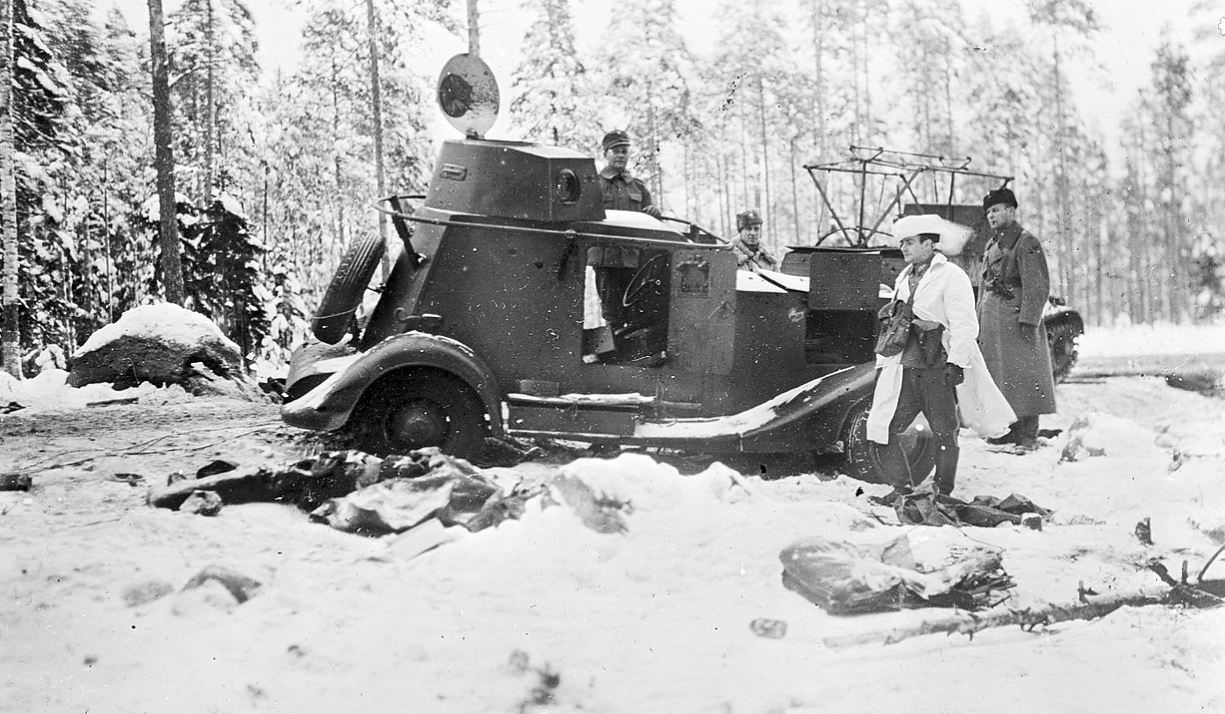
Tolvajärvi Victory

On December 12, 1939, Finnish forces defeated those of the Soviet Union in the first major victory of what became known as the Winter War, in the Battle of Tolvajärvi.

December 12th birthdays include:

* Erasmus Darwin (1731) – English physician, slave trade abolitionist, inventor and poet

* John Jay (1745) — First Chief Justice of the United States

* William Lloyd Garrison (1805) — American abolitionist, editor of The Liberator

Categories
Thought

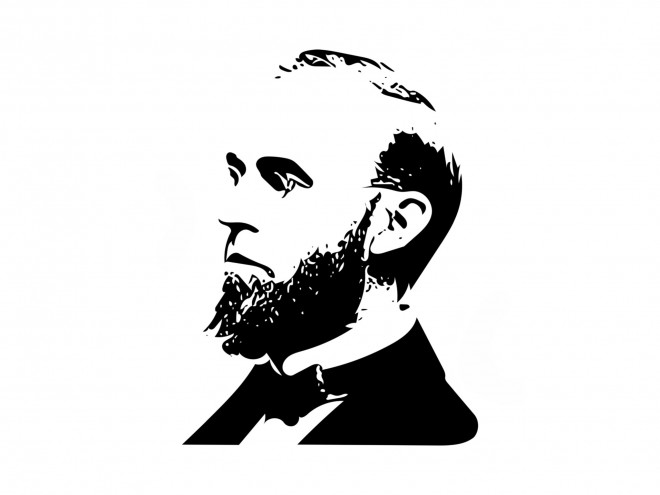
Arthur Latham Perry

“What is called the Progress of Civilization has been marked and conditioned at every step by an extension of the opportunities, a greater facility in the use of the means, a more eager searching for proper expedients, and a higher certainty in the securing of the returns, of mutual exchanges among men.”

Arthur Latham Perry, Principles of Political Economy, 1891.

Categories
general freedom

Nix the Union Jack?

“Get a wriggle on,” New Zealand’s Electoral Commission is telling citizens
who want to cast a vote before today’s deadline to mail in ballots.

New Zealand is choosing a new flag.

Maybe.

In the referendum ending today, the first of two, voters will choose one of five proposed new flags. The second referendum comes next year when the chosen new design goes mano a mano against the current flag.

For years, Prime Minister John Key has itched to “scratch” the Union Jack, the United Kingdom’s flag, off the New Zealand national flag.

To assert some independence, I suppose. Hey, I can relate.

HBO’s John Oliver calls New Zealand “Australia’s Australia.” Glance at the two nation’s flags, they’re virtually identical. Populating a remote two-island nation, New Zealanders may share a desire not to live in any other nation’s shadow.

Granted, there were no demonstrations for the flag re-design, in the streets of Auckland, Wellington or Christchurch — or anywhere else, as far as I can tell. This was a referred measure, from politicians to the people — not an initiative.

And the referendums will cost $26 million, something not lost on the citizenry.

Furthermore, a flag is far less important than issues of war and peace, taxes, jobs, you name it.

But I really like that politicians didn’t give a designer a no-bid contract and do the choosing without the people. In fact, after whittling down to offer voters four designs in this referendum, a fifth entry was added after a petition for it on social media caught fire.

Could the flag chosen be as pleasing as the democratic process being used to get it?

This is Common Sense. I’m Paul Jacob.


Printable PDF

New Zealand, flags, flag, democracy, voting, Common Sense


Categories
Thought

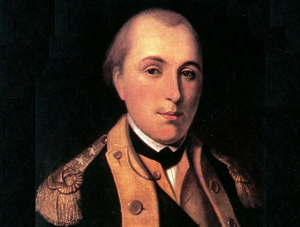
The Marquis de Lafayette

“Humanity has gained its suit; Liberty will nevermore be without an asylum.”


Lafayette, Letter to friends (1780), published in Memoirs de La Fayette, Vol. II, p. 50.

Categories
Today

Bagge It

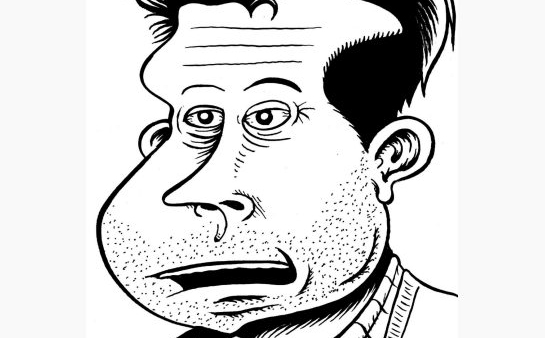
On December 11, 1957, American cartoonist and Reason magazine contributor Peter Bagge was born.

Categories
crime and punishment general freedom ideological culture media and media people nannyism national politics & policies Second Amendment rights too much government U.S. Constitution

Anti-Gun Barrage

America’s would-be gun-grabbers, chiefly in the media and “on the left,” don’t know much about guns.

But they know what they hate.

After the horrific terrorist shooting spree in San Bernardino, MSNBC and CNN went on a shooting-their-mouths-off spree, relentlessly pushing the need for stricter gun control. President Barack Obama and his fellow Democrats echoed the theme.

Cenk Uygur of The Young Turks went full accelerando, unleashing a foul rant about how “we” are the terrorists and “we” are letting “us” get away with mass murder “every week,” ignoring the statistics that murder rates have gone down, are still going down, and that the rest of the world is being hit with mass shootings too, mainly from Muslim radicals.

When the news came out that the perps were, indeed, Muslim, the barrage of anti-gun talk didn’t stop, though their intellectual ammunition had fizzled.

The president went further off his rocker, calling the guns he wanted to ban “powerful” — though they are of lower caliber than many handguns — while Hillary Clinton talked about the need to ban “assault rifles.”

As has been noted by others, “assault rifle” only means what anti-gun folks say it means, and what they designate as assault weapons are not (contrary to their constant implications) the equivalent of machine guns (which have been illegal for citizen ownership for a long, long time).

Being scared of scary-looking guns is no excuse not to be able to define them. While it would be good to reduce incentives for folks to “go postal” or to commit terroristic acts, we aren’t going to prevent mass shootings by a simple prohibitionary or mere regulatory regime.

That’s for scare-mongers to push. And us to resist.

This is Common Sense. I’m Paul Jacob.


Printable PDF

guns, anti-gun, second amendment, Common Sense, illustration
Categories
Today

Passy, Dunant and Huck

On December 10, 1884, Mark Twain’s Adventures of Huckleberry Finn was first published. This novel, narrated in the first person by the title character, is a dark comedy of the antebellum South and slavery, and has been considered by many American critics and writers to qualify as the “Great American Novel.”

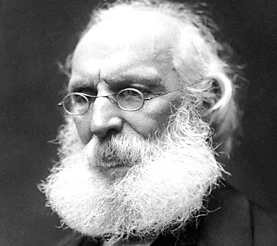
On this date in 1901, the first Nobel Peace Prizes were awarded — to economist Frédéric Passy (pictured above), co-founder of the Inter-Parliamentary Union; and to Henry Dunant the founder of the International Committee of the Red Cross.

Passy was an admirer of Cobden, and an active member in the French Liberal School of Political Economy that developed in the tradition of J.B. Say, Destutt de Tracy, Charles Comte and Charles Dunoyer, and Frédéric Bastiat. His published works include Leçons d’économie politique (1860-61); La Démocratie et l’Instruction (1864); L’Histoire du Travail (1873); Malthus et sa Doctrine (1868); and La Solidarité du Travail et du Capital (1875).

Categories
Thought

Arthur Latham Perry

“Wantonly and enormously heavy lies the hand of the national Government upon the masses of the people at present. But the People are sovereign, and not their transient agents in the government; and the signs are now cheering indeed, that they have not forgotten their native word of command, nor that government is instituted for the sole benefit of the governed and governing people, nor that the greatest good of the greatest number is the true aim and guide of Legislation.”

Arthur Latham Perry, 1890, preface to Principles of Political Economy, 1891.

Categories
ideological culture nannyism too much government

A Handle on Global Warming?

Folks in government are prone to overstepping their bounds.

Take, for example, the North Vancouver, British Columbia, City Council, which has instituted a mandatory sticker program for gas pumps. Starting in 2016, public service announcements will appear on North Vancouver gas pump nozzle handles.

What for?

To warn us of the danger of global warming.

Though the city government hasn’t accepted any particular message, Autoblog reports that the policy is clear: “The idea behind the warnings isn’t to shame people for filling up an internal combustion engine but instead to suggest that there could be more eco-friendly alternatives.”

Autoblog calls this new move a “small step to help fight the planet’s rising temperatures,” and that North Vancouver “will likely be the first city in the world” to enact such a mandate.

I am sure city pols are proud of themselves.

The ordinance was pushed by a not-for-profit Canadian group called Our Horizon. The goal? Make a “positive impact on the environment” with this “relatively low cost but highly visible strategy.”

The official estimate on costs? Between C$3,000 and C$5,000. Costs to businesses? “Gas station owners must display [the stickers] as a condition of their business license.”

Meanwhile, the unsettled science of climate change teeters ahead, as The Rebel Media reports: increased carbon dioxide may not cause extra warming (chlorofluorocarbons do that), but does induce greening, helping plant life to flourish.

When the truth finally emerges, out of the fog blown over the issues by groupthink, the findings of legitimate science probably won’t fit on a sticker.

This is Common Sense. I’m Paul Jacob.


Printable PDF

Global Warming, Vancouver, gas, sticker, climate change, common sense