Categories
education and schooling national politics & policies

The Bloomberg Limit

Afraid that scandal-alluring Hillary Clinton may prove too flawed a presidential candidate, some Democrats are talking to billionaire and former three-term New York City Mayor Michael Bloomberg about a 2016 presidential run.

Mrs. Clinton’s “slide is accelerating,” writes New York Post columnist Michael Goodwin. “A damaging new poll goes to the Achilles’ heel of her candidacy: People simply don’t trust her.”

Goodwin gushes, instead, at the “intriguing” possibility of Mr. Bloomberg.

“Wall Street wants Michael Bloomberg to run for president,” reports Business Insider, “but the billionaire isn’t budging.”

And for good reason. He can’t win.

It’s not just me saying so; it’s Michael Bloomberg himself. Last year, he told CBS Face the Nation that he’d consider running . . . “If I thought I could win.”

His honor should know, having spent more of his own money chasing public office than any person in American history.

Why did incumbent Mayor Bloomberg have to spend so much dough? He double-crossed voters on term limits. Bloomberg promised to oppose city council attempts to weaken the limits, but flipped to grab a third mayoral term for himself.

Voter anger “over his maneuver to undo the city’s term limits law,” reported The Times, became . . . well, a big problem. “To eke out a narrow re-election victory over the city’s understated comptroller, Mayor Michael R. Bloomberg spent $102 million of his own money, or about $183 per vote,” explained the New York Times in 2009, “. . . making his bid for a third term the most expensive campaign in municipal history.”

A similar price tag in a presidential race stands at roughly $23 billion. That’s a lot for anyone.

This is Common Sense. I’m Paul Jacob.


Printable PDF

Bloomberg Votes


Categories
Today

Declarations

On June 11, 1776, the Continental Congress appointed John Adams, Benjamin Franklin, Thomas Jefferson, Robert R. Livingston, and Roger Sherman to draft a declaration of independence from Great Britain.

In 1963, Thich Quang Duc, a Buddhist monk, doused himself with gasoline and set himself aflame in a busy Saigon intersection as a protest against South Vietnam’s lack of religious freedom.

Categories
Thought

David Crockett

“I gave my decisions on the principles of common justice and honesty between man and man, and relied on natural born sense, and not on law, learning to guide me; for I had never read a page in a law book in all my life.”


David Crockett, A Narrative of the Life of David Crockett (1834), chapter 9.

Categories
education and schooling folly

Learning Zone or War Zone

Given the stated purposes of the university — discovering, learning, teaching, engaging in open intellectual discourse — you might suppose that the pitched battles on campus would be primarily intellectual in nature. Persons set forth a view, others criticize it or elaborate a positive alternative, etc.

Open intellectual change, however heated, is indeed often what transpires.

But on many campuses, we also witness efforts to muzzle opponents of ideas or policies. The censors contend that disagreement as such constitutes a kind of assault on them, one from which their delicate selves must be forcibly and un-delicately protected.

Thus, campus activists at Northwestern University have reported Professor Laura Kipnis for “sexual harassment” for arguing, in The Chronicle of Higher Education, that “Sexual Paranoia [Is Striking] Academe,” as exemplified by prissy new rules about dating, jokes, the simplest of standard human interactions. According to her accusers, her article somehow creates a “hostile environment” for students eager to impose not only a Victorian screen on dating and talking, but also a screen, or lid, on any discussion of the Victorian screen. It’s just one example of a syndrome that could be multiplied ad infinitum.

What to do?

One thing, if you’re applying to college: omit as a prospect any school rife with the politics of repression. Boycott the anti-academic academy.

The second, larger solution: bypass the modern university altogether.

Modern technology can help with that. There are more and more ways to learn, and teach, with every day that passes.

This is Common Sense. I’m Paul Jacob.


Printable PDF

College Safe Zones


Categories
Today

Nat Hentoff

Apple shipped the first Apple II computer on June 10, 1977.

Born on this day: historian, jazz critic and civil libertarian Nat Hentoff (1925); children’s writer Maurice Sendak (1929); scientist and pioneer of “sociobiology” E. O. Wilson (1929).

Categories
Thought

Aristotle

“Man, when perfected, is the best of animals, but when separated from law and justice, he is the worst of all.”


Aristotle, Politics, Book One.

Categories
ballot access general freedom national politics & policies

The Duopoly Rules

As Americans brace themselves for another presidential campaign, USA Today’s editors hazard that the “configuration” of the Commission on Presidential Debates (CPD) “certainly creates an appearance of a political duopoly designed to limit independent voices.”

In 1987, after the League of Women Voters displeased the two major parties, the duopoly’s respective chairmen cooked up the CPD. Both men indicated that including non-R-or-D candidates was not part of the plan.

Thirteen years later, to keep the CPD’s tax-exempt status, the CPD established a “non-partisan” rule to “fix” an opportunity for minor parties: candidates must garner 15 percent support in the polls for inclusion in the debates.

Fast forward to today, and we witness a new group pushing the CPD to drop that requirement. Change the Rule wants one third-party nominee to be included, provided that candidate is on enough state ballots to mathematically have a chance to win the presidency.

“A third person in the general-election debates would make it harder for the major-party candidates to stick to talking points and platitudes,” agrees USA Today. But the newspaper worries about “unintended consequences,” that rather than the “centrist” they want in the debates, a new system might produce someone “on the far left or far right.”

Dear Editors, the election process ought not be designed to produce a certain pre-arranged ideological outcome.

Establishing a fair system entails not limiting voter choice ahead of time. Voters should get to hear from every candidate on enough ballots to be elected president.

This is Common Sense. I’m Paul Jacob.


Printable PDF

Duopoly


Categories
Today

Hospers

Roman Emperor Nero committed suicide on this day in June, 68 AD, ending Rome’s Julio-Claudian Dynasty, later written about with verve by Suetonius and Robert Graves.

Also on June 9, James Oglethorpe received a charter from the British crown to start the Georgia colony (1732); William Jennings Bryan resigned his position as Secretary of State under Woodrow Wilson, disgusted over the handling of the sinking of the Lusitania (1915); philosopher John Hospers — who would go on to run as a Libertarian candidate for the U.S. presidency in 1972 — was born in 1918 on the ninth of June.

Categories
crime and punishment

Cops as Robbers

If there’s anything that cops should not be, it’s robbers.

By “cops” I mean anyone, including prosecutors, charged with protecting us against criminals. The guardians should not become predators themselves.

Thankfully, these two presumptively opposite categories of men have not become wholly indistinguishable — yet. But every day brings more evidence that we’re skating closer to that abyss.

Consider the police raid on the Michigan home of Ginnifer Hency, whose alleged crime was possession of marijuana with “intent to deliver,” i.e., to use it to assuage her own disease-caused pain, as well as that of others for whom she is a registered caregiver. Hency is fully compliant with all state law. A judge has therefore dismissed the charges wrongly brought against her.

At least one official involved in the case, then, has exhibited the respect for rights and justice that all should be exhibiting.

Good.

But questions remain.

Why was her home raided to begin with? Why was she charged? Why did police use the raid to grab loot, everything from TV sets to her kids’ cell phones and iPads?

And why, after the charges were dismissed, did a prosecutor gloat that he didn’t have to return Hency’s belongings, that “I can still beat you in civil court”?

Actually, we don’t need to know the motives of such thugs to know that they must be stopped.

The Michigan House is considering bills that would make this type of legalized robbery harder.

It should also be punishable.

This is Common Sense. I’m Paul Jacob.


Printable PDF

Police Crooks


Categories
Thought

David Crockett

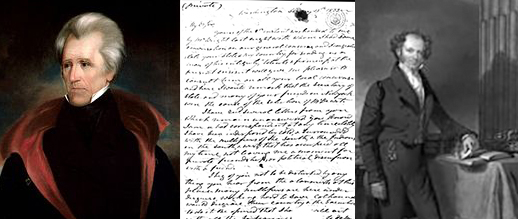
“It was expected of me that I was to bow to the name of Andrew Jackson, and follow him in all his motions, and windings, and turnings, even at the expense of my consciences and judgment. Such a thing was new to me, and a total stranger to my principles. . . . His famous, or rather I should say infamous Indian bill was brought forward and, and I opposed it from the purest motives in the world. Several of my colleagues got around me, and told me how well they loved me, and that I was ruining myself. They said it was a favorite measure of the President, and I ought to go for it. I told them I believed it was a wicked unjust measure, and that I should go against it, let the cost to myself be what it might; that I was willing to go with General Jackson in everything that I believed was honest and right; but further than this, I wouldn’t go for him, or any other man in the whole creation.”


David Crockett, A Narrative of the Life of David Crockett (1834), chapter 17.