Categories
Thought

Herbert Spencer

Whoso remembers that, among quite simple phenomena, causes produce effects which are sometimes utterly at variance with anticipation, will see how frequently this must happen among complex phenomena. That a balloon is made to rise by the same force which makes a stone fall; that the melting of ice may be greatly retarded by wrapping the ice in a blanket; that the simplest way of setting potassium on fire is to throw it into the water; are truths which those who know only the outside aspect of things would regard as manifest falsehoods. And, if, when the factors are few and simple, the results may be so absolutely opposed to seeming probability, much more will they be often thus opposed when the factors are many and involved. The saying of the French respecting political events, that “it is always the unexpected which happens” — a saying which they have been abundantly re-illustrating of late — is one which legislators, and those who urge on schemes of legislation, should have ever in mind.


Herbert Spencer, “Specialized Administration,” The Fortnightly Review(December 1871).
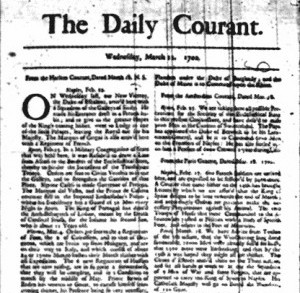
Categories
Today

Daily Courant

On March 11, 1702, The Daily Courant, England’s first national daily newspaper, was published for the first time. It was a one-sheet, concentrated on foreign news, sans commentary. The reverse side sported advertising. It was produced by Elizabeth Mallet (1672–1706), a printer and bookseller who lived, and published the paper, next to the Kings Arms tavern at Fleet Bridge in London.

Categories
folly general freedom ideological culture media and media people nannyism national politics & policies too much government

The Weight of Politics

Folks sure go crazy over diets. And that’s without the insanity of politics à la mode.

Consider the new Trump Diet — actually, several of them.

Actress Lena Dunham pledged to move to Canada if Donald Trump won last November. Instead, she stayed to offer a new weight loss scheme. “Everyone’s been asking like, ‘What have you been doing?’” she told Howard Stern. “And I’m like, ‘Try soul-crushing pain and devastation and hopelessness and you, too, will lose weight.’”

So, there is hope!

Conversely, comedian Judd Apatow complains, “It’s very hard to lose weight in the Trump era.” The acclaimed Hollywood producer, director and writer adds, “Most of us are just scared and eating ice cream.”

Not Barbra Streisand. Oh, yes, she tweeted: “Donald Trump is making me gain weight.” But she made it clear that “after the morning news, I eat pancakes smothered in maple syrup!” At least, her new song, “People, People Who Need Pancakes,” is moving up the scales — er, charts.

With mixed results for shedding pounds in the U.S., let’s graze elsewhere.

Certainly, no diet regime has been as successful, nor as rigorously tested, as the Maduro Diet — made famous in Venezuela by President Nicolás Maduro. The entire socialist nation is on it, and a new survey discovered that three of four Venezuelans lost “at least 19 pounds” during 2016.

Think socialism doesn’t produce results? Fat chance.

Still, such a steady diet of politics is hard to stomach. Instead, maybe we better concentrate on exercising . . .

. . . our freedom.

This is Common Sense. I’m Paul Jacob.


PDF for printing


Categories
Thought

Mary Wollstonecraft

I am more and more convinced, that poetry is the first effervescence of the imagination, and the forerunner of civilization.

Mary Wollstonecraft, from Hints originally intended to have been placed in the second part of A Vindicaton of the Rights of Woman (1792).
Categories
Today

The Mahatma

On March 10, 1922, Mahatma Gandhi was arrested in India, tried for sedition, and sentenced to six years in prison, only to be released nearly two years later for an appendicitis operation.

Categories
Accountability education and schooling free trade & free markets national politics & policies responsibility

The Leading Edge of Higher Ed

“People are paying tons of money to be kept out of the real world . . . being taught by people most of whom have never even worked in the business world. It’s kinda crazy.”

Well, yeah. There’s a lot of crazy in modern college life.

Which is one reason to work around it. That’s what Isaac Morehouse — quoted above — has done.

Morehouse is the founder of Praxis. You may have heard him on The Tom Woods Show or seen him interviewed on Fox News. “The mindset of ‘obey the rules, follow procedures, chase credentials, chase grades, and wait to be told what to do and you’ll be handed this magical ticket to a job,’” Morehouse told Fox’s Tucker Carlson, “it’s just not true.”

His alternative is simple: leverage the apprenticeship idea, combine it with counseling and instruction, and arrange with participating companies a guaranteed job at program’s end.

Our college system deserves a failing grade. Colleges sponge away fortunes (often borrowed) from students, while neglecting to train them to do much of anything but . . . college work.

This means not only that college grads have trouble finding work, but, as Mr. Morehouse discovered before he hit upon the Praxis idea, there are many, many companies trying to hire competent workers, but unable to find them.

A market opportunity!! Praxis unites demand and supply, connecting companies needing smart, energetic, cooperative workers with willing, eager young folks seeking meaningful (and well-paid) employment.

You can find a good overview of his effort — and a way to sign up! — at discoverpraxis.com.

Praxis’s testimonials are inspiring.

As the future should be.

This is Common Sense. I’m Paul Jacob.


Printable PDF


Categories
Today

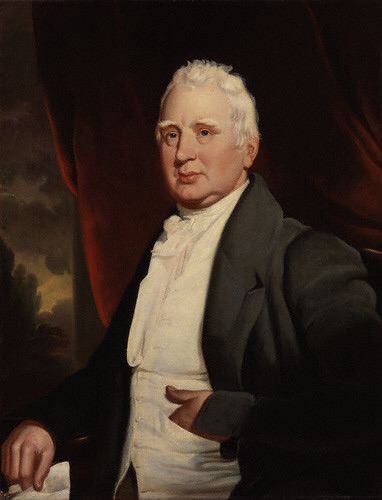
William Cobbett

March 9 marks the 1763 birthday of British pamphleteer and activist William Cobbett. Cobbett was known for his lifelong opposition to authority, and his later-in-life “radicalism,” which included his opposition to Britain’s protectionist Corn Laws, and his support for Catholic Emancipation. Cobbett died in 1835.

In 1776 on this date, Scottish philosopher Adam Smith first published An Inquiry into the Nature and Causes of the Wealth of Nations, which became the first widely accepted landmark work in the field of economics. It was not the first general treatise on the subject, however; that designation almost certainly belongs to banker Richard Cantillon’s Essai sur la Nature du Commerce en Général, cited by Smith in his more famous book. It is also worth noting that Étienne Bonnot de Condillac’s systematic treatise, Le Commerce et le Gouvernement, also saw publication in 1776.

On March 9, 1862, the USS Monitor and CSS Virginia fought to a draw in the Battle of Hampton Roads, the first battle between two ironclad warships. The Virginia was built on the remains of the USS Merrimack, and the battle is often referred to as between “the Monitor and the Merrimack.”

Categories
Thought

Herbert Spencer

When Edward I forbade all towns to harbour forestallers, and when Edward VI made it penal to buy grain for the purpose of selling it again, they were preventing the process by which consumption is adjusted to supply: they were doing all that could be done to insure alternations of abundance and starvation. Similarly with the many legislative attempts since made to regulate one branch or other of the food-industry, down to the corn-law sliding-scale of odious memory. For the marvellous efficiency of this organization we are indebted to private enterprise; while the derangements of it we owe to the positively-regulative action of the Government. Meanwhile, its negatively-regulative action, required to keep this organization in order, Government has not duly performed. A quick and costless remedy for breach of contract, when a trader sells, as the commodity asked for, what proves to be wholly or in part some other commodity, is still wanting.


Herbert Spencer, “Specialized Administration,” The Fortnightly Review(December 1871).

Categories
Accountability media and media people moral hazard national politics & policies responsibility

War on Page A-10

War was once big news. Now? Not so much.

Which may be a function of the never-ending War on Terror, no end in sight in Afghanistan and an Iraq War that is officially over . . . except for the fighting.

Last October, Green Party presidential candidate Jill Stein busied fact-checkers by claiming the U.S. was “bombing seven countries.” True, declared PolitiFact: Afghanistan, Iraq, Libya, Pakistan, Somalia, Syria and Yemen.

Yemen is better known after January’s raid that killed Navy SEAL Ryan Owens, wounded three other SEALs, and killed 14 to 25 Yemeni civilians, including children. Last week, during President Trump’s speech to Congress, Owens’s widow, Carryn, received a thunderous ovation.

But, as I argued at Townhall, “Ryan Owens and his widow and her three now fatherless children deserve more than applause.“ How about thoughtful policies and a Congress that holds the executive branch accountable?

Invading Iraq was a mistake. So was President Obama’s swerve over to destabilize Libya.

“We are not about to send American boys 9 or 10 thousand miles away from home to do what Asian boys ought to be doing for themselves,” President Lyndon Johnson once said . . . right before he sent more American soldiers to Vietnam.

Consider that U.S. Special Forces were deployed to 70 percent of the world’s nations in 2016. And, in recent weeks, President Trump asked for a $54 billion increase in military spending, and we have learned of Pentagon plans to seek a “significant increase in U.S. participation” against ISIS.

We owe it to those in uniform to ask tough questions, including: Is what we’re doing really worth a single American life?

This is Common Sense. I’m Paul Jacob.


Further reading:

Reason: Is the Military Really “Depleted” After Years of Record-High Spending?

The Atlantic: Fighting Terrorism With a Credit Card

The National Interest: America Is Never (Ever, Ever) Ending the War on Terror


Printable PDF


Categories
Thought

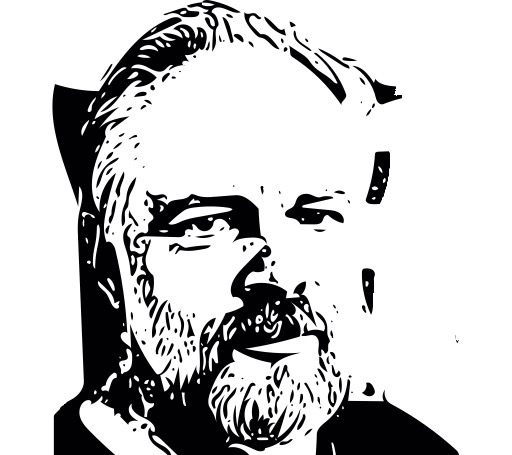
Philip K. Dick

Don’t try to solve serious matters in the middle of the night.


Philip K. Dick, “What The Dead Men Say” (1964).