Categories
Today

June 5

Harriett Beecher Stowe’s “Uncle Tom’s Cabin” begins its ten-month serialization in the National Era, an abolitionist publication, on this date in 1851.

Also on June 5, Scottish economist and philosopher Adam Smith is born (1723); British economist John Maynard Kenes was also born on this date (1883), June 5 deaths include American authors Stephen Crane (1900), author of “The Red Badge of Courage,” and O. Henry, America’s most influential short story writer, ten years later.

Categories
Today

June 4, 1896

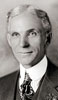
Henry Ford puts his first “quadricycle” through a test run on June 4, 1896. Ford would go on to transform transportation by applying the principles of the assembly line to automobile production, which would transform American life . . . and the world.

Categories
Today

June 3

Born on this date in 1821, Edward Livingston Youmans, American science writer and editor. In 1871 he started publication of the International Scientific Series of then-modern classics of scientific literature (published simultaneously first in New York, London, Paris, and Leipzig, later also in St. Petersburg and Milan), and the next year started the magazine Popular Science Monthly. In these and other venues he promoted the work of British philosopher Herbert Spencer, instigating Spencer to write the popular “The Study of Sociology,” and arranging publication of all of Spencer’s books with D. Appleton & Co., as well as many other international authors – with royalties on the sales (which in Spencer’s case reached 132,000 copies by 1890) going to the authors, despite the lack of an international copyright.

Categories
Today

June 2, Intolerable Acts

On June 2, 1774, the Quartering Acts were passed by British Parliament, part of a package of punitive acts devised as a response to colonial unrest. The acts did not have the desired effect; they did not quell resistence. Instead, they became known as the “Intolerable Acts,” and helped fuel the fires of secession, leading to the American Revolution.

Also on June 2: The Sack of Rome begins, and the Vandals bequeath their name to hooligans of the future (455 AD); President Grover Cleveland marries his ward, Frances Folsom, while in office (1886); the Bhutan Broadcasting Service brings TV to the Himalayan kingdom (1999).

Categories
Today

June 1, General Motors files for bankruptcy

On June 1, 2009, General Motors files for bankruptcy. The natural course of this fourth largest official business failure was forestalled by the auto maker bailout, which progressives would later ballyhoo as a complete success in that investors and businesses would jump on the rescued company – which is what would have happened in an unbailed-out bankruptcy, anyway.

June 1 births include musical geniuses Mikhail Glinka (1804) and Alanis Morissette (1974).

Categories
Today

May 31, Emperor Petronius Maximus

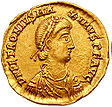
On May 31, 455, the Roman Emperor Flavius Petronius Maximus dies, soon followed by the Vandal sack of Rome. In a system without terms or term limits for rulers, his 78 days at the top of the Western Roman Empire ended as so many did, in violence – in this case by being stoned by an angry mob while fleeing the capital. His body was flung into the Tiber.

Also on this day, Genghis Khan was born in 1162 AD. On a more positive note, other May 31 births include less violent folks such as composer Marin Marais (1656), poet Walt Whitman (1814), philosopher and economist Henry Sidgwick (1838), clergyman Norman Vincent Peale, and actors Don Ameche (1908), Alida Valli (1921), Denholm Elliott (1922), Clint Eastwood (1930), and Brooke Shields (1965).

Categories
Today

SF White Night riots, 2 Irish hunger strikers die

On May 21, 1979, the White Night riots erupted in San Francisco following the manslaughter conviction of Dan White for the assassinations of George Moscone and Harvey Milk.

On May 21, 1981, Irish Republican hunger strikers Raymond McCreesh and Patsy O’Hara die on hunger strike in Maze prison.

Categories
Today

French law allowing slavery, Lindbergh & Earhart cross Atlantic, WH street closure

On May 20, 1802, Napoleon Bonaparte reinstated slavery in the French colonies, revoking its abolition in the French Revolution.

On May 20, 1927, Charles Lindbergh took off from Roosevelt Field in Long Island, New York, at 7:52 am, on the world’s first solo non-stop flight across the Atlantic Ocean. He would touch down at 10:22 pm the next day at Le Bourget Field in Paris.

On May 20, 1932, Amelia Earhart took off from Newfoundland to begin the world’s first solo nonstop flight across the Atlantic Ocean by a female pilot, landing in Ireland the next day.

On May 20, 1953, Gen. Henri Navarre assumed command of French Union Forces in Vietnam, decaring, “Now we can see [success in Vietnam] clearly, like light at the end of a tunnel.”

On May 20, 1995, President Bill Clinton permanently closed the two-block stretch of Pennsylvania Avenue in front of the White House to all non-pedestrian traffic as a security measure, calling the move “a responsible security step necessary to preserve our freedom, not part of a long-term restriction of our freedom.”

Categories
Today

Barlett dies, Wilde released, TE Lawrence dies

On May 19, 1795, Josiah Bartlett, a New Hampshire Patriot and signatory of the Declaration of Independence who also served as the state’s governor and Supreme Court chief justice, died.

On May 19, 1897, Oscar Wilde was released from jail after two years of hard labor. In 1891, the Marquess of Queensbury denounced Wilde as a homosexual. Wilde, who was involved with the marquess’ son, sued for libel but lost when evidence supported the marquess’ allegations. Because homosexuality was a crime in England, Wilde was arrested. His first trial resulted in a hung jury, but a second jury sentenced him to two years. After his release, Wilde fled to Paris and began writing The Ballad of Reading Gaol (1898). Wilde died just three years after his release.

On May 19, 1935, T.E. Lawrence, known to the world as Lawrence of Arabia, died as a retired Royal Air Force mechanic living under an assumed name. The legendary war hero, author, and archaeological scholar succumbed to injuries suffered in a motorcycle accident six days earlier. Sent to join the Arabian army of Hussein’s son Faisal as a liaison officer in 1916, Lawrence proving a gifted military strategist, helping the Arabs launch an effective guerrilla war against the Ottoman Turks. After the war, he lobbied hard for independence for Arab countries, appearing at the Paris peace conference in Arab robes.

Categories
Today

Beijing protests begin, WWI Selective Service Act, RI outlaws slavery

On May 18, 1989, a crowd of protesters, estimated to number more than one million, marched through the streets of Beijing calling for a more democratic political system. Less than a month later, Chinese troops would forcibly remove protesters from Tiananmen Square, killing an estimated 2,500 and injuring as many as 10,000.

On May 18, 1917, six weeks after the United States formally entered the First World War, the U.S Congress passed the Selective Service Act, giving the president the power to conscript soldiers. Of the almost 4.8 million Americans who eventually served in the war, some 2.8 million were drafted.

On May 18, 1652, Rhode Island passed the first law in English-speaking North America making slavery illegal.