 On July 5, 1687, Isaac Newton publishes the work for which he is most honored, the Philosophiæ Naturalis Principia Mathematica. In 1811 on the same date, Venezuela declares independence from Spain. In 1819, Admiral William Cornwallis dies. In 1937, Hormel introduces SPAM, the canned “meat” product, which helps America win World War II. In 1945, U.S. declares the Philippines liberated. In 1947, Larry Doby joins the Cleveland Indians, becoming the American League’s first black player. In 1971 on this date, President Richard Nixon signs the 26th Amendment to the U.S. Constitution, lowering the voting age to 18 years.
Category: Today
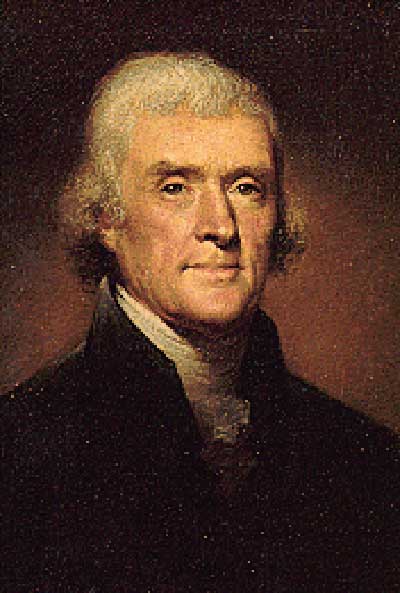 The most important document in American history is titled this way, in five lines: “In CONGRESS, July 4, 1776./ A DECLARATION / By the REPRESENTATIVES of the
/ UNITED STATES OF AMERICA, / In GENERAL CONGRESS assembled.” This “Declaration of Independence” begins with one of the best preambles ever: “WHEN in the course of human Events, it becomes necessary for one People to dissolve the Political Bands which have connected them with another, and to assume among the Powers of the Earth, the separate and equal Station to which the Laws of Nature and of Nature’s God entitle them, a decent Respect to the Opinions of Mankind requires that they should declare the causes which impel them to the Separation.”
And it then goes on to assert a vital philosophical position: “We hold these Truths to be self-evident, that all Men are created equal, that they are endowed by their Creator with certain unalienable Rights, that among these are Life, Liberty, and the pursuit of Happiness—-That to secure these Rights, Governments are instituted among Men, deriving their just Powers from the Consent of the Governed, that whenever any Form of Government becomes destructive of these Ends, it is the Right of the People to alter or abolish it, and to institute a new Government, laying its Foundation on such Principles, and organizing its Powers in such Form, as to them shall seem most likely to effect their Safety and Happiness.”
It was a document that changed American history — and the world’s. But it wasn’t the only one to do so: The United States’ Constitution followed in 1787. But some documents can’t be fit onto a broadside. In a Saturday Review article published on July 4, 1953, historian Eric F. Goldman identified 13 “Books That Changed America.” These books were Thomas Paine’s Common Sense, The Federalist Papers, Harriet Beecher Stowe’s Uncle Tom’s Cabin, Herbert Spencer’s The Study of Sociology, Henry George’s Progress and Poverty, Charles Sheldon’s In His Steps, Sigmund Freud’s The Interpretation of Dreams, Charles Beard’s An Economic Interpretation of the Constitution, John Maynard Keynes’s The Economic Consequences of the Peace, John Dewey’s Human Nature and Conduct, Sinclair Lewis’s Babbitt, Lincoln Steffens’s Autobiography, and Wendell L. Willkie’s One World.
 In New York City, July 3, 1819, the Bank of Savings is opened — the first of its kind in the country. In 1848, slaves are freed in the Danish West Indies on July 3. In 1890 on this date, Idaho becomes the 43rd state of the union. July 3 births include:
- Leoš Janáček, Czech composer, 1854
- Ralph Barton Perry, American philosopher, 1876
- Alfred Korzybski, Polish linguist, 1879
- Franz Kafka, Czech-German author of “Metamorphosis,” 1883
- Ruth Crawford Seeger, American avant-garde composer and mother of Pete Singer, 1901
- Dave Barry, American humorist
Happy Birthday, Dave!
 The Continental Congress adopts a resolution to sever ties with the Kingdom of Great Britain on July 2, 1776. The next year on this date the independent Vermont Republic abolishes slavery, fourteen years before joining the union, thereby gaining the honor of being the first U.S. territory to make slavery against the law.
Jean-Jacques Rousseau died on this date in 1778. July 2 marks the death dates of a number of major American authors:
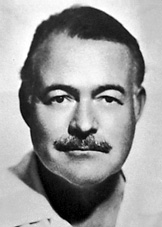
- Ernest Hemingway, 1961
- Vladimir Nabokov, 1977
- Mario Puzo, 1999
 Emancipation Day, or Keti Koti, in Suriname, celebrated on July 1 because, on that day in 1863, the Netherlands “cut the chains” of slavery. (It took another decade for full emancipation to occur, as there was a transition period, but the initial declaration became the celebratory day.)
In 1908, “SOS” is adopted as the international distress signal.
In 2008, allegations of election fraud spur mass rioting in Mongolia.
July 1 birthdays include Lew Rockwell’s in 1944 — Rockwell once served as an aide to Ron Paul, founded the Ludwig von Mises Institute, and is a popular blogger — and singer Debbie Harry.
In 1894 on July 1, private detective Allan Pinkerton died; two years later, author Harriet Beecher Stowe died; other July 1 deaths include:
- Statesman John Hay, 1905
- Composer Erik Satie, 1925
- Omnihypergenius R. Buckminster Fuller, 1983
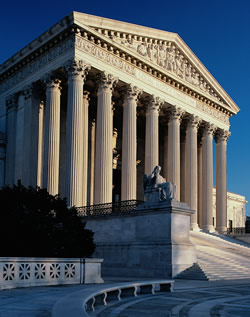 On June 26, 1997, the Supreme Court of the United States rules that the Communications Decenty Act violates the First Amendment. Six years later, to the date, the Supreme Court rules that gender-based sodomy las are unconstitutional. Exactly six more years later, the Supreme Court decides, in District of Columbia v. Heller, that the Second Amendment to the United States Constitutional protects an individual right to bear arms, at least in the District of Columbia, which is directly supervised by Congress.
Apple ships the first Apple II computer on June 10, 1977.
Born on this day: historian, jazz critic and civil libertarian Nat Hentoff (1925); children’s writer Maurice Sendak (1929); scientist and pioneer of “sociobiology” E. O. Wilson (1929).
June 10 deaths include Alexander the Great (323 BC), Angelina Weld Grimké (1958); and Louis L’Amour (1988).
Categories
June 8, 1972
 On June 8, 1972, a 9-year-old girl heard a soldier scream — a warning to run — and a few seconds later she saw the village temple her family had sought refuge in engulfed in flames. It was napalm. American and North Vietnamese forces, fighting over the village, sent her running screaming, her clothes burned off, her skin melting.
A photographer snapped a shot of her grave distress, and it became one of the most unforgettable photographs of the Vietnam War.
There’s something like a happy ending to the story. The girl did not die. The photographer took her to a hospital, and insisted she be treated. Her face had never been affected by the burns, which covered 30 percent of her body, and her skin slowly healed. Phan Thi Kim Phuc, the mother of two children, recently visited with the photographer, Nick Ut, who had saved her life.
Categories
June 7, 1776
 The first official move towards secession from the British Empire occurs on June 7, 1776, when Richard Henry Lee presents a resolution to the Continental Congress, which is seconded by John Adams.
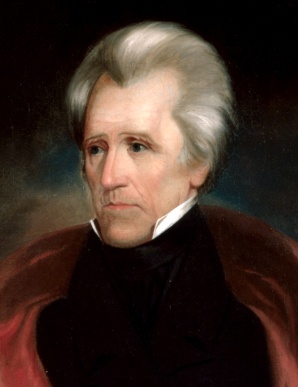 In 1883, Andy Jackson becomes the first U.S. president to ride on a train.
Also on June 6, in 2005, the U.S. Supreme Court upholds a federal law banning marijuana. Justice Clarence Thomas’s dissent on this case becomes an instant classic