 The Continental Congress adopts a resolution to sever ties with the Kingdom of Great Britain on July 2, 1776. The next year on this date the independent Vermont Republic abolishes slavery, fourteen years before joining the union, thereby gaining the honor of being the first U.S. territory to make slavery against the law.
Jean-Jacques Rousseau died on this date in 1778. July 2 marks the death dates of a number of major American authors:
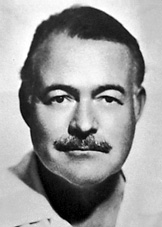
- Ernest Hemingway, 1961
- Vladimir Nabokov, 1977
- Mario Puzo, 1999
 Emancipation Day, or Keti Koti, in Suriname, celebrated on July 1 because, on that day in 1863, the Netherlands “cut the chains” of slavery. (It took another decade for full emancipation to occur, as there was a transition period, but the initial declaration became the celebratory day.)
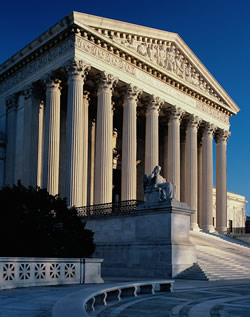 On June 26, 1997, the Supreme Court of the United States rules that the Communications Decenty Act violates the First Amendment. Six years later, to the date, the Supreme Court rules that gender-based sodomy las are unconstitutional. Exactly six more years later, the Supreme Court decides, in District of Columbia v. Heller, that the Second Amendment to the United States Constitutional protects an individual right to bear arms, at least in the District of Columbia, which is directly supervised by Congress.
 The first official move towards secession from the British Empire occurs on June 7, 1776, when Richard Henry Lee presents a resolution to the Continental Congress, which is seconded by John Adams.
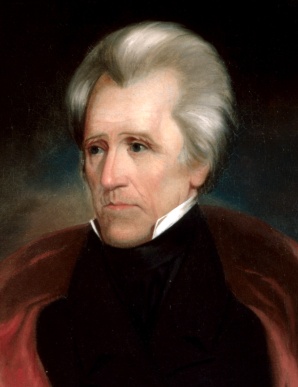 In 1883, Andy Jackson becomes the first U.S. president to ride on a train.
  Henry Ford puts his first “quadricycle” through a test run on June 4, 1896. Ford would go on to transform transportation by applying the principles of the assembly line to automobile production, which would transform American life . . . and the world.
 Born on this date in 1821, Edward Livingston Youmans, American science writer and editor. In 1871 he started publication of the International Scientific Series of then-modern classics of scientific literature (published simultaneously first in New York, London, Paris, and Leipzig, later also in St. Petersburg and Milan), and the next year started the magazine Popular Science Monthly. In these and other venues he promoted the work of British philosopher Herbert Spencer, instigating Spencer to write the popular “The Study of Sociology,” and arranging publication of all of Spencer’s books with D. Appleton & Co., as well as many other international authors – with royalties on the sales (which in Spencer’s case reached 132,000 copies by 1890) going to the authors, despite the lack of an international copyright.