In 1776, on June 12, the Fifth Virginia Convention at Williamsburg, Virginia, unanimously adopted a Declaration of Rights, several weeks prior to the adoption of the state’s constitution. George Mason, who drafted the document, stated clearly in the preamble that rights must be “the basis and foundation of Government.”
The first four planks run as follows:
I. That all men are by nature equally free and independent, and have certain inherent rights, of which, when they enter into a state of society, they cannot, by any compact, deprive or divest their posterity; namely, the enjoyment of life and liberty, with the means of acquiring and possessing property, and pursuing and obtaining happiness and safety.
II. That all power is vested in, and consequently derived from, the people; that magistrates are their trustees and servants, and at all times amenable to them.
III. That government is, or ought to be, instituted for the common benefit, protection, and security of the people, nation or community; of all the various modes and forms of government that is best, which is capable of producing the greatest degree of happiness and safety and is most effectually secured against the danger of maladministration; and that, whenever any government shall be found inadequate or contrary to these purposes, a majority of the community hath an indubitable, unalienable, and indefeasible right to reform, alter or abolish it, in such manner as shall be judged most conducive to the public weal.
IV. That no man, or set of men, are entitled to exclusive or separate emoluments or privileges from the community, but in consideration of public services; which, not being descendible, neither ought the offices of magistrate, legislator, or judge be hereditary.
 politician in Great Britain who, after reading the writings of Herbert Spencer, became a radical individualist, promoting a doctrine he called “voluntaryism.”
 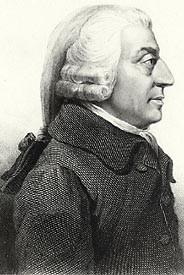 On June 16, 1723, economist and social philosopher Adam Smith was born. The author of The Theory of Moral Sentiments and An Inquiry into the Nature and Causes of the Wealth of Nations, Smith’s influence on the theory and practice of limited government and individual liberty has been enormous.
 Lord Byron read a collection of ghost stories to his house guests, on June 16, 1816. This inspired one guest to write the first modern vampire story, and another, Mary Shelley, to write “Frankenstein: or, The Modern Prometheus” — a literary classic that some say started modern science fiction.
  The Oregon Treaty, signed June 15, 1846, established the boundary between Great Britain’s Canadian territory and the United States of America, from the Rocky Mountains to the Strait of Juan de Fuca, using the 49th Parallel as the handy marker. However, the treaty was not exactly clear on the territorial status of the San Juan Islands, so exactly 13 years later, to the day, a war erupted, over a shot pig.
 Constantine the Great and co-emperor Valerius Licinius signed the Edict of Milan, proclaiming religious tolerance throughout the Roman Empire.
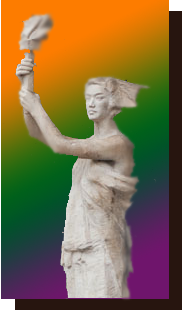 On May 30, 1989, student demonstrators unveil a 33-foot high “Goddess of Democracy and Freedom” statue in Tiananmen Square.