July Fourth — American “Independence Day” — events include:
1054 – A supernova was spotted by Chinese, Arab, and possibly Amerindian observers near the star Zeta Tauri, remaining, for several months, bright enough to be seen during the day. Its remnants form the Crab Nebula.
1776 — The Second Continental Congress approved the Declaration of Independence, thus formalizing its policy of secession from the rule of the Kingdom of Great Britain.
1803 — The Louisiana Purchase was announced to the American people.
1804 – Nathaniel Hawthorne, American author of “The Scarlet Letter,” “House of Seven Gables,” “The Blithesdale Romance,” and other classics, was born.
1826 – Thomas Jefferson, third president of the United States, died a few hours earlier on the same day as John Adams, second president of the United States, on the fiftieth anniversary of the adoption of the United States Declaration of Independence.
1826 – Stephen Foster, composer of “Old Black Joe,” “Beautiful Dreamer, and many other classic American songs, was born.
1827 – Slavery was abolished in New York State.
1831 – Samuel Francis Smith wrote “My Country, ‘Tis of Thee” for Boston’s July 4th festivities, set to the tune of Great Britain’s national anthem, “God Save the King/Queen.”
2009 – The Statue of Liberty’s crown re-opened to the public after eight years of closure that resulted from security concerns following the September 11, 2001, attacks.

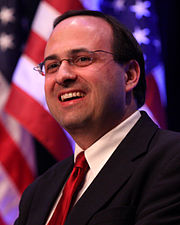
 On July 31, 1703, Daniel Defoe — who would later become famous as the author of “Robinson Crusoe” and other literary works — was placed in a pillory for the crime of seditious libel. The sedition pertained to a satirical pamphlet he had published, “The Shortest-Way with the Dissenters; Or, Proposals for the Establishment of the Church.” The mob pelted him with flowers.
 On July 30, 1980, the Pacific Islands nation of Vanuatu gained independence — it had previously been a French-English colony, New Hebrides — with foreign government aid from a variety of First World nations, placing as prime minister the very statist Walter Lini. Lini’s first act was to send troops to crush the Nagriamel secessionist movement on the island of Espiritu Santo, imprisoning its leader, Jimmy Stevens (pictured), in August.
 On July 16, 1931, Ethiopia’s Emperor Haille Selassie I signed a new Constitution. Not exactly a model of classical liberal limitations on government, the new document proved that the emperor was in keeping with the time, which was a period of weakening constitutional limits in America, Europe, and Britain. A flavor of the document can be gained by its most “rights-oriented” measures:
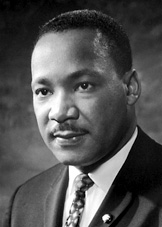 On July 11, 1977, Martin Luther King, Jr., was posthumously awarded the Presidential Medal of Freedom.
 July 3 marks the 1947 birthday of Dave Barry, American columnist and author.