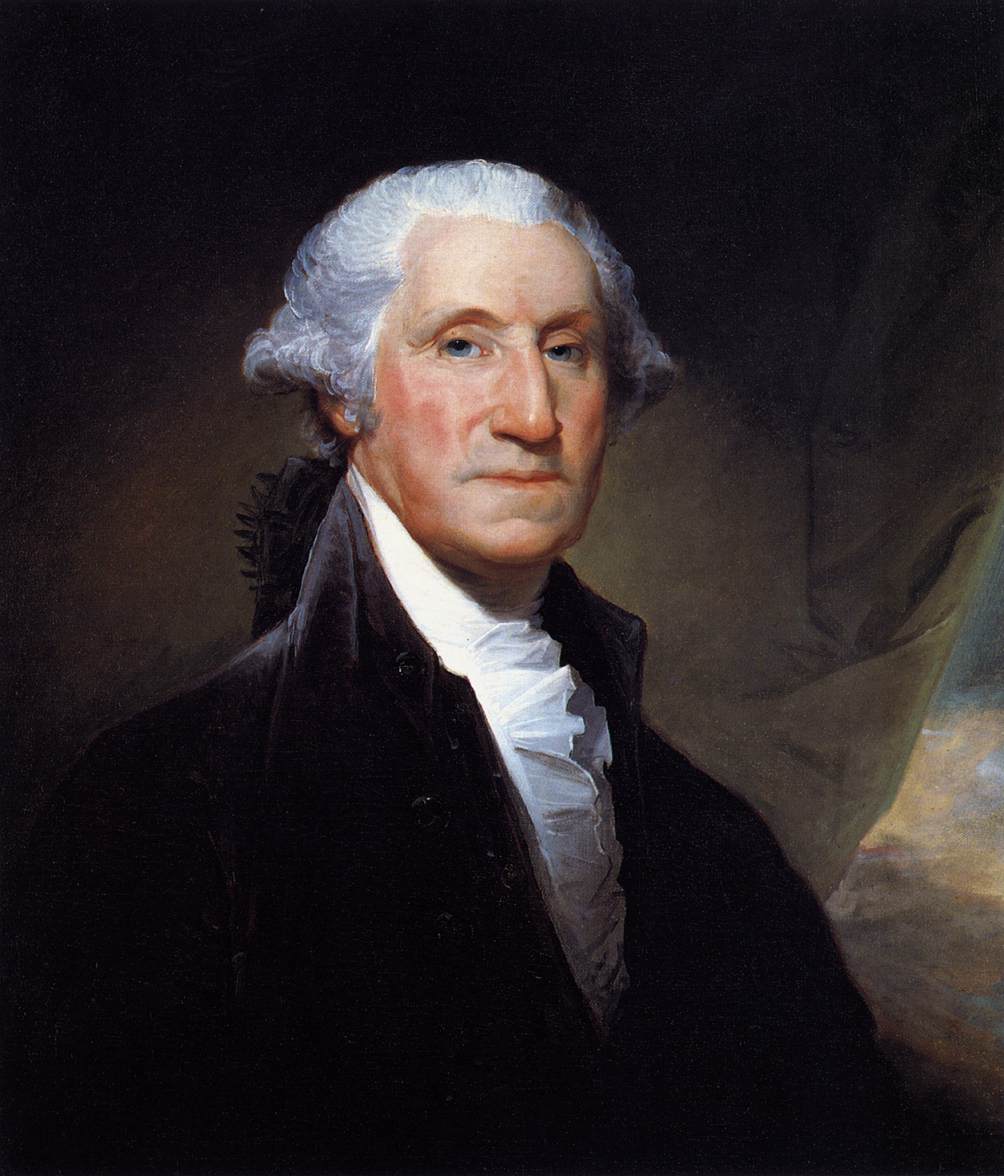
 On October 2, 1789, George Washington sent the proposed Constitutional amendments (the United States Bill of Rights) to the States for ratification.
On the same date in 1919, U.S. President Woodrow Wilson suffered a massive stroke, leaving him partially paralyzed, preventing him from reacting to the economic downturn following the Great War in a Progressive fashion, making his response de facto laissez faire. One insider, and skeptic of Progressive hubris, cattily referred to Wilson’s incapacitation as “a stroke of luck.”
His successor in office, President Warren G. Harding, would go on to massively cut spending as well as taxes, and take on regulation as well. He also released Woodrow Wilson’s domestic war prisoners — ranging from journalists, ordinary folk to Eugene V. Debs — who had dissented from Wilson’s involvement in the war.
The Depression of the early 1920s, though as deep as the early 1930s’, proved remarkably brief, thanks to Harding . . . and Wilson’s “stroke of luck.”
 October 6 is the traditional date commemorating the martyrdom of William Tyndale, in 1536. Tyndale translated the New Testament and much of the Old into the English of his day, and in the process added more new words into the English language than any other single writer, with the possible exception of Shakespeare. He also laid the ground for the later, and more famous, King James Edition of the Bible.
  On October 4, 2004, SpaceShipOne became the first private craft to fly into space, thereby winning the Ansari X Prize for private spaceflight.
 On October 3, 1919, James M. Buchanan was born. Buchanan would go on to an illustrious career in economics, developing the theory of “Public Choice,” and receiving the 1986 Nobel Memorial Prize in Economic Sciences for his work. His books include “Cost and Choice,” “The Calculus of Consent” (with Gordon Tullock), and “The Limits of Liberty: Between Anarchy and Leviathan.”
 On September 30, 1943, Franz Oppenheimer — a German-Jewish sociologist and political economist, who most famously published on the fundamental sociology of the state — died.