Irish-English medievalist, theologian, and fantasy writer Clive Staples Lewis was born on November 29, 1898.
Categories
Irish-English medievalist, theologian, and fantasy writer Clive Staples Lewis was born on November 29, 1898.
On November 28, 1893, women voted in a national election for the first time . . . in New Zealand. On the same date in 1917, the Estonian Provincial Assembly declared itself the sovereign power of Estonia. November 28 also marks the independence of Mauritania from France (1960), and East Timor from Portugal.
In 1894, on November 28, economics journalist Henry Hazlitt was born. Halitt went on to write “Economics in One Lesson,” “Time Will Run Back,” and several books criticizing Keynesianism. He was the main proponent of the work of Ludwig von Mises and F.A. Hayek in America during the 1940s and 1950s.
November 27, 1295, the first elected representatives from Lancashire were called to Westminster by King Edward I to attend what later became known as “The Model Parliament.” On the same date in 1895, Alfred Nobel signed his last will and testament, thereby establishing the Nobel Prizes.
November 26, 1792, saw the birth of Sarah Grimké, American abolitionist and feminist.
November 25, 1975, Suriname gained independence from the Netherlands. On the same month and date 17 years later, the Federal Assembly of Czechoslovakia voted to split the country into the Czech Republic and Slovakia (officially disjoined as of January 1, 1993).
November 24th marks the birthdays of philosopher Baruch Spinoza (1632) and three influential Americans: ragtime composer Scott Joplin (1868), self-help writer Dale Carnegie (1888), and conservative editor, writer, and television personality William F. Buckley Jr. (1925).
November 22 marks the death dates of a number of eminent writers, including that of British-American novelist and essayist Aldous Huxley and Irish-British novelist, theologian and medieval scholar C.S. Lewis, both of whom died in 1963, the same day as the assassination of American President John F. Kennedy. British novelist Anthony Burgess died exactly 30 years later.
The date also marks the birth of the great British novelist George Eliot (Mary Ann Evans), in 1819.
Recommended reading from these authors include:
“Silas Marner” (1861), a short and brilliant novel by George Eliot.
“Earthly Powers” (1980), a massive novel about life in the 20th century, by the ever-iconoclastic and hard-to-pin-down Anthony Burgess.
“The Humanitarian Theory of Punishment” (1949) and “Till We Have Faces” (1956), the former being C.S. Lewis’s thoughtful essay on the nature of modern tyranny, and the latter being what some regard his best novel, a retelling of the Psyche myth.
“Brave New World” (1931) and “Brave New World Revisited” (1958), the former is Aldous Huxley’s classic dystopian satire on technological tyranny, and the latter is the author’s survey of the issues raised by — and the degrees to which reality conforms to — his earlier fictional prophecy.
On November 21, 1620, Plymouth Colony settlers signed the Mayflower Compact. On this day in 1922, Rebecca Latimer Felton of Georgia took the oath of office, becoming the first female United States Senator.
November 21st birthdays include:
1694 – Voltaire, French philosopher (d. 1778)
1729 – Josiah Bartlett, American signer of the Declaration of Independence (d. 1795)
1870 – Alexander Berkman, anarchist (d. 1936), who shot but did not kill industrialist Henry Clay Frick
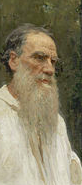 On November 20, 1910, Leo Nikolayevich Tolstoy, Russian author of several classic novels, including “War and Peace,” and novellas such as “The Death of Ivan Ilyich,” died. Late in his life he wrote a “Letter to a Hindoo” and the essay “The Kingdom of God Is Within You” that later served as a major influence on Mohandes K. Gandhi and the non-violent independence movement in India.
On November 19, 1863, President Abraham Lincoln delivered the Gettysburg Address at the ceremonial dedication of the military cemetery in Gettysburg, Pennsylvania, appropriating an old phraseology for republican government — “of the people, by the people, for the people” — and giving it its most memorable usage.
On the same date in 1955, National Review published its first issue.