Categories
Today

John Calvin & Desmond Tutu

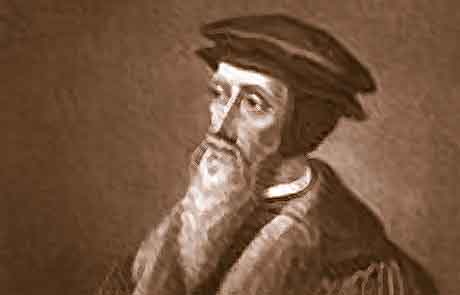
John Calvin [pictured above] returned to Geneva on September 13, 1541, after three years of exile. His subsequent work in church reform and theology became known as Calvinism, and profoundly influenced the course of European and (eventually) American civilization, including several concepts of servitude and liberty.

On the same date in 1989, Desmond Tutu led South Africa’s largest march aganst Apartheid.

Categories
Today

Switzerland federalized

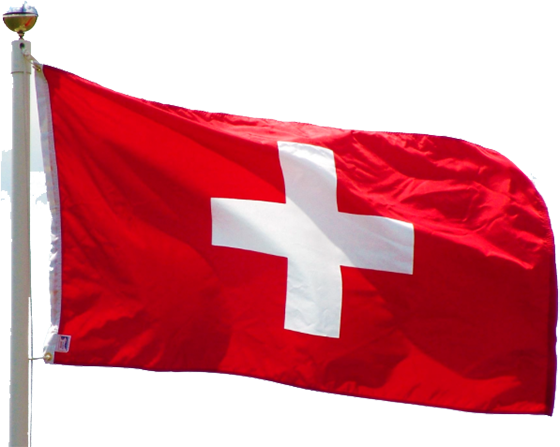
On September 12, 1848, Switzerland became a unified federal state with a constitution limiting central government powers and providing decentralized state (canton) power patterned on the U.S. Constitution.

In 1880 on this date, H.L. Mencken was born. One of his earliest books was a debate with a socialist, The Men versus The Man (1910); his greatest lasting contribution was probably The American Language (1919) and its supplements (1945, 1948). His work has been collected in numerous anthologies, such as Alistair Cooke’s Vintage Mencken (1955) and the author’s own Mencken Chrestomathy.

Categories
Today

9/11

September 11 marks several dates in the history of the clash between the West and the Islamic East:

• In 1526, the Ottoman army occupied Buda after the crushing Hungarian defeat in the Battle of Mohács.

• In 1565, Ottoman forces retreated from Malta, ending the Great Siege of Malta.

• In 1609, an expulsion order announced against the Moriscos of Valencia began the expulsion of all Spain’s Moors.

• In 2001, Muslim jihadists associated with Al Qaida hijacked two airliners flying out of Boston, Massachusetts, one out of Newark, N.J., and another out of Washington’s Dulles airport, and comandeered two of those jets into the World Trade Center in New York and one into the Pentagon near the nation’s capital. The fourth crashed into a field near Shanksville, Pennsylvania — making this flight, United 93, the only one of the terrorist attacks that day prevented from achieving its target, the agency of the prevention being the united efforts of civilians on the flight.
Categories
Today

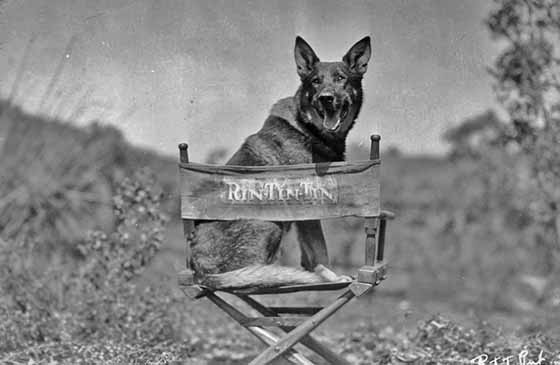
Rin Tin Tin

September 10, 1918, is the estimated date of birth for Rin Tin Tin, one of a litter of shell-shocked puppies found by an American serviceman in a bombed-out kennel in Lorraine, less than two months before the end of World War I. The dog went on to become the lead actor in a number of very popular films, and one of the great celebrities of his age.

Categories
Today

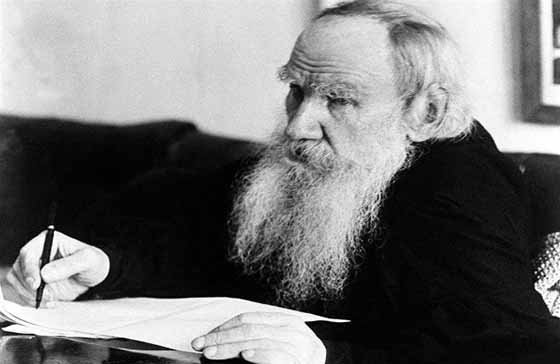
Leo Tolstoy

On September 9, 1828, Count Lev Nikolayevich Tolstoy was born. Known best as Leo Tolstoy, he became the celebrated author of the novels Anna Karenina and War and Peace, as well as the novellas and short stories entitled “Family Happiness,” “The Death of Ivan Ilyich,” and “The Kreutzer Sonata.” His political and religious ideas heavily influenced Gandhi and Martin Luther King, Jr.

Tolstoy died in 1910.

Categories
Today

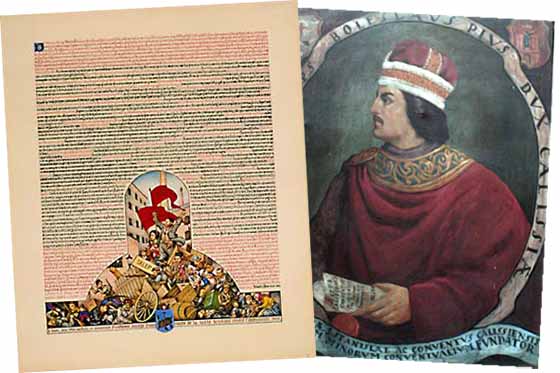
Statute of Kalisz

On September 8, 1264, Boleslaus the Pious, Duke of Greater Poland, promulgated the Statute of Kalisz, guaranteeing Jews safety and personal liberties and giving battei din jurisdiction over Jewish matters.

On the same date in 1883, former U.S. President Ulysses S. Grant drove in the final “golden spike” completing the Northern Pacific Railway in a ceremony at Gold Creek, Montana.

Categories
Today

Fannie and Freddie

On September 7, 2008, the US Government “took control” of the two largest mortgage financing companies in the United States, Fannie Mae and Freddie Mac. Both of these had been created by Congress as part of a concerted plan to make home ownership easier, and both had gotten completely out of hand during the many years of their existence, especially under new rules established by politicians in the 1990s. The after-market that they helped create — the packaged mortgage market — was what imploded in 2008, leading to the current economic slump.

Categories
Today

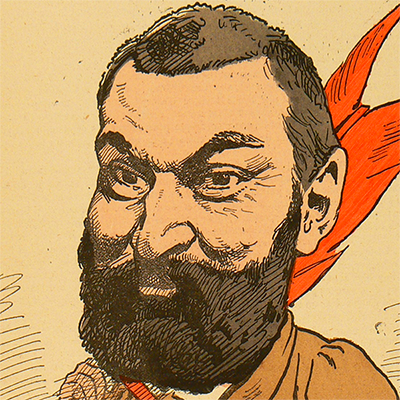
Yves Guyot

On September 6, 1843, Yves Guyot was born. A journalist, economist, and political activist, he once endured a six-month prison term for his campaign against the prefecture of police. He served as minister of public works under the premiership of P.E. Tirard in 1889, retaining his portfolio in the cabinet of Charles de Freycinet until 1892. A free-trade liberal, he lost his seat in the election of 1893 owing to his militant attitude against socialism. His many books included The Principles of Social Economy (1892), The Tyranny of Socialism (1894), The Comedy of Protection (1906), Socialistic Fallacies (1910), and Where and why Public Ownership Has Failed (1914). He served as editor of Journal des Économistes, following the Belgian economist Gustave de Molinari.

Categories
Today

First President of Congress

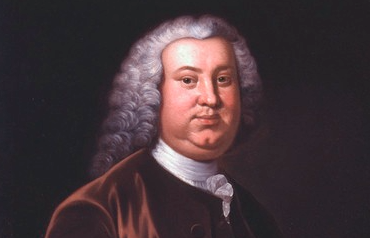
Responding to British Parliament’s enactment of the Coercive Acts in the American colonies, the first session of the Continental Congress convened at Carpenter’s Hall in Philadelphia, on September 5, 1774. Virginian Peyton Randolph (pictured) was appointed as the first president of Congress. John Adams, Patrick Henry, John Jay and George Washington were among the delegates.

Categories
Today

Rome Fell

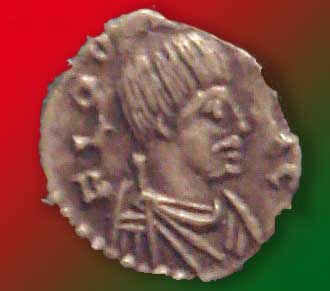
Odoacer, a German “barbarian,” ousted Romulus Augustus, the last emperor of the Western Roman Empire, thus ending that empire on September 4, 476.