Categories
Today

Americanisms

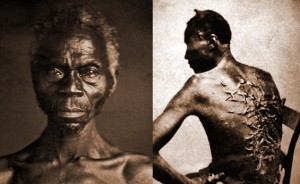
On April 14, 1775, the Society for the Relief of Free Negroes Unlawfully Held in Bondage, the first American organization committed to the abolition of slavery, was formed in Philadelphia.

On April 14, 1818, Noah Webster published his American Dictionary of the English Language, one of the first lexicons to include distinctly American words. The dictionary, which took him more than two decades to complete, introduced more than 10,000 “Americanisms.”

On April 14, 1988, representatives of the Soviet Union, Afghanistan, the United States, and Pakistan signed an agreement calling for the withdrawal of Soviet forces from Afghanistan. In exchange for an end to the disputed Soviet occupation, the United States agreed to end its arms support for the Afghan anti-Soviet factions, and Afghanistan and Pakistan agreed not to interfere in each other’s affairs.
Categories
Today

Thomas Jefferson

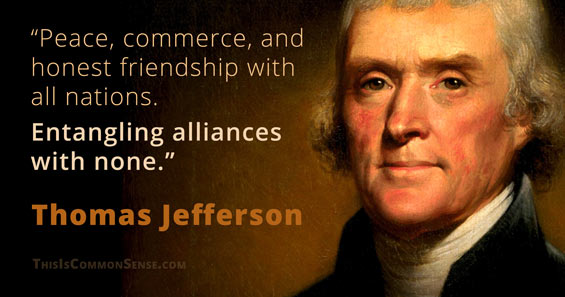
On April 13, 1743, Thomas Jefferson was born. Author of Notes on the State of Virginia and the first draft of the United States’ Declaration of Independence, Jefferson was also a scientist, philosopher, inventor, diplomat, and American politician. He also composed music, designed buildings, and translated works from his favorite French writers, whom he had met in his diplomatic missions to Paris.

Categories
Today

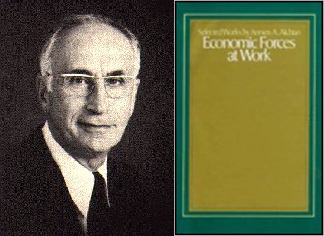
Armen Alchian

On April 12, 1914, American economist Armen Alchian was born. His contributions to economic theory and teaching were many and varied — his textbook, co-authored with William R. Allen, University Economics (also titled Exchange and Production), was widely considered one of the finest intermediate texts in microeconomics — but he remains perhaps best known for his work on property rights.

Alchian died in 2014, in late February, at the age of 99.

Categories
Today

Good Friday Agreement

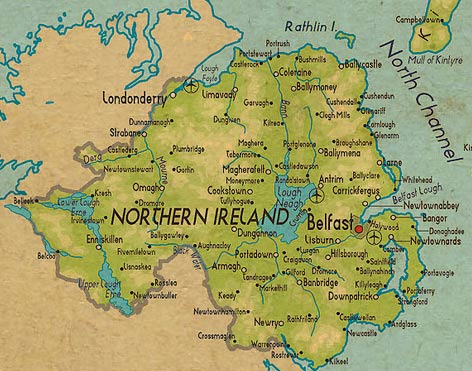
On the hundredth day of 1998, the Northern Ireland peace talks ended with an historic agreement, dubbed the Belfast, or Good Friday Agreement. The accord was reached after nearly two years of talks and 30 years of conflict — 19 years ago today.

Categories
Today

Independence Maintained, Gained

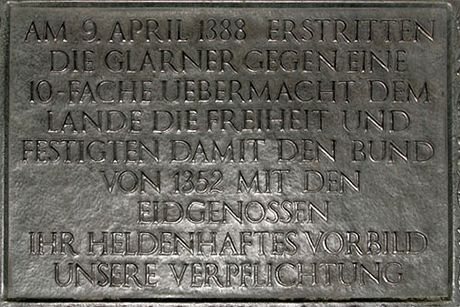
Despite being outnumbered 16 to one, forces of the Old Swiss Confederacy proved victorious over the Archduchy of Austria in the Battle of Näfels, April 9, 1388.

On this date in 1991, Georgia declared its independence from the Soviet Union.

Categories
Today

17th Amendment

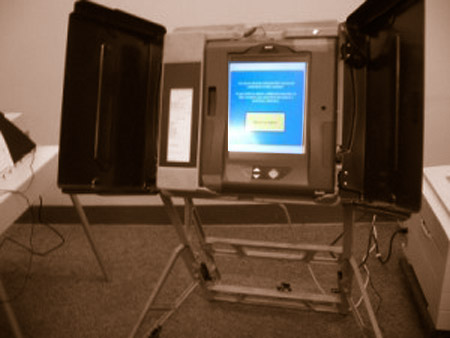
On April 8, 1913, the 17th amendment to the Constitution, providing for the popular election of U.S. senators, was ratified.

Categories
Today

Prohibition Begins to End

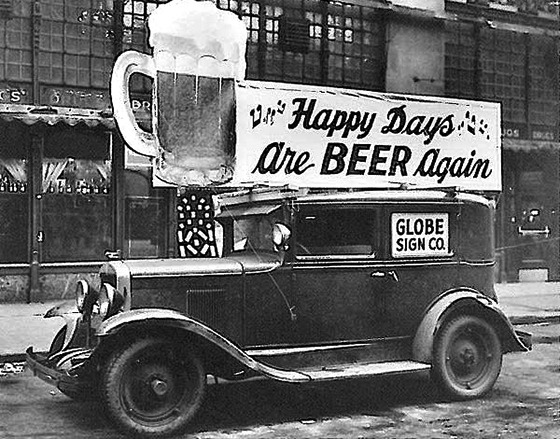
On April 7, 1933, Prohibition in the United States was repealed for beer of no more than 3.2 percent alcohol by weight, eight months before the ratification of the XXI amendment.

Categories
Today

Salt Rebel

On April 6, 1930, Mohandas K. Gandhi raised a lump of mud and salt, declaring, “With this, I am shaking the foundations of the British Empire.”

Thus began the Salt Satyagraha.

Categories
Today

Our First Veto

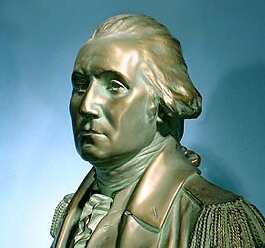
On April 5, 1792, U.S. President George Washington exercised his authority to veto a bill, the first time this power was used in the United States.

Categories
Today

Tippecanoe (and, sadly, MLK, too)

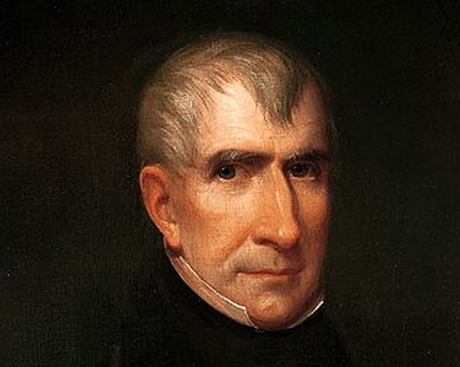
On April 4, 1841, William Henry Harrison died of pneumonia, becoming the first President of the United States to die in office and the one with the shortest term served (he died on his 32nd day as president). Renowned Indian killer (having risen to fame for his part in 1811’s Battle of Tippecanoe), a proponent of the expansion of slavery into Northwest Territories, and a Whig, Harrison won the presidency in part by turning the Democrats’ “log cabin and hard cider” aspersions on his character as the basic symbols of the campaign.

Though hardly a “limited government man,” some limited government history buffs proclaim him the Greatest President, on the ostensibly droll and possibly cynical grounds that he spent so little time in office.

On a sadder note, Martin Luther King, Jr., was assassinated on this day in 1968.