Categories
Today

Sibyl’s Ride

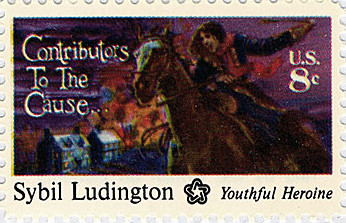
On April 26, 1777, Sibyl Ludington, aged 16, rode 40 miles to alert American colonial forces to the approach of the British. Her ride was over twice as long as the more famous Paul Revere’s.

On the same day in 1805, United States Marines captured Derne under the command of First Lieutenant Presley O’Bannon, an important event in the First Barbary War. In April 26, 1865, Union cavalry troopers cornered John Wilkes Booth, assassin of President Lincoln, in Virginia, shooting him to death. There was no interrogation.
Categories
Today

Congress’s Library

On April 24, 1792, the French national anthem, “La Marseillaise,” was composed by Capt. Claude Joseph Rouget de Lisle.

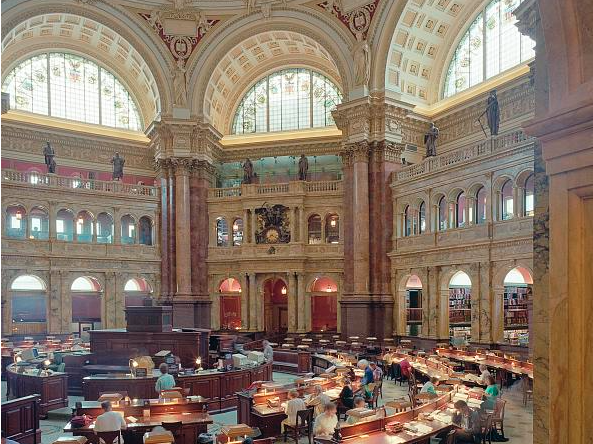
Eight years later to the day, the United States Congress approved a bill establishing the Library of Congress.

Categories
Today

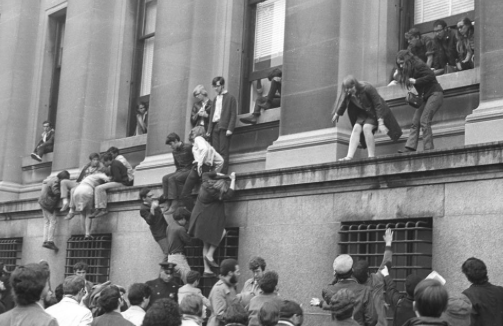
A Student Protest

On April 23, 1968, students at New York City’s Columbia University held a demonstration to protest military research and the condemnation of part of the neighboring Morningside Heights section of Harlem to make way for a new student gymnasium. The protest escalated into a week-long occupation of five campus buildings before police moved in. Some 712 students were arrested, and over 100 injured during the forcible eviction. After the university-ordered police response, a student strike shut down the campus for the rest of the semester.

Categories
Today

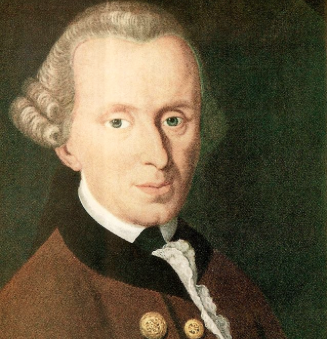
Immanuel Kant

On April 22, 1724, philosopher Immanuel Kant was born.

Aside from being the pre-eminent modern philosopher and originator of transcendental idealism, Kant was also a major figure of Enlightenment thought, a classical liberal, and the originator of the notion of the Categorial Imperative. He was an early and important astronomical theorist in his early career, but produced his greatest works towards the end of his life, including The Critique of Pure Reason and The Groundwork for the Metaphysics of Morals. He was also author of the 1795 essay “Perpetual Peace: A Philosophical Sketch.”

Arthur Schopenhauer is widely known as an admiring and astute critic of Kant’s thought, while philosophical opponents include Friedrich Nietzsche and Ayn Rand. Kant’s approach to ethics continues to excite interest today, with some of the revival a result of the work of John Rawls.

Kant died on February 12, 1804, in Königsberg, Prussia (now Kaliningrad, Russia), where he had lived the bulk of his life.

Categories
Today

New Amsterdam

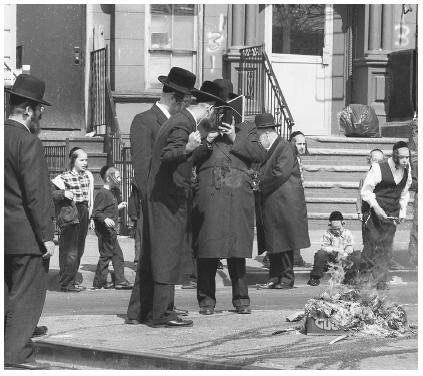
On April 20, 1657, freedom of religion was granted to the Jews of New Amsterdam (which was later renamed New York City).

Categories
Today

The Revolution Begins

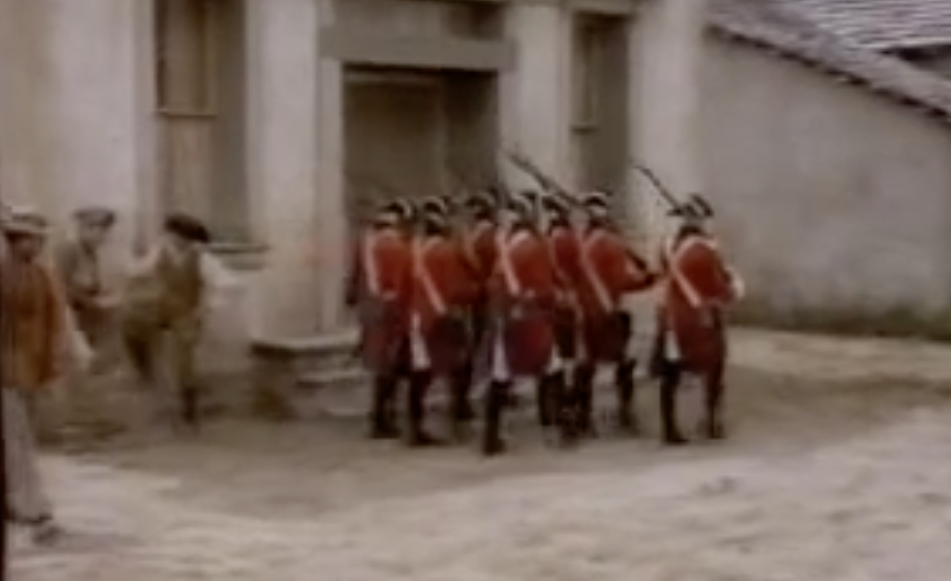
On April 19, 1775, the American Revolution began when the “shot heard around the world” was fired between the 700 British troops on a mission to capture Patriot leaders Sam Adams and John Hancock and to seize a Patriot arsenal and the 77 armed minutemen under Captain John Parker waiting for them on the Lexington town green. The Battle of Lexington ended with eight Americans killed and ten wounded, along with one wounded British soldier.

In Concord, a couple of hours later, British troops were encircled by hundreds of armed Patriots. The British commander ordered his men to return to Boston without directly engaging the Americans, but on the 16-mile journey they were constantly attacked by Patriot marksmen firing at them Indian-style from behind trees, rocks, and stone walls. By the time the British reached the safety of Boston, nearly 300 soldiers had been killed, wounded, or were missing in action. The Patriots suffered fewer than 100 casualties. (See Liberty’s Kids for a video on these events, or the video featured on this page.)

On April 19, 1782, John Adams secured the Dutch Republic’s recognition of the United States as an independent government.

Categories
Today

Tax Day

On April 18, 1689, Bostonians rebelled against the government of Sir Edmund Andros.

On this day in April, in 2007, the Supreme Court of the United States, split 5-4, upheld the Partial-Birth Abortion Ban Act.

April 18 marks the 1772 birthday of David Ricardo, English political economist and one of the most influential thinkers in economic theory. An advocate for free trade and the abolition of slavery, Ricardo’s most famous work is his Principles of Political Economy and Taxation (1817).

Common Sense takes the occasion of the word “taxation” to mention that today is Tax Day for most of the nation.

Categories
Today

Ronald Hamowy

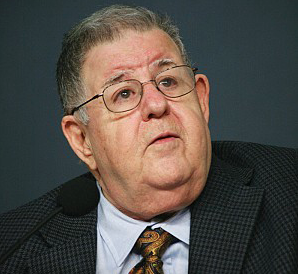
April 17 marks the 1937 birth of Ronald Hamowy, Canadian historian, who first came to international prominence for his writings in the short-lived New Individualist Review. Hamowy died in 2012.

Categories
Today

Letter from Birmingham Jail

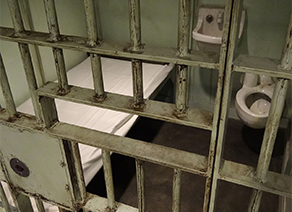
Dr. Martin Luther King, Jr., penned his Letter from Birmingham Jail while incarcerated in Birmingham, Alabama, for protesting segregation, on April 16, 1963.

Categories
Today

Bergen-Belsen Liberated

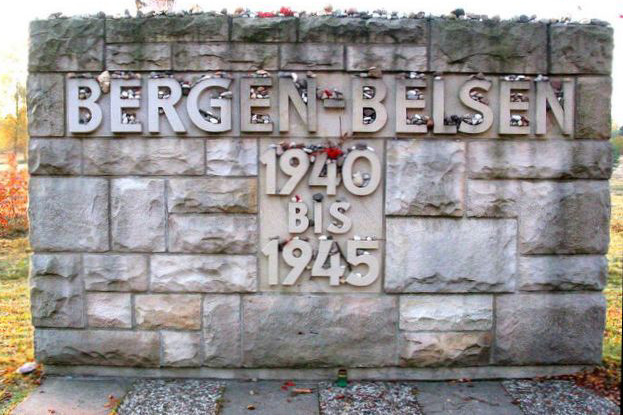
On April 15, 1945, the Bergen-Belsen concentration camp was liberated.