Categories
Today

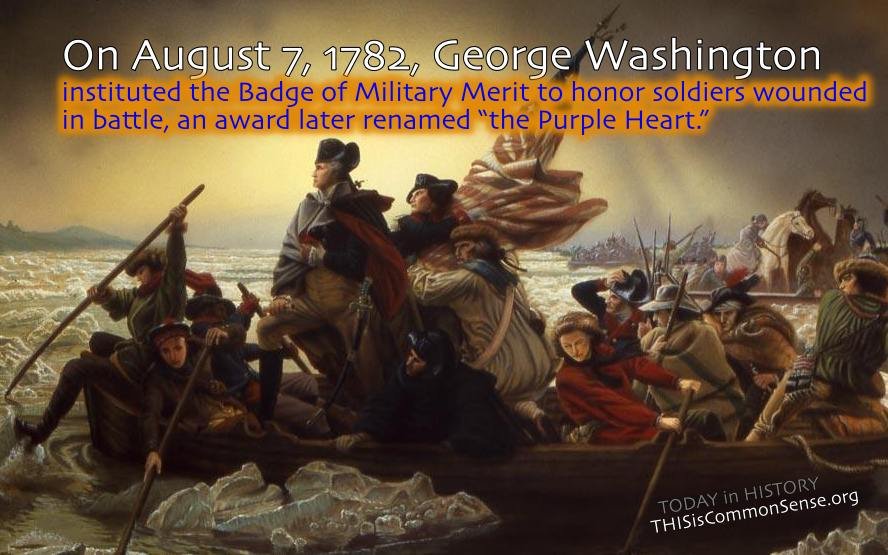
First Purple Hearts

On August 7, 1782, George Washington instituted the Badge of Military Merit to honor soldiers wounded in battle, an award later renamed “the Purple Heart.”


Illustration: “Washington Crossing the Delaware,” Emanuel Leutze, 1851, Oil on canvas (Metropolitan Museum of Art, New York City), depicting an event in 1776, not 1782.

Categories
Today

Jamaican

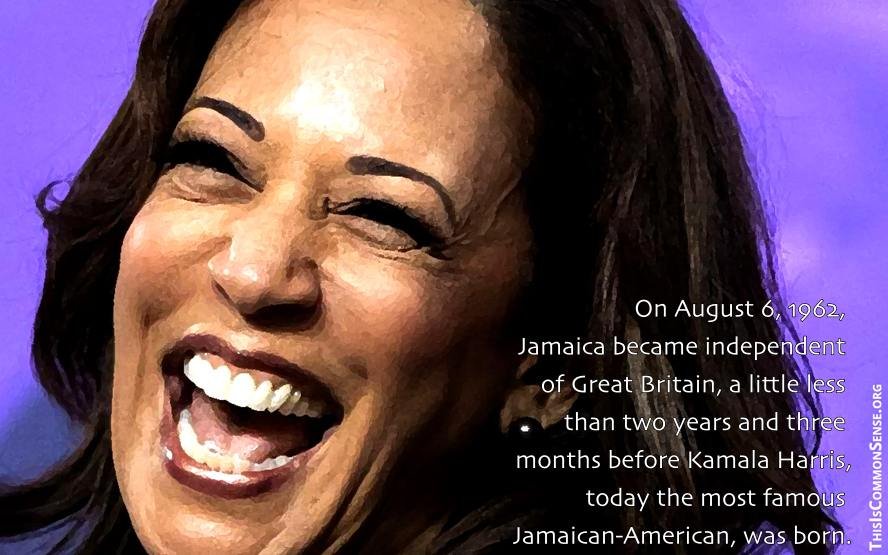
On August 6, 1962, Jamaica became independent of Great Britain, a little less than two years and three months before Kamala Harris, the most famous Jamaican-American, was born.


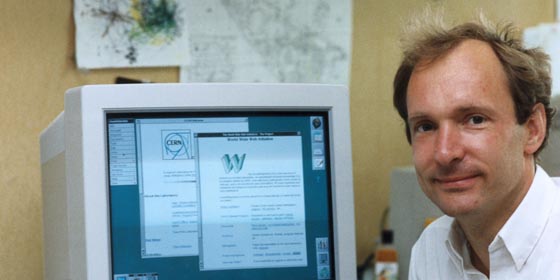
In 1991, on this date, Tim Berners-Lee released files describing his idea for the World Wide Web, and put up the first website, running on a NeXT computer at CERN, in France.

Tim Berners-Lee, pioneer of the World Wide Web, c 1990s.
Categories
Today

Flogged, Founded, Fired

On August 5, 1861, the U.S. Army abolished flogging.

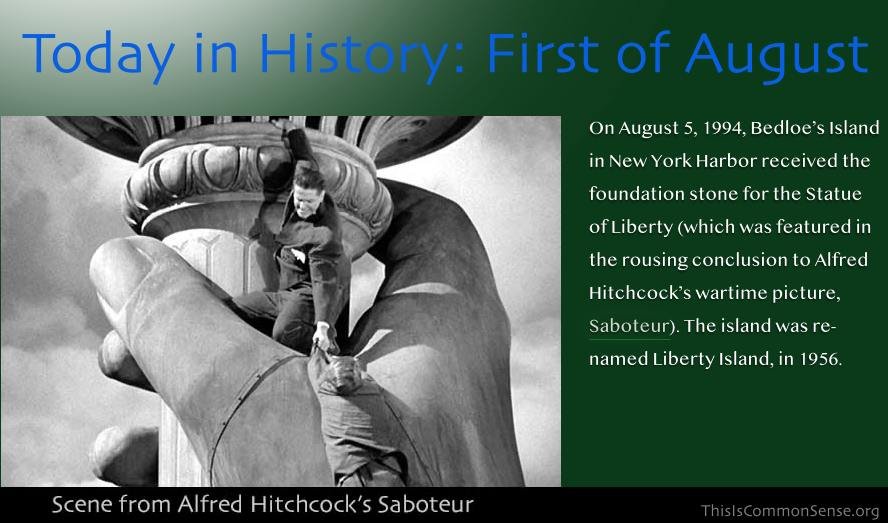
The same day 23 years later, Bedloe’s Island in New York Harbor received the foundation stone for the Statue of Liberty (which was featured in the rousing conclusion to Alfred Hitchcock’s wartime picture, Saboteur). The island was renamed Liberty Island, in 1956.

President Ronald Reagan fired 11,359 striking air-traffic controllers (who had ignored his order for them to return to work) on August 5, 1981.

Categories
Today

A Great Peace

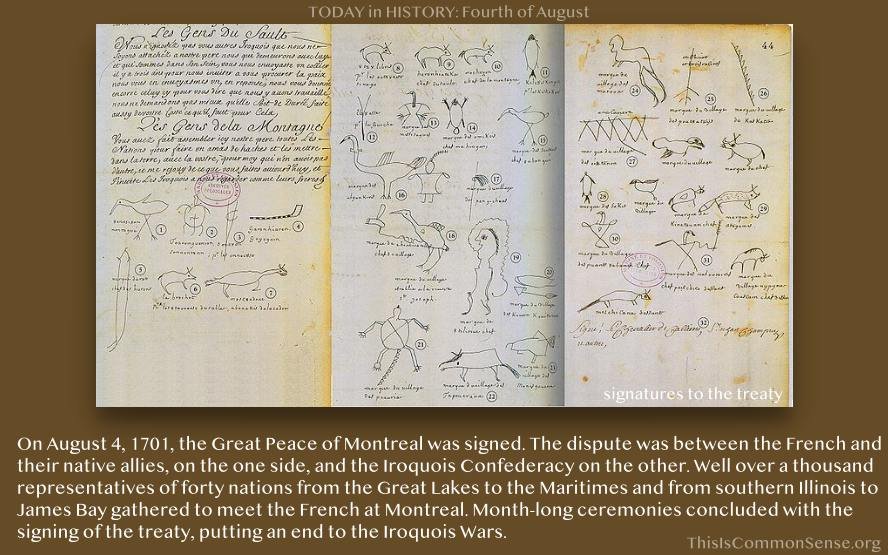
On August 4, 1701, the Great Peace of Montreal was signed. The dispute was between the French and their native allies, on the one side, and the Iroquois Confederacy on the other. Well over a thousand representatives of forty nations from the Great Lakes to the Maritimes and from southern Illinois to James Bay gathered to meet the French at Montreal. Month-long ceremonies concluded with the signing of the treaty, putting an end to the Iroquois Wars.

Categories
Today

Hiss, Boo

On August 3, 1948, Whittaker Chambers, testifying under subpoena before the House Un-American Activities Committee, accused United Nations bigwig Alger Hiss of being a communist and a spy for the Soviet Union.  

Categories
Today

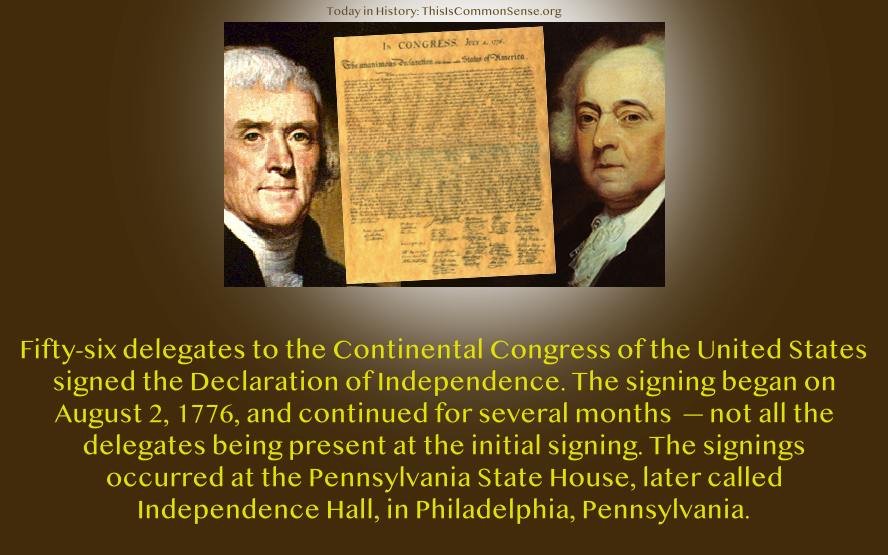
Fifty-six in 1776

Fifty-six delegates to the Continental Congress of the United States signed the Declaration of Independence. The signing began on August 2, 1776, and continued for several months, not all the delegates being present at the initial signing. The signings occurred at the Pennsylvania State House — later called Independence Hall — in Philadelphia, Pennsylvania.

Categories
Today

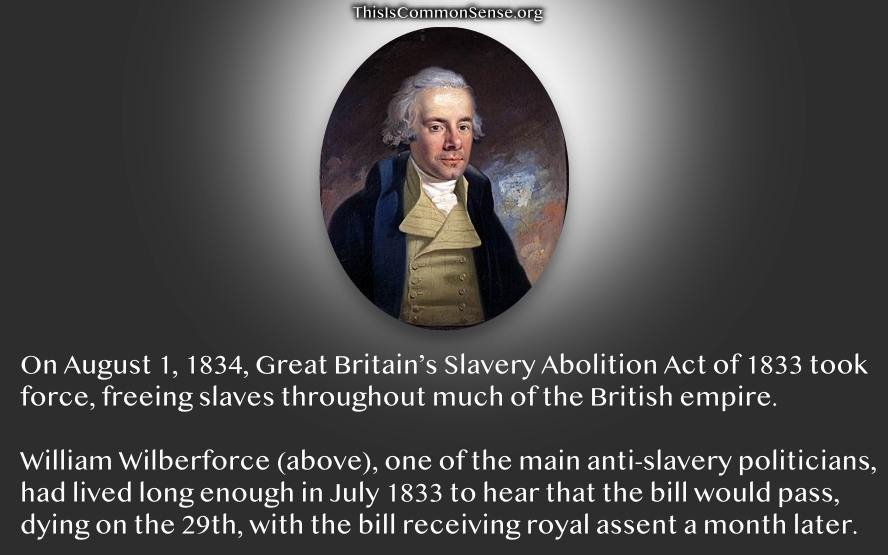
Slavery Ended

On August 1, 1834, Great Britain’s Slavery Abolition Act of 1833 took force, freeing slaves throughout much of the British empire.

William Wilberforce, one of the country’s main anti-slavery politicians, had lived long enough in July 1833 to hear that the bill would pass, dying on the 29th, with the bill receiving royal assent a month later.


August 1 births include Francis Scott Key (1779), composer of the poem “The Star-Spangled Banner”; American authors Richard Henry Dana, Jr. (1815) and Herman Melville (1819); and Thomas E. Woods, Jr. (1972), historian and popularizer of Austrian economics, podcaster of the Tom Woods Show.

Categories
Today

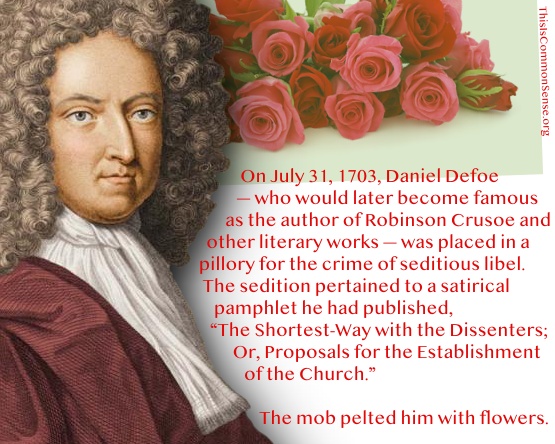
DeFoe Pelted

On July 31, 1703, Daniel Defoe — who would later become famous as the author of Robinson Crusoe and other literary works — was placed in a pillory for the crime of seditious libel. The sedition pertained to a satirical pamphlet he had published, “The Shortest-Way with the Dissenters; Or, Proposals for the Establishment of the Church.” The mob pelted him with flowers.


On the same date in 1912, Milton Friedman was born. Friedman became one of the most influential economists of the 20th century, and one of the most effective advocates of free markets, as well. His books include Capitalism and Freedom and two famous collaborations, A Monetary History of the United States (with Anna Schwartz) and Free to Choose (with his wife, Rose Director Friedman).

Categories
Today

Out the Window!

July 30, 1419, the First Defenestration of Prague: Jan Želivský, a Hussite priest at the church of the Virgin Mary of the Snows, led his congregation on a procession through the streets of Prague to the New Town Hall, on Charles Square. While they were marching, a stone was thrown at Želivský from the window of the town hall. The mob, enraged, stormed the hall. Once inside, the group threw the judge, the burgomaster, and some thirteen members of the town council out of the window and into the street, where they were killed by the fall or dispatched by the mob.

King Wenceslaus IV of Bohemia, upon hearing this news, was so stunned, the legend goes, that he died soon after.


On July 30, 1619, the first representative assembly in the Americas, the House of Burgesses, convened for the first time in Jamestown, Virginia. On the same date in 1676, Nathaniel Bacon issued the “Declaration of the People of Virginia,” beginning Bacon’s Rebellion against the rule of Governor William Berkeley.

On this date in 1863, representatives of the United States and tribal leaders (including the Shoshone’s Chief Pocatello) signed the Treaty of Box Elder.

July 30 birthdays include Henry Ford (1863), Gen. Smedley Butler (1881), C. Northcote Parkinson (1909), and former California Governor Arnold Schwarzenegger (1947).

Vanuatuans celebrate Independence Day on July 30.
Categories
Today

A King Shot

King Umberto I of Italy was assassinated by the anarchist Gaetano Bresci on July 29, 1900. After shooting the monarch multiple times, Breschi was wrestled to the ground and almost lynched. Upon his arrest, he said “I did not kill Umberto. I have killed the King. I killed a principle.” This did not prove immediately true, for Umberto’s 31-year-old son, Victor Emmanuel III, succeeded his father to the throne. What Bresci spawned was the terrorist craze of anarchists trying to kill heads of state and captains of industry, itself a kind of self-defeating principle, since the peoples of the world turned decidedly against the anarchists.