Categories
Today

The Twenty-Fifth

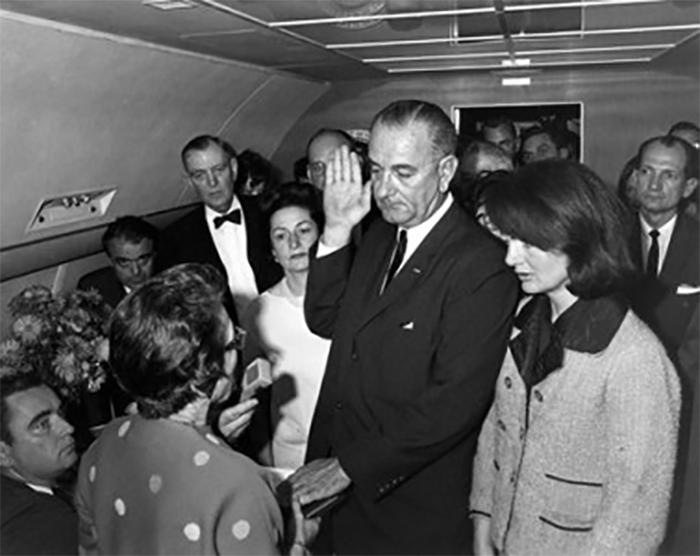
On Feb. 10, 1967, the 25th Amendment to the U.S. Constitution was ratified by Nevada, the necessary 38th state to do so. The amendment sets the process for presidential succession, and reads:

Section 1. In case of the removal of the President from office or of his death or resignation, the Vice President shall become President.

Section 2. Whenever there is a vacancy in the office of the Vice President, the President shall nominate a Vice President who shall take office upon confirmation by a majority vote of both Houses of Congress.

Section 3. Whenever the President transmits to the President pro tempore of the Senate and the Speaker of the House of Representatives his written declaration that he is unable to discharge the powers and duties of his office, and until he transmits to them a written declaration to the contrary, such powers and duties shall be discharged by the Vice President as Acting President.

Section 4. Whenever the Vice President and a majority of either the principal officers of the executive departments or of such other body as Congress may by law provide, transmit to the President pro tempore of the Senate and the Speaker of the House of Representatives their written declaration that the President is unable to discharge the powers and duties of his office, the Vice President shall immediately assume the powers and duties of the office as Acting President.

Thereafter, when the President transmits to the President pro tempore of the Senate and the Speaker of the House of Representatives his written declaration that no inability exists, he shall resume the powers and duties of his office unless the Vice President and a majority of either the principal officers of the executive department or of such other body as Congress may by law provide, transmit within four days to the President pro tempore of the Senate and the Speaker of the House of Representatives their written declaration that the President is unable to discharge the powers and duties of his office. Thereupon Congress shall decide the issue, assembling within forty-eight hours for that purpose if not in session. If the Congress, within twenty-one days after receipt of the latter written declaration, or, if Congress is not in session, within twenty-one days after Congress is required to assemble, determines by two-thirds vote of both Houses that the President is unable to discharge the powers and duties of his office, the Vice President shall continue to discharge the same as Acting President; otherwise, the President shall resume the powers and duties of his office.
Categories
Today

The Age of Tom Paine Begins

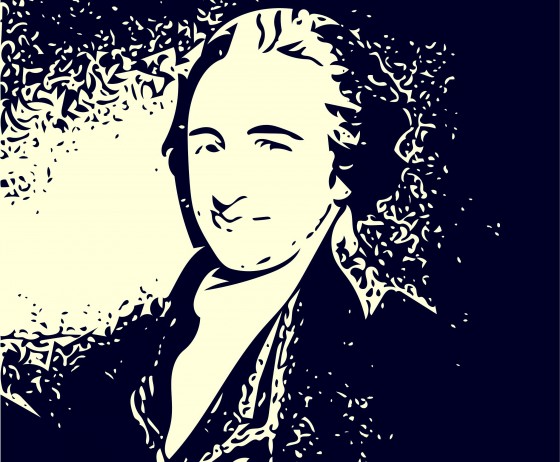
On Feb. 9, 1737, Thomas Paine was born in Thetford, England.

Paine would come to America in 1774 and by 1776 publish Common Sense, urging American independence. Later works included The Rights of Man (1792) and The Age of Reason (published in three parts in 1794, 1795, and 1807).

Paine died in 1809.

Categories
Today

Delaware and Slavery

On February 8, 1865, Delaware voters rejected the Thirteenth Amendment to the U.S. Constitution, voting to continue the practice of slavery. Delaware belatedly and symbolically ratified the amendment on February 12, 1901.

Categories
Today

Soviets Give Up

On February 7, 1990, the Central Committee of the Soviet Communist Party agreed to give up its monopoly on power, thus ushering the way for the dissolution of the putatively communist empire.

Categories
Today

Burr and Reagan

On February 6, 1778, the Treaty of Alliance and the Treaty of Amity and Commerce were signed by the United States and France, signaling official recognition of the new republic. Exactly a decade later, the State of Massachusetts became the sixth in the union to ratify the new United States Constitution.

February 6 marks the birthdays of Aaron Burr (1756 – 1836), third Vice President of the United States and infamous Weehauken duelist, and Ronald Reagan (1911 – 2004) 40th President of the United States.

Categories
Today

Sir Robert Peel

On February 5, 1788, Robert Peel was born. He would become one of the most important of the United Kingdom’s prime ministers, ushering in some reforms that led to the liberalization of England in the 19th century.

Peel is also regarded as the father of the modern British police — the popular term “bobbies” refers to “Bob” Peel — and as one of the founders of the modern Conservative Party. Robert Peel died in 1850.

Categories
Today

First President

On February 4, 1789, George Washington was unanimously elected as the first President of the United States, under the new Constitution, by the U.S. Electoral College.

On the same date five years later, the French legislature abolished slavery throughout all territories of the French Republic.

Categories
Today

Arkansas at the Apex

On February 3, 1931, the legislature of the State of Arkansas passes a motion to pray for the soul of journalist H. L. Mencken, after he calls the state the “apex of moronia.”

Categories
Today

The Free Constitution of Nationality?

On March 3, 1924, the 407-year-old Islamic caliphate was abolished, when Caliph Abdülmecid II of the Ottoman Caliphate was deposed. The last remnant of the old regime gives way to the reformed Turkey of Kemal Atatürk. On the same day, the Free State of Fiume was annexed by the Kingdom of Italy.

On March 3, 1931, the United States adopted The Star-Spangled Banner as its national anthem.

Eight years later, in Bombay, Mohandas Gandhi began a hunger strike in protest at the autocratic rule in British India.


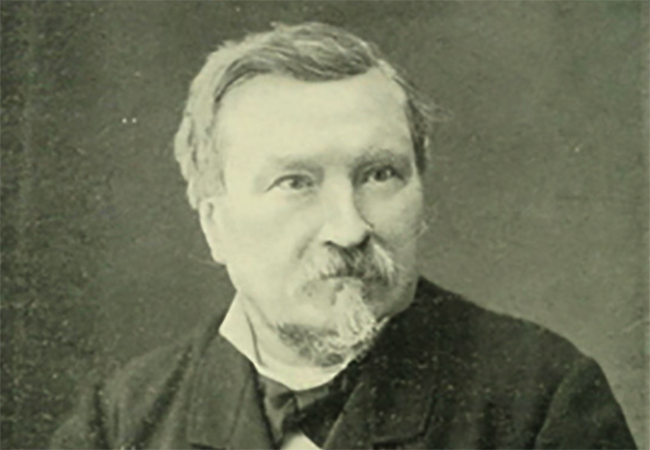
Belgian economist Gustave de Molinari (pictured) was born on March 3, 1819. Associated with French laissez-faire economists Frédéric Bastiat and Yves Guyot, he was the longest-serving editor of Guillamin’s Journal des économistes. Today chiefly known in the English-speaking world for his authorship of one article, “The Production of Security” (1849), he was, as Ludwig von Mises described, the most productive economist in his school. Despite this, and his worldwide recognition, only one of his many books was translated from the French into English during his lifetime, The Society of To-morrow (1904), his final book. Molinari died on January 28, 1912.

Man is an organism composed of vital, physical, intellectual, and moral forces. This matter and these forces, which form the individual and the species, can only be preserved and developed by the assimilation, or, to use the economic term, the consumption of materials and forces of like nature. Failing this consumption, their vitality wastes and is finally extinguished. But waste and extinction of vitality cause pain and suffering, and it is the stimulus of pain and suffering which impels man to acquire the materials necessary for the development and preservation of his life. All these materials are present in his environment, air, &c.; and nature gives him a small number free of cost. But with the exception of this minority they must be discovered, acquired, and adapted to the purposes of consumption. Man must be a producer.

Opening paragraph, The Society of To-morrow (1904).

In this final book, Molinari offered a political program he called the “free constitution of nationality.”

Categories
Today

Corn Law

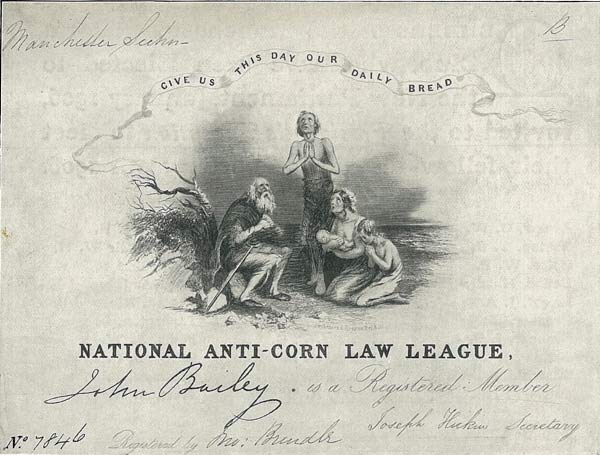
On January 31, 1849, the Corn Laws were abolished in the United Kingdom, one of the most impressive and far-reaching anti-protectionist moves of all time. “Corn” stood for all grains, including wheat, oats, barley, etc.; the free-trade agitation by John Bright and Richard Cobden was one of the main impetuses for the reform.

On Jan. 31, 1865, the United States Congress proposed the Thirteenth Amendment to the U.S. Constitution, submitting it to the states for ratification. The Amendment’s main section reads: “Neither slavery nor involuntary servitude, except as a punishment for crime whereof the party shall have been duly convicted, shall exist within the United States, or any place subject to their jurisdiction.”

On Jan. 31, 1990, the first McDonald’s fast food restaurant opens in the Soviet Union. Having once traveled to Moscow, I’m exceedingly thankful for this.