Categories
Today

Nobel Prizes

November 27, 1295, the first elected representatives from Lancashire were called to Westminster by King Edward I to attend what later became known as “The Model Parliament.”

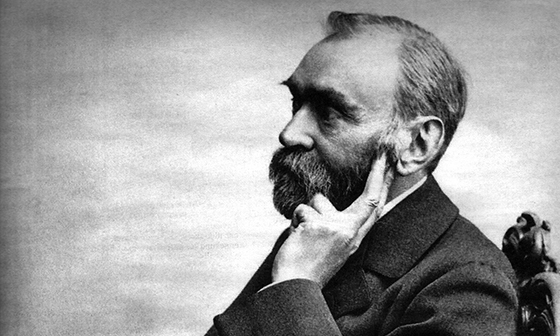
On the same date in 1895, Alfred Nobel (pictured) signed his last will and testament, thereby establishing the Nobel Prizes.

Categories
Today

A Grimké Birthday

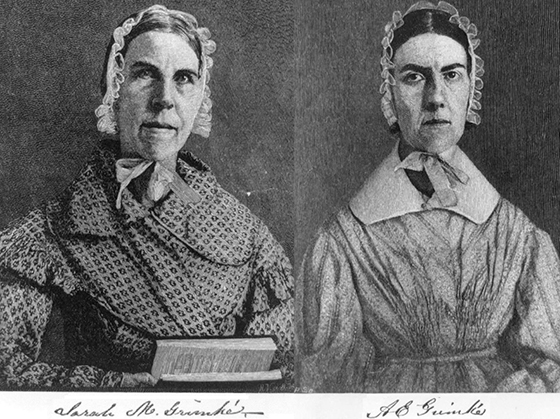
November 26, 1792, saw the birth of Sarah Moore Grimké, American abolitionist and feminist. She was the elder sister of the equally famed Angelina Emily Grimké Weld.

Categories
Today

Velvet

November 25, 1975, Suriname gained independence from the Netherlands.

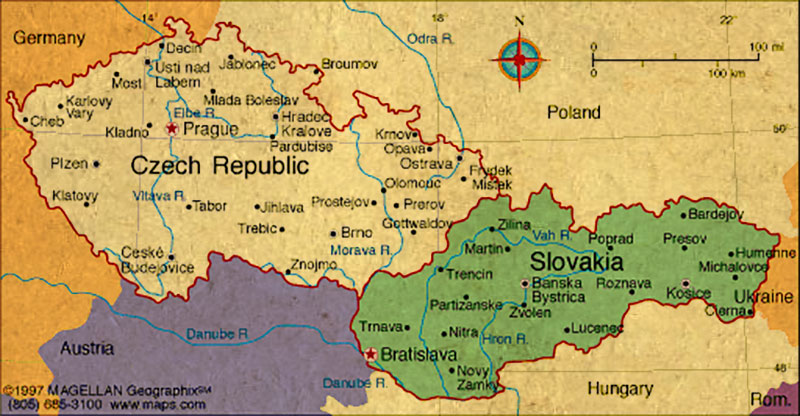
On the same month and date 17 years later, the Federal Assembly of Czechoslovakia voted to split the country into the Czech Republic and Slovakia (officially disjoined as of January 1, 1993). This split has been called “The Velvet Divorce” (following, in style and method, “The Velvet Revolution”).

Categories
Today

Happy Birthday, Baruch!

November 24th marks the birthdays of philosopher Baruch Spinoza (1632) and three influential Americans: ragtime composer Scott Joplin (1868), self-help writer Dale Carnegie (1888), and conservative editor, writer, and television personality William F. Buckley Jr. (1925).

Categories
Today

Areopagitica

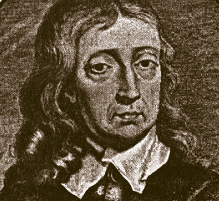
On November 23, 1644, British poet John Milton published Areopagitica, a pamphlet decrying censorship.

Categories
Today

The Day JFK Was Shot

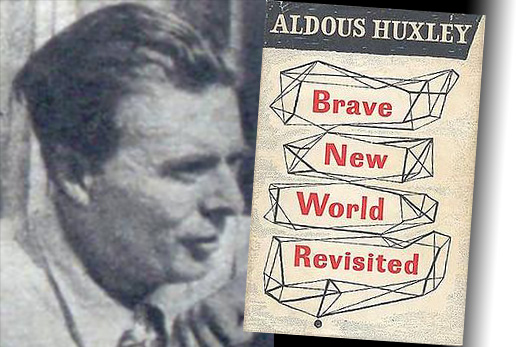
November 22 marks the death dates of a number of eminent writers, including that of English-American novelist and essayist Aldous Huxley and Irish-English novelist, theologian and medieval scholar C.S. Lewis, both of whom died in 1963, the same day as the assassination of American President John F. Kennedy. British novelist Anthony Burgess died exactly 30 years later.

The date also marks the birth of the great British novelist George Eliot (Mary Ann Evans), in 1819.

Recommended reading from these authors include:

  • Silas Marner (1861), a short and brilliant novel by George Eliot. Her most generally esteemed classic is the much longer Middlemarch (1872).
  • Earthly Powers (1980), a massive novel about life in the 20th century, by the ever-iconoclastic and hard-to-pin-down Anthony Burgess. His most famous novel is undoubtedly A Clockwork Orange (1963).
  • “The Humanitarian Theory of Punishment” (1949) and Till We Have Faces (1956), the former being C.S. Lewis’s thoughtful essay on the nature of modern tyranny, and the latter being what some regard his best fiction effort, a retelling of the Psyche myth. He is most famously known for The Screwtape Letters (1942) and The Chronicles of Narnia (1950-1956).
  • Brave New World (1931) and Brave New World Revisited (1958), the former is Aldous Huxley’s classic dystopian satire on technological tyranny-by-hedonism, and the latter is the author’s survey of the issues raised by — and the degrees to which reality conforms to — his earlier fictional prophecy. The two books have been printed under one cover as well as separately.
Categories
Today

The Mayflower Compact

On November 21, 1620, Plymouth Colony settlers signed the Mayflower Compact.

On this day in 1922, Rebecca Latimer Felton of Georgia took the oath of office, becoming the first female United States Senator.

November 21st birthdays include:

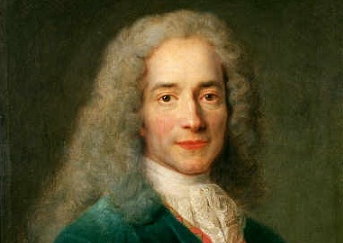
1694 – Voltaire, French philosopher (d. 1778) — portrait above.
1729 – Josiah Bartlett, American signer of the Declaration of Independence (d. 1795).
1870 – Alexander Berkman, anarchist (d. 1936), who shot but did not kill industrialist Henry Clay Frick.

Categories
Today

Fidelio

On November 20, 1789, New Jersey became the first U.S. state to ratify the Bill of Rights.

In 1805 on this date, Ludwig van Beethoven’s only opera, Leonore, oder Der Triumph der ehelichen Liebe (in English, Leonore, or The Triumph of Marital Love, later renamed Fidelio), premiered in Vienna. Beethoven wrote four overtures for the opera, all part of the orchestra’s concert repertoire. The opera tells the tale of the rescue from unjust imprisonment of Florestan by his wife Leonore, who disguises herself as a boy, Fidelio.

Categories
Today

Of/By/For

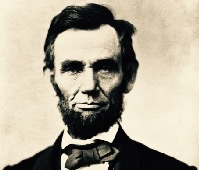
On November 19, 1863, President Abraham Lincoln delivered the Gettysburg Address at the ceremonial dedication of the military cemetery in Gettysburg, Pennsylvania, appropriating an old phraseology for republican government — “of the people, by the people, for the people” — and giving it its most memorable usage.

On the same date in 1955, National Review published its first issue.

Categories
Today

Tell and Shaw

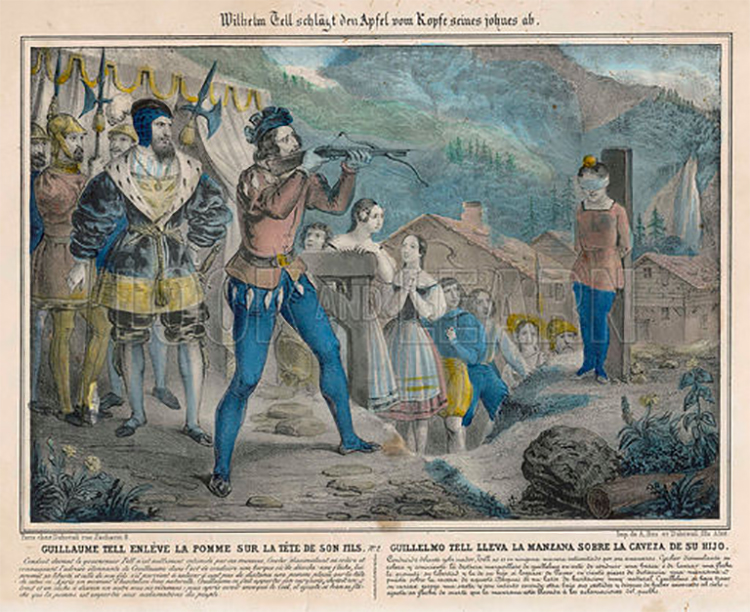
On November 18, 1307, legend has it, William Tell shot a crossbow bolt to pierce an apple, toppling it off his son’s head. He was forced to do this by the local Austrian authority, whose hat hung on a pole in the Altdorf town square Tell had refused to bow to when entering the village. Tell endures as a Swiss folk hero, and provides the subject of a famous opera by Rossini — the music of which is associated with, in many ears, Bugs Bunny and the Lone Ranger.

In 1926, on this date, George Bernard Shaw formally refused to accept the money for his Nobel Prize for Literature, saying, “I can forgive Alfred Nobel for inventing dynamite, but only a fiend in human form could have invented the Nobel Prize.”