It is better to be hated for what you are than to be loved for what you are not.
André Gide, Autumn Leaves (Feuillets d’automne, 1941, trans. Jeanine Parisier Plottel).
Categories
André Gide
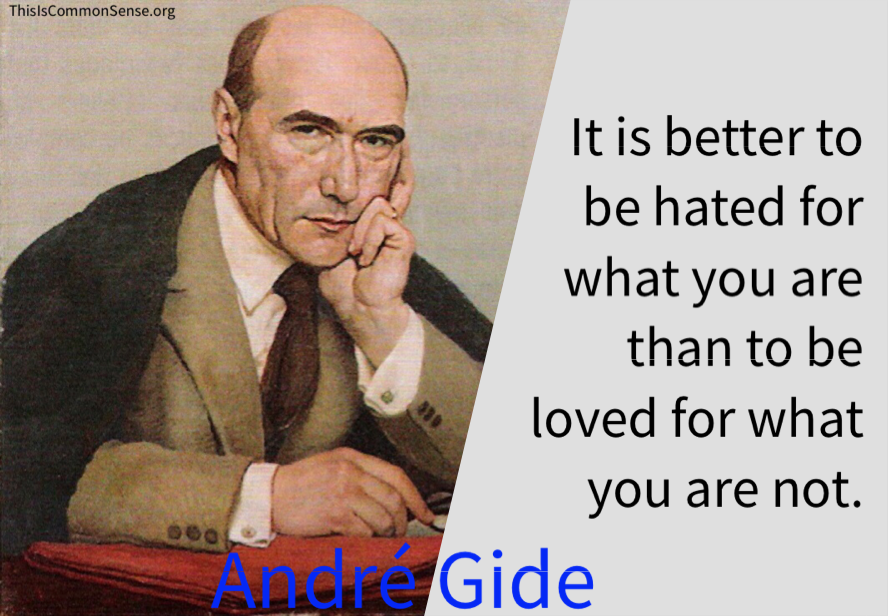
It is better to be hated for what you are than to be loved for what you are not.
André Gide, Autumn Leaves (Feuillets d’automne, 1941, trans. Jeanine Parisier Plottel).
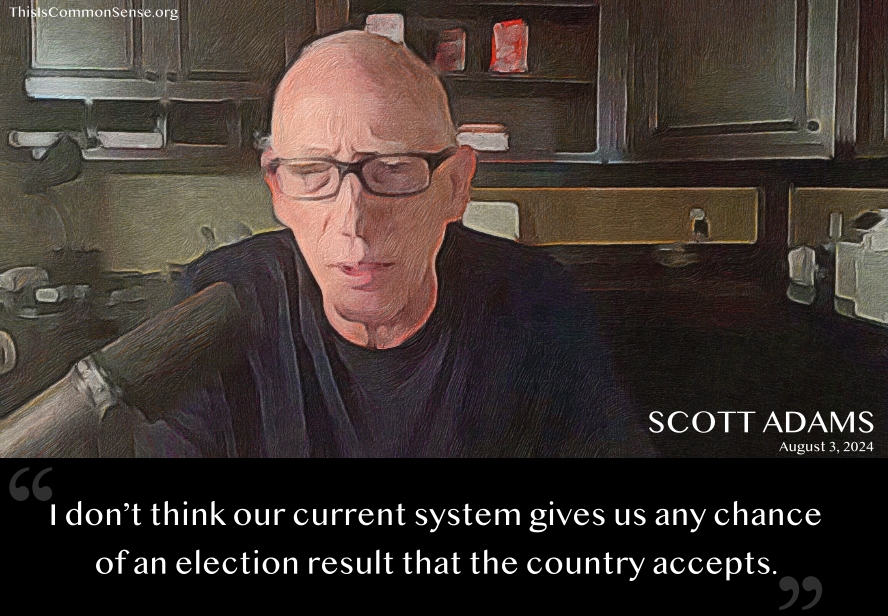
I don’t think our current system gives us any chance of an election result that the country accepts.
Scott Adams, Real Coffee with Scott Adams, Episode 2555 (August 3, 2024).
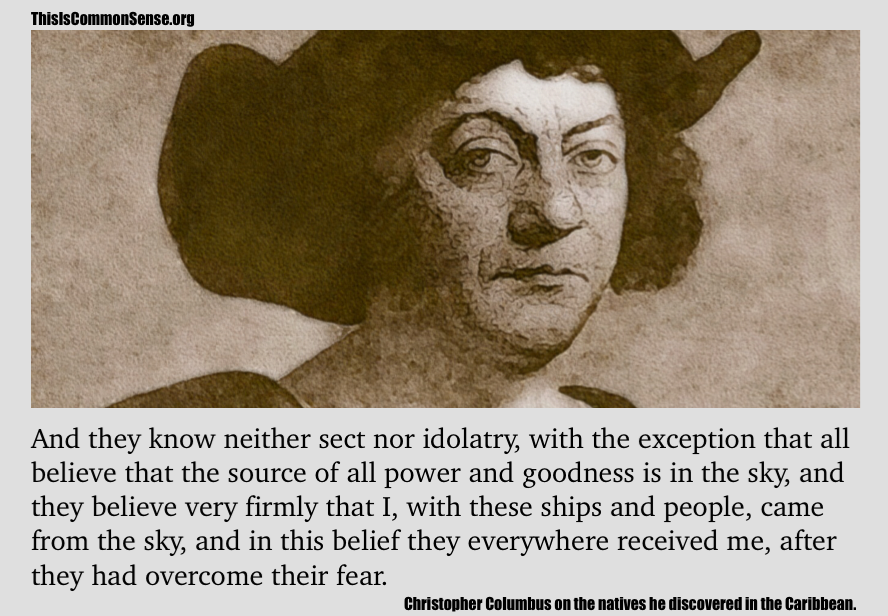
And they know neither sect nor idolatry, with the exception that all believe that the source of all power and goodness is in the sky, and they believe very firmly that I, with these ships and people, came from the sky, and in this belief they everywhere received me, after they had overcome their fear.
Christopher Columbus, “Letter to the Sovereigns” (1493).
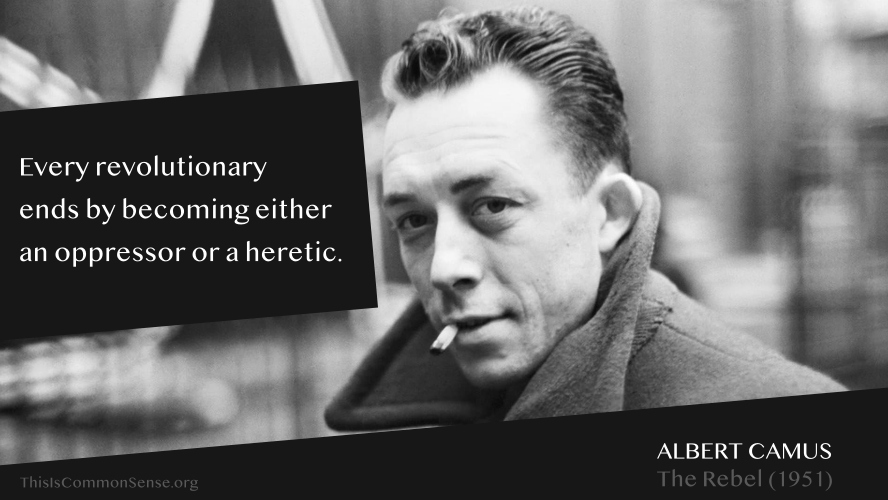
Every revolutionary ends by becoming either an oppressor or a heretic.
Albert Camus, The Rebel (1951).
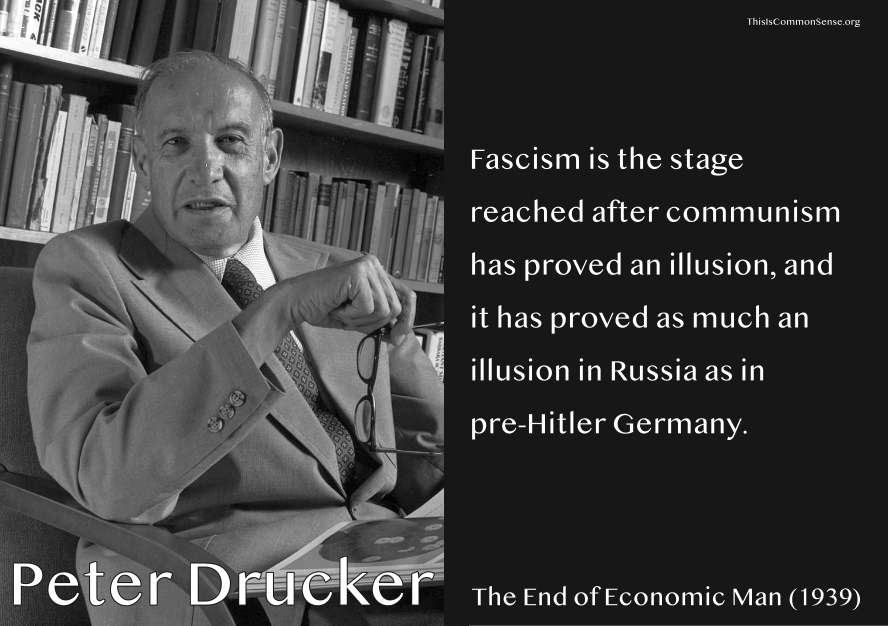
Fascism is the stage reached after communism has proved an illusion, and it has proved as much an illusion in Russia as in pre-Hitler Germany.
Peter Drucker, The End of Economic Man: The Study of the New Totalitarians (1939), pp. 245-246.
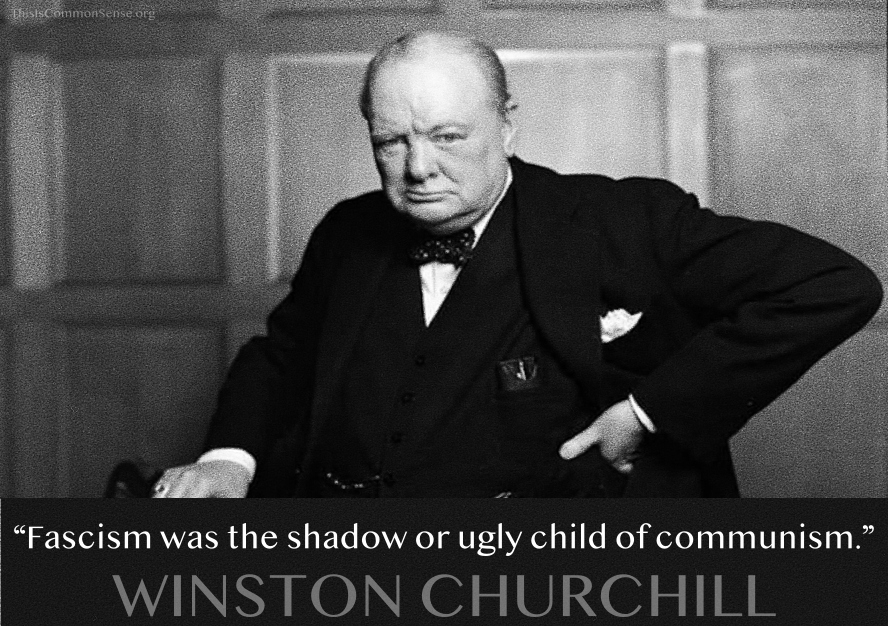
Fascism was the shadow or ugly child of communism. . . . As Fascism sprang from Communism, so Nazism developed from Fascism. Thus were set on foot those kindred movements which were destined soon to plunge the world into more hideous strife, which none can say has ended with their destruction.
Winston Churchill, The Second World War, Volume 1, The Gathering Storm (1948).
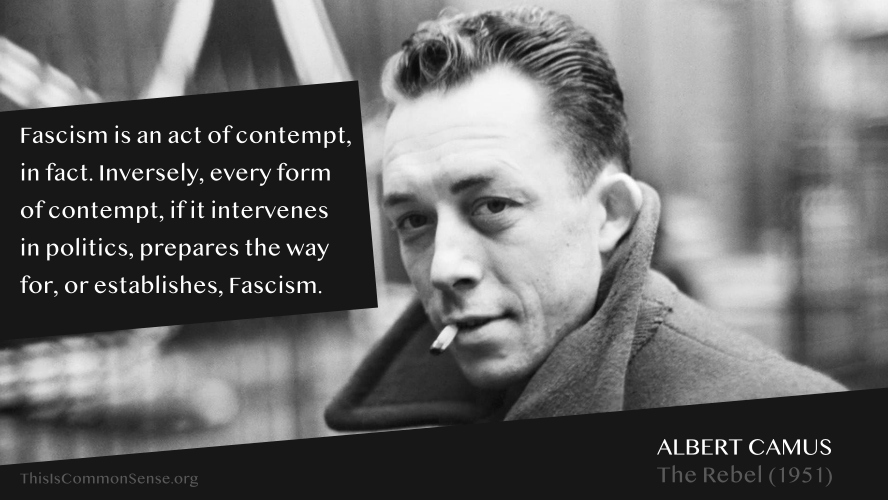
Fascism is an act of contempt, in fact. Inversely, every form of contempt, if it intervenes in politics, prepares the way for, or establishes, Fascism.
Albert Camus, The Rebel (1951).
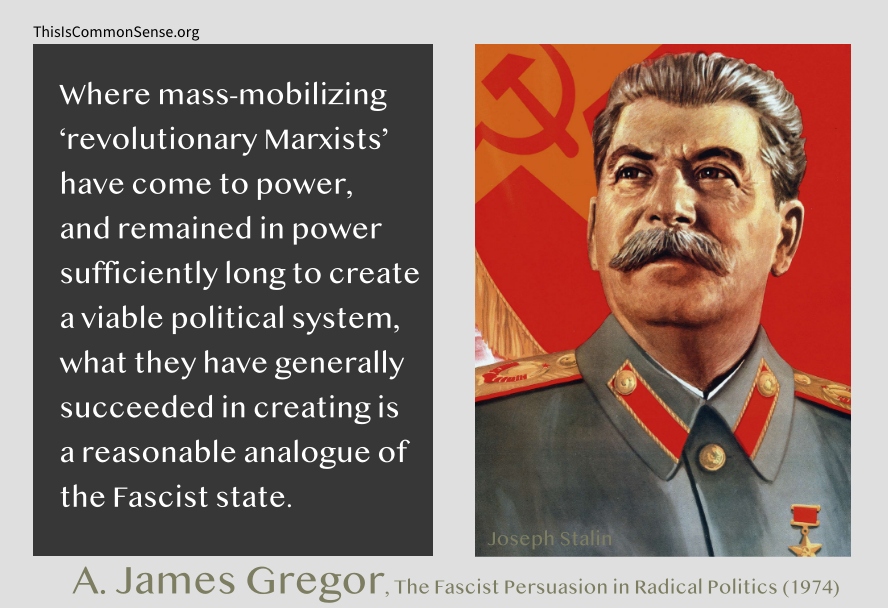
Where mass-mobilizing ‘revolutionary Marxists’ have come to power, and remained in power sufficiently long to create a viable political system, what they have generally succeeded in creating is a reasonable analogue of the Fascist state.
A. James Gregor, The Fascist Persuasion in Radical Politics (1974), p. 134.
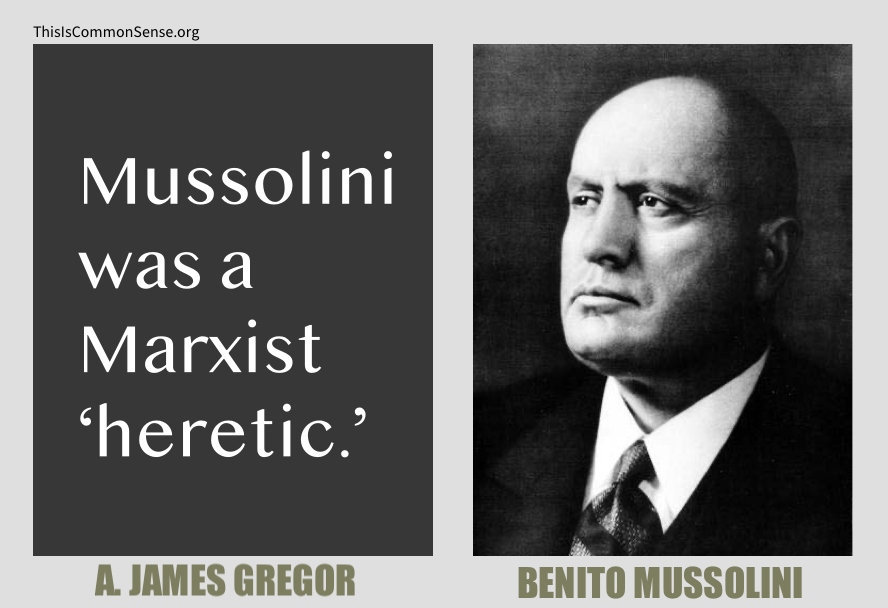
Mussolini was a Marxist ‘heretic.’
A. James Gregor, Young Mussolini and the Intellectual Origins of Fascism (1979), p. xi. In his 1969 analysis, The Ideology of Fascism, he elaborated on Mussolini’s socialist bona fides: “Mussolini was a well-informed and convinced Marxist. His ultimate political convictions represent a reform of classical Marxism in the direction of a restoration of its Hegelian elements.”
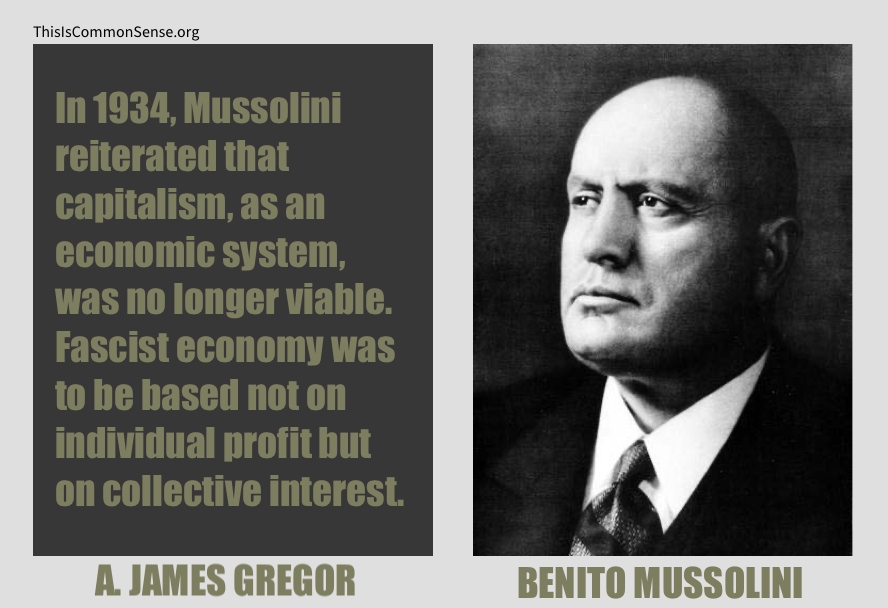
In 1934, Mussolini reiterated that capitalism, as an economic system, was no longer viable. Fascist economy was to be based not on individual profit but on collective interest.
A. James Gregor, The Ideology of Fascism: The Rationale of Totalitarianism (1969), p. 299, showing that fascism has always been the very opposite of a free-trade, freedom-of-contract society.