There is literally no one in the public sphere that you or I can trust.
Drew Pinsky in conversation with Winston Marshall, “Dr Drew Analyses Kamala’s Cognitive Abilities” (November 1, 2024).
Categories
Dr. Drew Pinsky
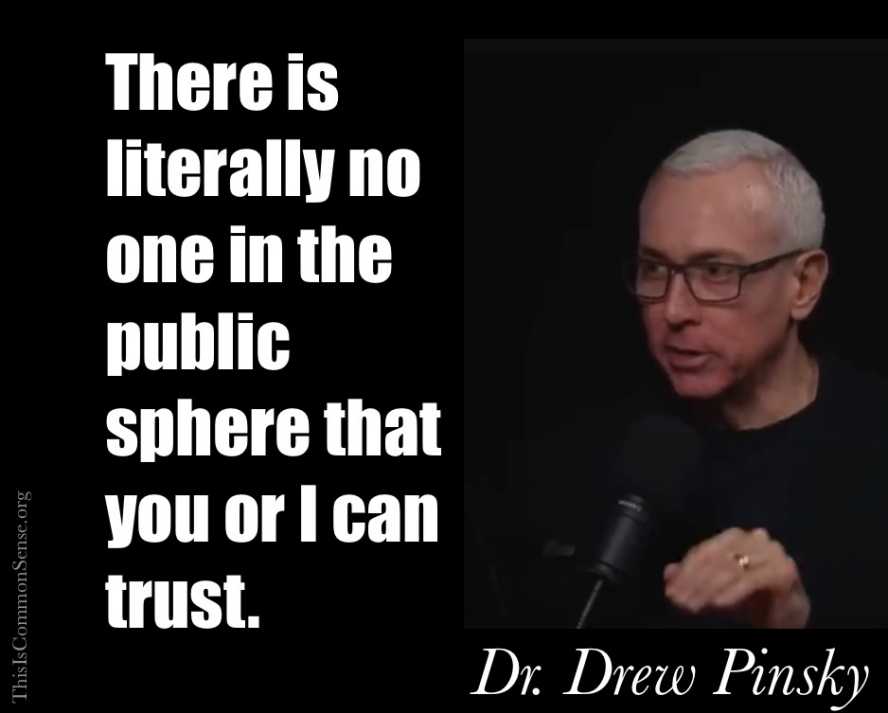
There is literally no one in the public sphere that you or I can trust.
Drew Pinsky in conversation with Winston Marshall, “Dr Drew Analyses Kamala’s Cognitive Abilities” (November 1, 2024).
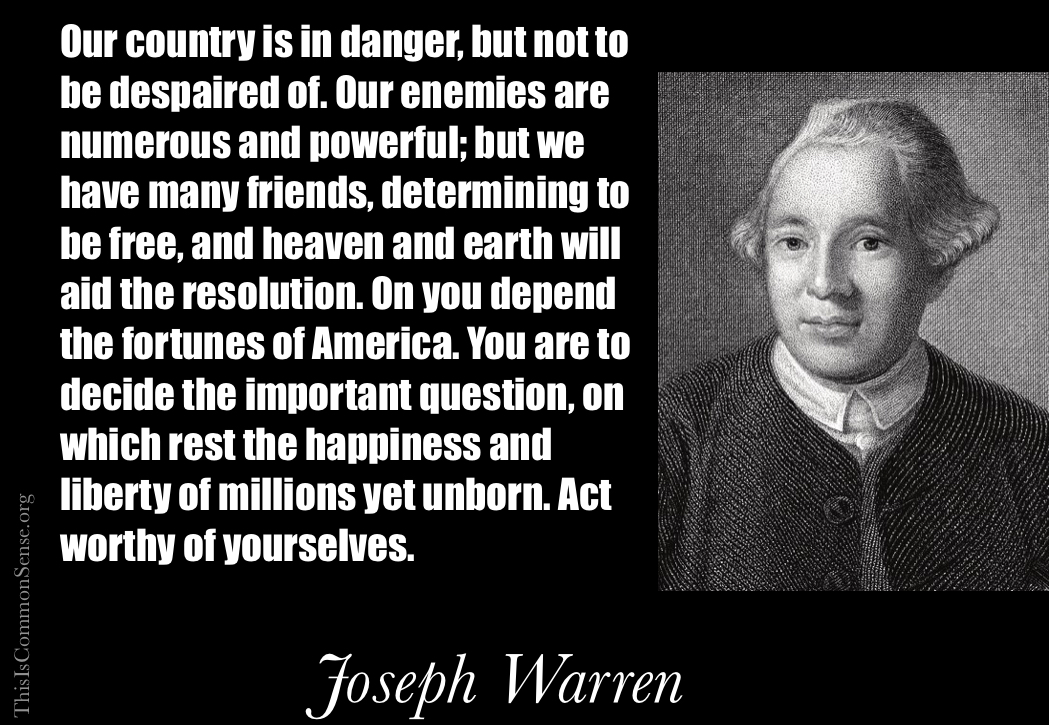
Our country is in danger, but not to be despaired of. Our enemies are numerous and powerful; but we have many friends, determining to be free, and heaven and earth will aid the resolution. On you depend the fortunes of America. You are to decide the important question, on which rest the happiness and liberty of millions yet unborn. Act worthy of yourselves.
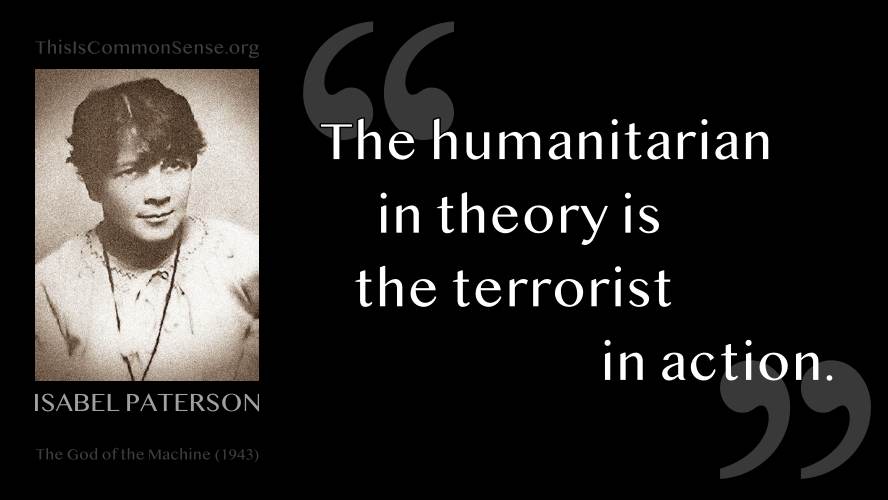
Isabel Paterson, The God of the Machine, 1943, p. 242.
The humanitarian in theory is the terrorist in action.

There are many difficulties impeding the rapid spread of reasonableness. One of the main difficulties is that it always takes two to make a discussion reasonable. Each of the parties must be ready to learn from the other. You cannot have a rational discussion with a man who prefers shooting you to being convinced by you.
Karl Popper, “Utopia and Violence,” address to Institut des Arts in Brussels, Belgium (1947); later published The Hibbert Journal 46 (1948), and in Conjectures and Refutations: The Growth of Scientific Knowledge (1963).
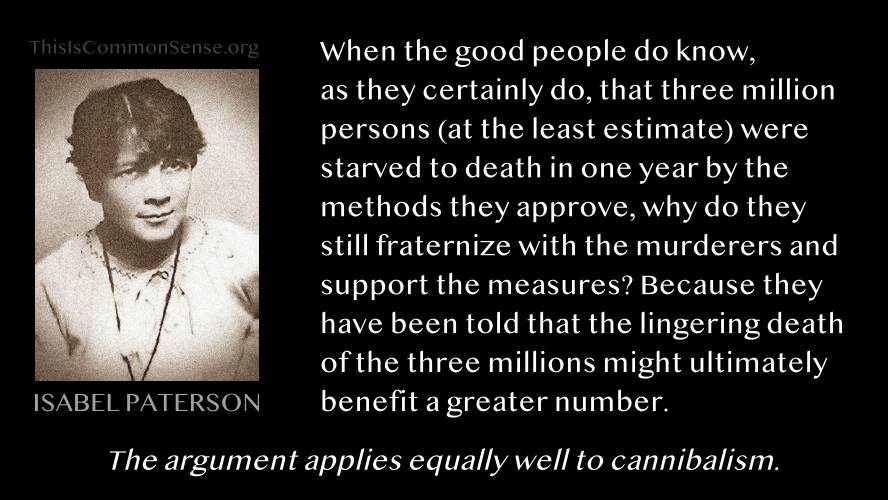
But when the good people do know, as they certainly do, that three million persons (at the least estimate) were starved to death in one year by the methods they approve, why do they still fraternize with the murderers and support the measures? Because they have been told that the lingering death of the three millions might ultimately benefit a greater number. The argument applies equally well to cannibalism.
Isabel Paterson, The God of the Machine, 1943, p. 250.

κύνες γὰρ καὶ βαΰζουσινὃν, ἂν μὴ γινώσκωσι.
Dogs, also, bark at what they do not know.
Heraclitus, Fragment 97.
Weep not that the world changes — did it keep
William Cullen Bryant, “Mutation: A Sonnet” (1824).
A stable, changeless state, ’twere cause indeed to weep.
We have so many people who can’t see a fat man standing beside a thin one without coming to the conclusion the fat man got that way by taking advantage of the thin one. So they’re going to solve all the problems of human misery through government and government planning. Well, now, if government planning and welfare had the answer — and they’ve had almost 30 years of it — shouldn’t we expect government to read the score to us once in a while? Shouldn’t they be telling us about the decline each year in the number of people needing help? The reduction in the need for public housing?
But the reverse is true. Each year the need grows greater; the program grows greater.
Ronald Reagan, “A Time for Choosing,” a televised speech in support of Barry Goldwater’s 1964 presidential campaign (October 27, 1964).
Truth, crushed to earth, shall rise again;
William Cullen Bryant, The Battlefield (1839), st. 9. Martin Luther King, Jr., cited this poem (Dec. 3, 1956, as quoted in The Papers of Martin Luther King, Jr: Advocate of the social gospel, p. 162) thusly: “There is something in this universe which justifies William Cullen Bryant in saying Truth crushed to earth will rise again.”
The eternal years of God are hers;
But Error, wounded, writhes with pain,
And dies among his worshippers.
Fools have a habit of believing that everything written by a famous author is admirable. For my part I read only to please myself and like only what suits my taste.
Voltaire, Candide (1759).