You’ve got to tell the world how to treat you. If the world tells you how you are going to be treated, you are in trouble.
James Baldwin and Margaret Mead: A Rap on Race (1971).
Categories
James Baldwin
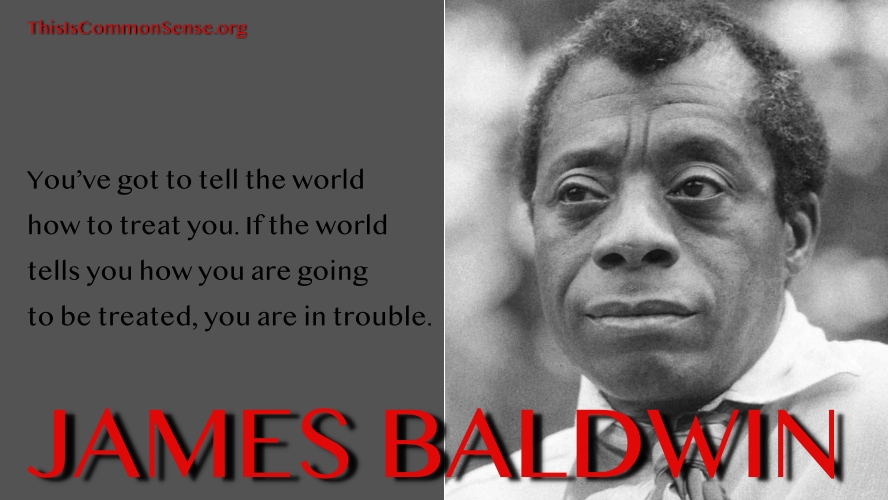
You’ve got to tell the world how to treat you. If the world tells you how you are going to be treated, you are in trouble.
James Baldwin and Margaret Mead: A Rap on Race (1971).
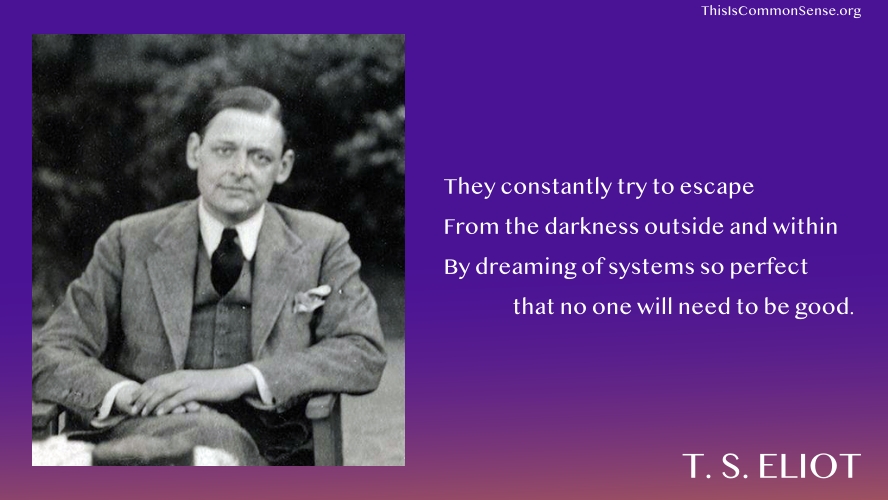
They constantly try to escape
Thomas Stearns Eliot, Choruses from The Rock (1934).
From the darkness outside and within
By dreaming of systems so perfect that no one will need to be good.
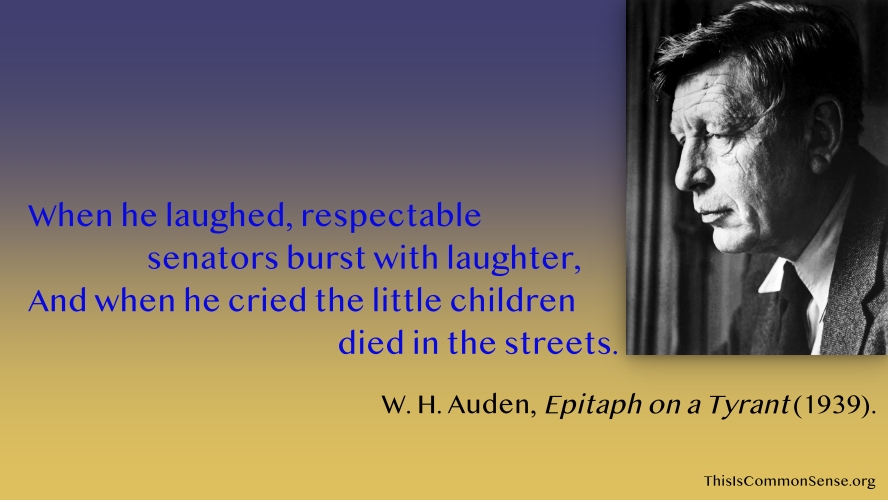
When he laughed, respectable senators burst with laughter,
W. H. Auden, Epitaph on a Tyrant (1939).
And when he cried the little children died in the streets.
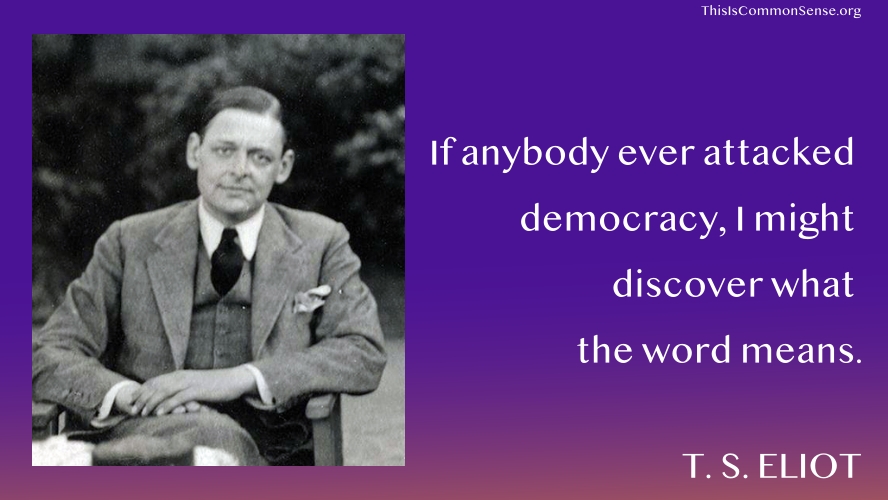
If anybody ever attacked democracy, I might discover what the word means.
Thomas Stearns Eliot, The Idea of a Christian Society (1939).
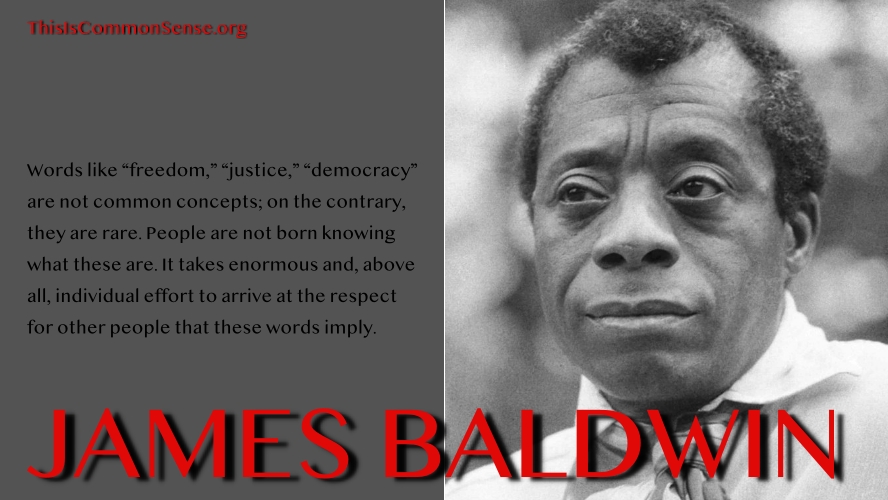
Words like “freedom,” “justice,” “democracy” are not common concepts; on the contrary, they are rare. People are not born knowing what these are. It takes enormous and, above all, individual effort to arrive at the respect for other people that these words imply.
James Baldwin, “The Crusade of Indignation,” The Nation (July 7, 1956), published in book form in The Price of the Ticket (1985).
Civilization exists by geological consent, subject to change without notice.
Will Durant, “What Is Civilization?” Ladies’ Home Journal (January 1946).
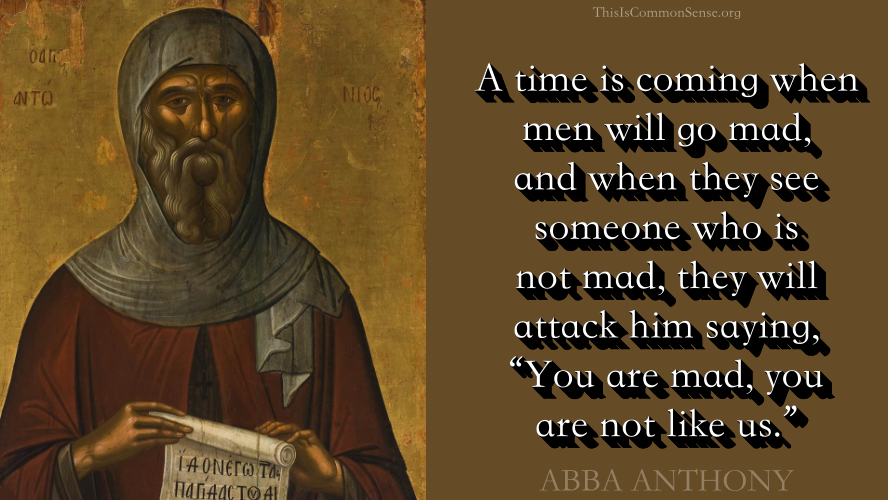
A time is coming when men will go mad, and when they see someone who is not mad, they will attack him saying, “You are mad, you are not like us.”
Anthony the Great, as quoted in The Sayings of the Desert Fathers, Benedicta Ward, trans.
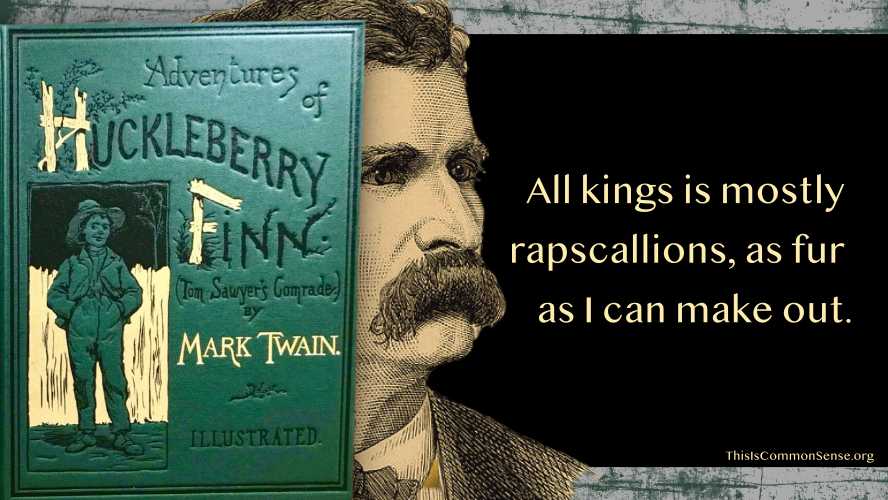
All kings is mostly rapscallions, as fur as I can make out.
Mark Twain, The Adventures of Huckleberry Finn (1884), Chapter 23.

Incompossible, adj. Unable to exist if something else exists. Two things are incompossible when the world of being has scope enough for one of them, but not enough for both — as Walt Whitman’s poetry and God’s mercy to man.
Laughter, n. An interior convulsion, producing a distortion of the features and accompanied by inarticulate noises. It is infectious and, though intermittent, incurable.
Liberty, n. The distinction between freedom and liberty is not accurately known; naturalists have never been able to find a living specimen of either.
Three entries from Ambrose Bierce’s The Devil’s Dictionary (1911).
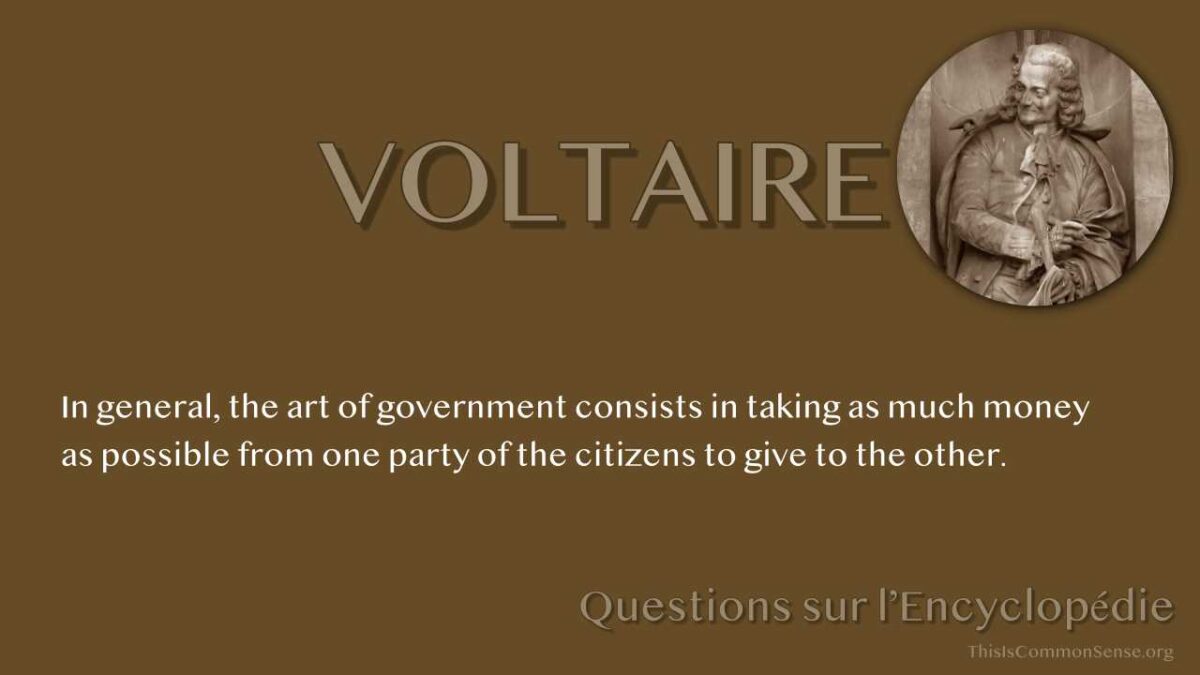
En général, l’art du gouvernement consiste à prendre le plus d’argent qu’on peut à une grande partie des citoyens, pour le donner à une autre partie.
In general, the art of government consists in taking as much money as possible from one party of the citizens to give to the other.
François-Marie Arouet (1694 – 1778), known by the nom de plume “Voltaire,” Questions sur l’Encyclopédie, “Money” (1770).