Man is a universe in little.
Democritus (c. 460 BC – c. 370 BC), pre-Socratic philosopher. Image of the Andromeda galaxy, NASA.
Categories
Democritus
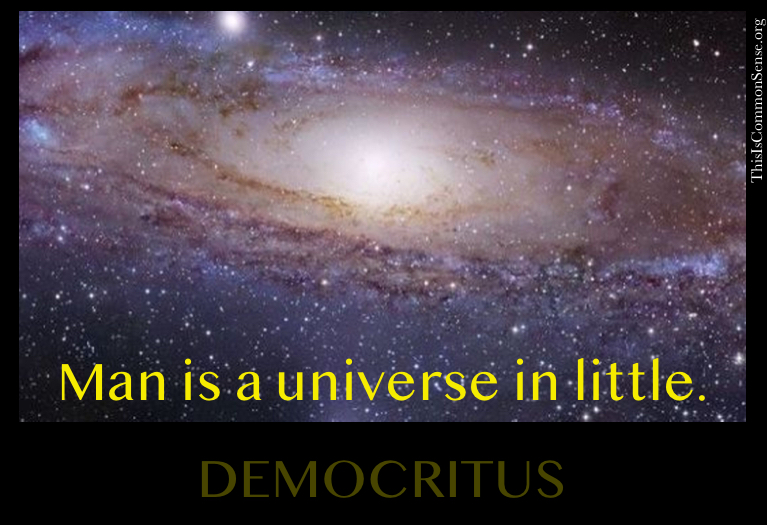
Man is a universe in little.
Democritus (c. 460 BC – c. 370 BC), pre-Socratic philosopher. Image of the Andromeda galaxy, NASA.
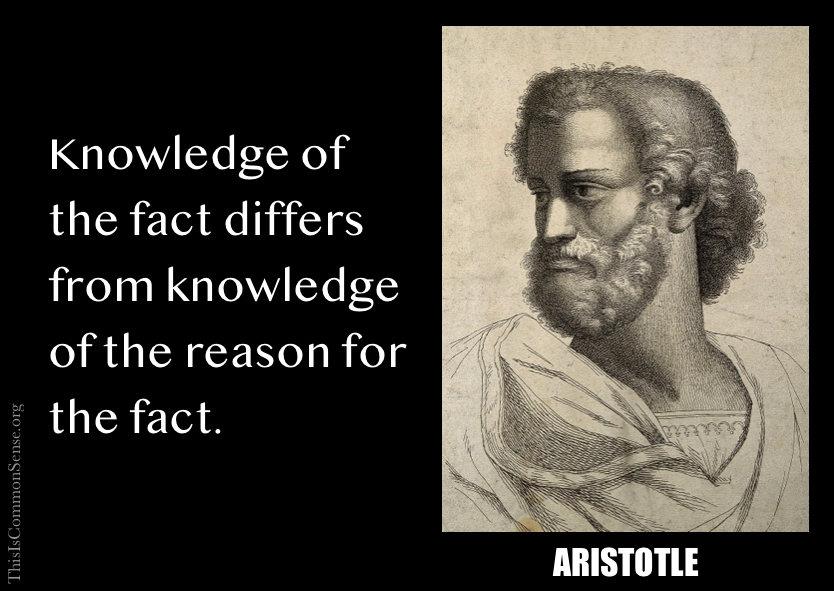
Knowledge of the fact differs from knowledge of the reason for the fact.
Aristotle, Posterior Analytics.
ἔστιν ἄρα ἡ ἀρετὴ ἕξις προαιρετική, ἐν μεσότητι οὖσα τῇ πρὸς ἡμᾶς, ὡρισμένῃ λόγῳ καὶ ᾧ ἂν ὁ φρόνιμος ὁρίσειεν. μεσότης δὲ δύο κακιῶν, τῆς μὲν καθ᾽ ὑπερβολὴν τῆς δὲ κατ᾽ ἔλλειψιν:
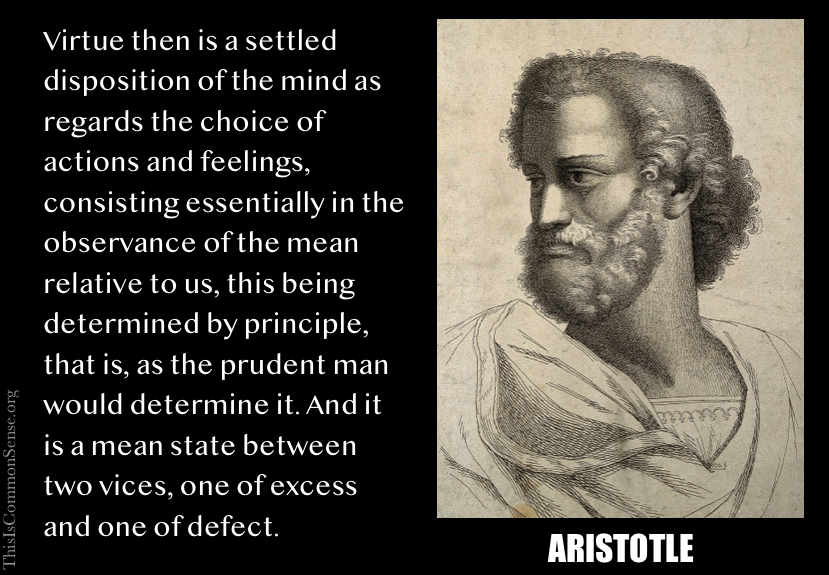
Virtue then is a settled disposition of the mind as regards the choice of actions and feelings, consisting essentially in the observance of the mean relative to us, this being determined by principle, that is, as the prudent man would determine it. And it is a mean state between two vices, one of excess and one of defect.
Aristotle, Nicomachean Ethics, Book II, translated by Harris Rackham. The illustration of the philosopher is a line engraving by P. Fidanza after Raphael Sanzio.
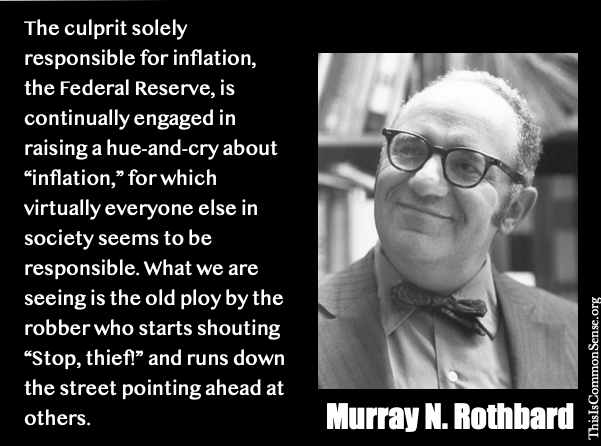
The culprit solely responsible for inflation, the Federal Reserve, is continually engaged in raising a hue-and-cry about “inflation,” for which virtually everyone else in society seems to be responsible. What we are seeing is the old ploy by the robber who starts shouting “Stop, thief!” and runs down the street pointing ahead at others.
Murray N. Rothbard, The Case Against The Fed (1994), as quoted by Douglas French, “The Case Against the Fed: How Do We Eliminate Inflation and the Boom-Bust Cycle” (FEE, November 1, 1995).
There is no human quality more attractive than the courage of the weak.
Gene Wolfe, Home Fires (2011), Reflection 1.
Once the most potent moral figure in Western culture was Jesus Christ. Believer or unbeliever, you took your ethical bearings from him, or professed to. To question his morals was to expose yourself as a monster. Now, the most potent moral figure in Western culture is Adolf Hitler. It is as monstrous to praise him as it would once have been to disparage Jesus. He has become the fixed reference point by which we define evil.
Alec Ryrie, Unbelievers: An Emotional History of Doubt (November 2019). See also “The End of the Age of Hitler,” First Things, November 2024.

November 14:
332 BC — Alexander the Great was crowned pharaoh of Egypt.
1770 AD — James Bruce discovered what he believed to be the source of the Nile.
1947 AD — P. J. O’Rourke, American libertarian political satirist and journalist (d. 2022) was born.
When a people lose the courage to resist encroachment on their rights, then they can’t be saved by an outside force. Our belief is that people always have the kind of government they want and that individuals must bear the risks of freedom, even to the extent of giving their lives.
Lucy Rail, a character in A. E. Van Vogt’s The Weapon Shops of Isher (1951).
People who fear death . . . live no longer than those who don’t, and live scared.
Gene Wolfe, The Knight (2004), p. 384.
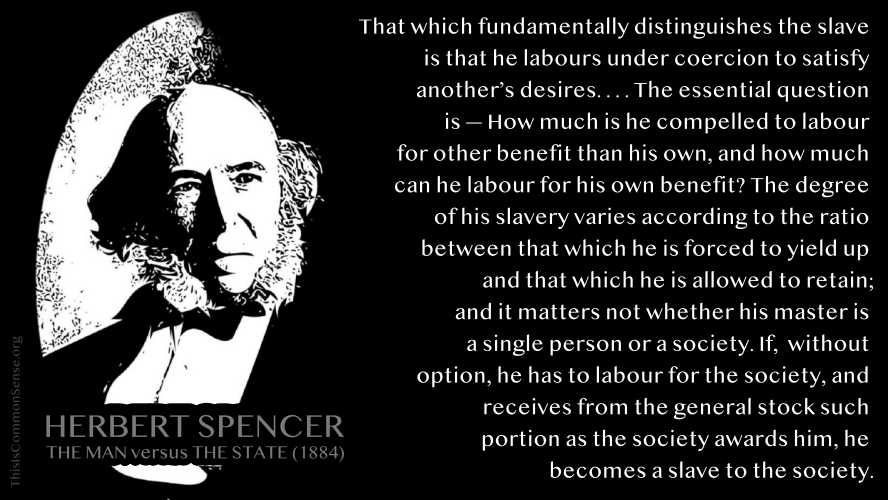
What is essential to the idea of a slave? We primarily think of him as one who is owned by another. To be more than nominal, however, the ownership must be shown by control of the slave’s actions — a control which is habitually for the benefit of the controller. That which fundamentally distinguishes the slave is that he labours under coercion to satisfy another’s desires. The relation admits of sundry gradations. Remembering that originally the slave is a prisoner whose life is at the mercy of his captor, it suffices here to note that there is a harsh form of slavery in which, treated as an animal, he has to expend his entire effort for his owner’s advantage. Under a system less harsh, though occupied chiefly in working for his owner, he is allowed a short time in which to work for himself, and some ground on which to grow extra food. A further amelioration gives him power to sell the produce of his plot and keep the proceeds. Then we come to the still more moderated form which commonly arises where, having been a free man working on his own land, conquest turns him into what we distinguish as a serf; and he has to give to his owner each year a fixed amount of labour or produce, or both: retaining the rest himself. Finally, in some cases, as in Russia before serfdom was abolished, he is allowed to leave his owner’s estate and work or trade for himself elsewhere, under the condition that he shall pay an annual sum. What is it which, in these cases, leads us to qualify our conception of the slavery as more or less severe? Evidently the greater or smaller extent to which effort is compulsorily expended for the benefit of another instead of for self-benefit. If all the slave’s labour is for his owner the slavery is heavy, and if but little it is light. Take now a further step. Suppose an owner dies, and his estate with its slaves comes into the hands of trustees; or suppose the estate and everything on it to be bought by a company; is the condition of the slave any the better if the amount of his compulsory labour remains the same? Suppose that for a company we substitute the community; does it make any difference to the slave if the time he has to work for others is as great, and the time left for himself is as small, as before? The essential question is — How much is he compelled to labour for other benefit than his own, and how much can he labour for his own benefit? The degree of his slavery varies according to the ratio between that which he is forced to yield up and that which he is allowed to retain; and it matters not whether his master is a single person or a society. If, without option, he has to labour for the society, and receives from the general stock such portion as the society awards him, he becomes a slave to the society.
Herbert Spencer, “The Coming Slavery,” The Contemporary Review (April 1884), p. 474. See also The Man versus the State (1884).