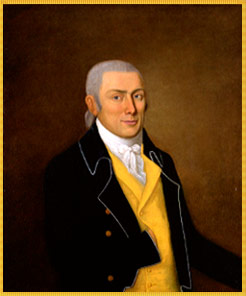
 There is a Passion natural to the Mind of man, especially a free Man, which renders him impatient of Restraint.
Categories
There is a Passion natural to the Mind of man, especially a free Man, which renders him impatient of Restraint.
 The power to “tax” is simply the power to “take.”
For the ordinary citizen, the power to tax is the most familiar manifestation of the government’s power to coerce. This power to tax involves the power to impose, on individuals and private institutions more generally, charges that can be met only by a transfer to government of economic resources, or financial claims to such resources—charges that carry with them effective powers of enforcement under the very definition of the taxing power. To be sure, governments may use tax revenues for financing public goods or transfers that citizens-taxpayers desire. But we must distinguish sharply here between a rationalization for the government’s possession of the power to tax and an understanding of that power in and of itself. The power to tax, per se, does not carry with it any obligation to use the tax revenue raised in any particular way. The power to tax does not logically imply the nature of spending.

As societies grow decadent, the language grows decadent, too. Words are used to disguise, not to illuminate, action: you liberate a city by destroying it. Words are to confuse, so that at election time people will solemnly vote against their own interests.
 Nothing increases the number of jobs so rapidly as labor-saving machinery, because it releases wants theretofore unknown, by permitting leisure.
Most of the harm in the world is done by good people, and not by accident, lapse, or omission. It is the result of their deliberate actions, long persevered in, which they hold to be motivated by high ideals toward virtuous ends… when millions are slaughtered, when torture is practiced, starvation enforced, oppression made a policy, as at present over a large part of the world, and as it has often been in the past, it must be at the behest of very many good people, and even by their direct action, for what they consider a worthy object.
 As soon as A observes something which seems to him wrong, from which X is suffering, A talks it over with B, and A and B then propose to get a law passed to remedy the evil and help X. Their law always proposes to determine what C shall do for X, or, in better case, what A, B, and C shall do for X… What I want to do is to look up C… I call him the forgotten man… He is the man who never is thought of. He is the victim of the reformer, the social speculator, and philanthropist, and I hope to show you before I get through that he deserves your notice both for his character and for the many burdens which are laid upon him.
 A claim for equality of material position can be met only by a government with totalitarian powers.
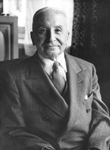 If one rejects laissez faire on account of man’s fallibility and moral weakness, one must for the same reason also reject every kind of government action.

Voyager upon life’s sea:—
To yourself be true,
And whate’er your lot may be,
Paddle your own canoe.