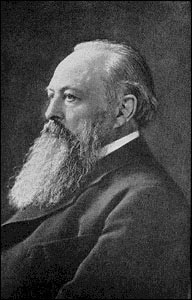
 By liberty I mean the assurance that every man shall be protected in doing what he believes his duty against the influence of authority and majorities, custom and opinion.
Categories
By liberty I mean the assurance that every man shall be protected in doing what he believes his duty against the influence of authority and majorities, custom and opinion.
There is no worse heresy than that the office sanctifies the holder of it.
The inflexible integrity of the moral code is, to me, the secret of the authority, the dignity, the utility of history.
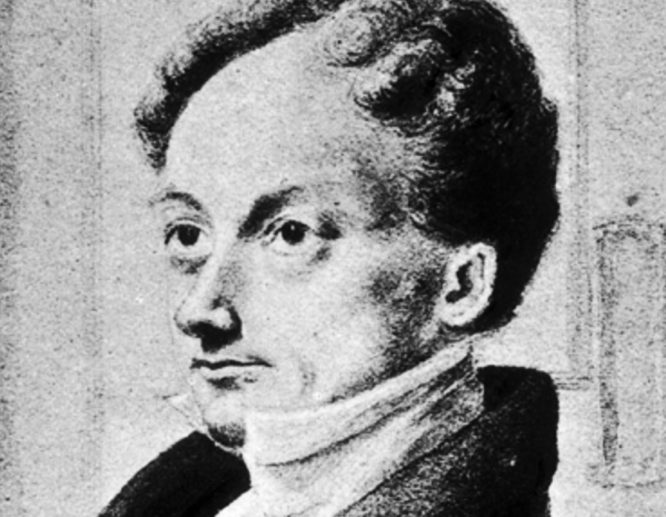
Every man should be considered as having a right to the character which he deserves; that is, to be spoken of according to his actions.
 To force men to dig wells by prohibiting them from taking water from the brook is to increase their useless labor, but not their wealth.
[T]he kind of dependence that results from exchange, from commercial transactions, is a reciprocal dependence. We cannot be dependent on the foreigner without the foreigner being dependent on us. Now, this is the very essence of society. To break up natural relations is not to place ourselves in a state of independence, but in a state of isolation.
Our theory is so little opposed to practice that it is nothing else but practice explained.
Road-makers and Obstructives working together on the most friendly terms possible, under the orders of the same legislative assembly, and at the expense of the same taxpayers, the one set endeavoring to clear the road, and the other set doing their utmost to render it impassable.
To be the dupe of other people is not very pleasant, but to employ a vast representative apparatus in order to dupe, and double dupe, ourselves — and that, too, in an affair of arithmetic — should surely humble the pride of this age of enlightenment.
I often seriously ask myself how anything so whimsical could ever have entered into the human brain, as first of all to lay out many millions for the purpose of removing the natural obstacles that lie between France and other countries, and then to lay out many more millions for the purpose of substituting artificial obstacles, which have exactly the same effect; so much so, indeed, that the obstacle created and the obstacle removed neutralize each other, and leave things as they were before, the residue of the operation being a double expense.