“Oh eyes, no eyes, but fountains fraught with tears;
Oh life, no life, but lively form of death;
Oh world, no world, but mass of public wrongs,
Confused and filled with murder and misdeeds.”
Thomas Kyd, “The Spanish Tragedy” (1592)
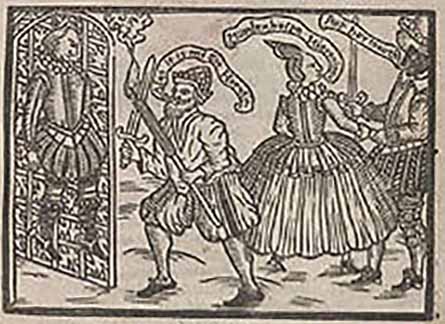
“Oh eyes, no eyes, but fountains fraught with tears;
Oh life, no life, but lively form of death;
Oh world, no world, but mass of public wrongs,
Confused and filled with murder and misdeeds.”
Thomas Kyd, “The Spanish Tragedy” (1592)
“One of the annoying things about believing in free will and individual responsibility is the difficulty of finding somebody to blame your problems on. And when you do find somebody, it’s remarkable how often his picture turns up on your driver’s license.”
Shared ideas matter. Please pass this along to friends.
Get a high-resolution screensaver of this image. Click on the thumbnail picture below to open a large version that you can download.
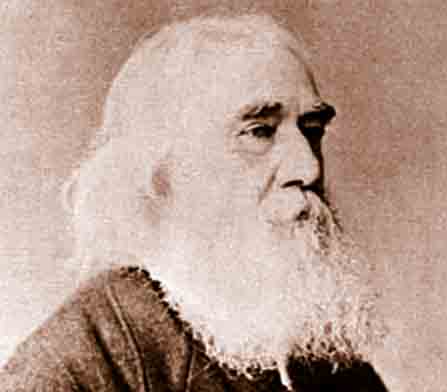
“Children learn the fundamental principles of natural law at a very early age. Thus they very early understand that one child must not, without just cause, strike or otherwise hurt, another; that one child must not assume any arbitrary control or domination over another; that one child must not, either by force, deceit, or stealth, obtain possession of anything that belongs to another; that if one child commits any of these wrongs against another, it is not only the right of the injured child to resist, and, if need be, punish the wrongdoer, and compel him to make reparation, but that it is also the right, and the moral duty, of all other children, and all other persons, to assist the injured party in defending his rights, and redressing his wrongs. These are fundamental principles of natural law, which govern the most important transactions of man with man. Yet children learn them earlier than they learn that three and three are six, or five and five ten. Their childish plays, even, could not be carried on without a constant regard to them; and it is equally impossible for persons of any age to live together in peace on any other conditions.”
Lysander Spooner, “Natural Law; or The Science of Justice” (1882)
“The ancient maxim makes the sum of a man’s legal duty to his fellow men to be simply this: ‘To live honestly, to hurt no one, to give to every one his due.’”
Lysander Spooner, “Natural Law; or The Science of Justice” (1882)
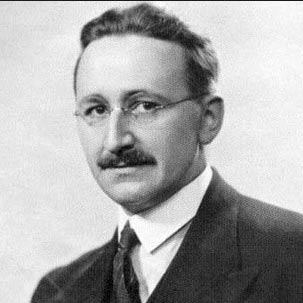
There is all the difference in the world between treating people equally and attempting to make them equal. While the first is the condition of a free society, the second means as De Tocqueville describes it, ‘a new form of servitude.’
F. A. Hayek, “Individualism: True and False” (1945), in Individualism and Economic Order (1948).
“. . . I very much doubt whether monetary policy has ever done anything good. . . .”
F. A. Hayek, Cato Policy Report, from an interview conducted by James U. Blanchard III.
The more the state ‘plans’ the more difficult planning becomes for the individual.
F. A. Hayek, The Road to Serfdom, Chapter 6, “Planning and the Rule of Law.”
“Many of the greatest things man has achieved are not the result of consciously directed thought, and still less the product of a deliberately coordinated effort of many individuals, but of a process in which the individual plays a part which he can never fully understand.”
F. A. Hayek, “Scientism and The Study of Society” (1944), p. 67; later published in The Counter-revolution of Science
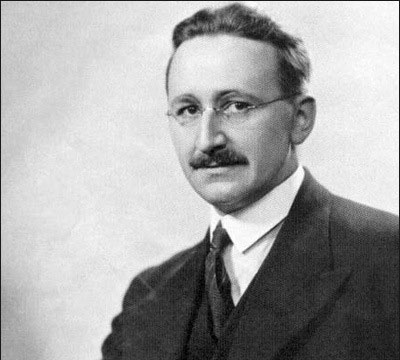
“All economic activity is carried out through time. Every individual economic process occupies a certain time, and all linkages between economic processes necessarily involve longer or shorter periods of time.”
F. A. Hayek, “Intertemporal Price Equilibrium and Movement in the Value of Money” (1928)
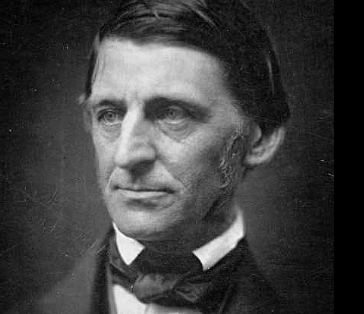
“Never read any book that is not a year old.”
Ralph Waldo Emerson, “First Visit to England” in English Traits (1856)