“The nature of power is such that even those who have not sought it, but have had it forced upon them, tend to acquire a taste for more.”
Aldous Huxley, Brave New World Revisited (1958), chapter one, p. 12.
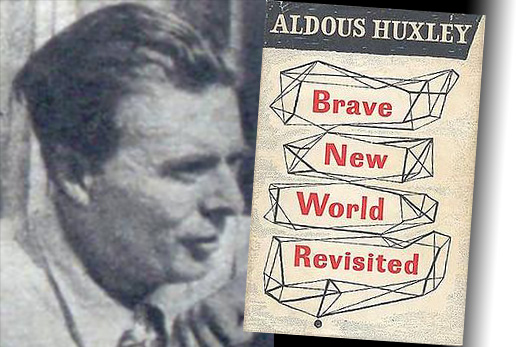
“The nature of power is such that even those who have not sought it, but have had it forced upon them, tend to acquire a taste for more.”
Aldous Huxley, Brave New World Revisited (1958), chapter one, p. 12.
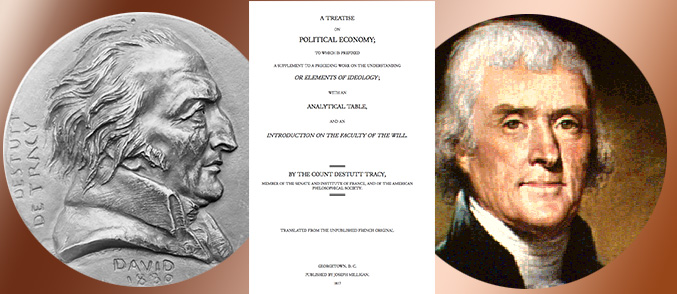
“The merit of this work will, I hope, place it in the hands of every reader in our country. By diffusing sound principles of Political Economy, it will protect the public industry from the parasite institutions now consuming it, and lead us to that just and regular distribution of the public burthens from which we have sometimes strayed.”
Thomas Jefferson, cover letter to the publisher, Joseph Milligan, on returning the corrected translation of A Treatise on Political Economy, by Frenchman Destutt de Tracy, October 25, 1818.
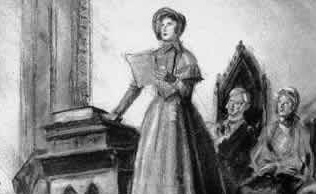
“When, in the course of human events, it becomes necessary for one portion of the family of man to assume among the people of the earth a position different from that which they have hitherto occupied, but one to which the laws of nature and of nature’s God entitle them, a decent respect to the opinions of mankind requires that they should declare the causes that impel them to such a course.”
Declaration of Sentiments, preamble — Seneca Falls Women’s Rights Converence, July 19-20, 1848.
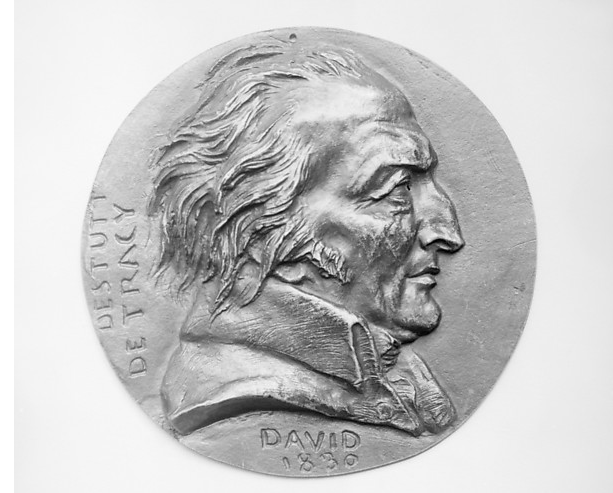
“We can scarcely conceive at first that the great effects . . . have no other cause than the sole reciprocity of services and the multiplicity of exchanges. However this continual succession of exchanges has three very remarkable advantages.
“First, the labour of several men united is more productive, than that of the same men acting separately. . . .
“Secondly, our knowledge is our most precious acquisition, since it is this that directs the employment of our force, and renders it more fruitful, in proportion to its greater soundness and extent. . . .
“Thirdly, and this still merits attention: when several men labour reciprocally for one another every one can devote himself exclusively to the occupation for which is fittest, whether from his natural dispositions or from fortuitous circumstances; and thus he will succeed better. . . .
“Concurrence of force, increase and preservation of knowledge, and division of labour,—these are the three great benefits of society. They cause themselves to be felt from the first by men the most rude; but they augment in an incalculable ratio, in proportion as they are perfected,—and every degree of amelioration, in the social order, adds still to the possibility of increasing and better using them.”
Antoine Louis Claude Destutt, comte de Tracy, A Treatise on Political Economy (Georgetown, D.C.: Joseph Mulligan, publisher; W. A. Rind & Co., printer, 1817) Thomas Jefferson, ed. of translation, from the section entitled “The First Part of the Treatise on the Will and Its Effects: Of Our Action,” chapter one, “Of Society.”
We clearly see certain animals execute labours which concur to a common end, and which to a certain point appear to have been concerted; or fight for the possession of what they desire, or supplicate to obtain it; but nothing announces that they really make formal exchanges. The reason, I think, is that they have not a language sufficiently developed to enable them to make express conventions; and this, I think, proceeds . . . from their being incapable of sufficiently decomposing their ideas, to generalise, to abstract, and to express them separately in detail, and in the form of a proposition; whence it happens that those of which they are susceptible, are all particular, confused with the attributes, and manifest themselves in mass by interjections, which can explain nothing explicitly. Man, on the contrary, who has the intellectual means which are wanting to them is naturally led to avail himself of them, to make conventions with his fellow beings. They make no exchanges, and he does.
Antoine Louis Claude Destutt, comte de Tracy, in A Treatise on Political Economy (Georgetown, D.C.: Joseph Mulligan, publisher; W. A. Rind & Co., printer, 1817) Thomas Jefferson, ed. of translation, from the section entitled “The First Part of the Treatise on the Will and Its Effects: Of Our Actions,” chapter one, “Of Society.”
“Whenever I make an exchange freely, and without constraint, it is because I desire the thing I receive more than that I give; and, on the contrary, he with whom I bargain desires what I offer more than that which he renders me.”
Antoine Louis Claude Destutt, comte de Tracy, A Treatise on Political Economy (Georgetown, D.C.: Joseph Mulligan, publisher; W. A. Rind & Co., printer, 1817) Thomas Jefferson, ed. of translation, from the section entitled “The First Part of the Treatise on the Will and Its Effects: Of Our Action,” p. 8.
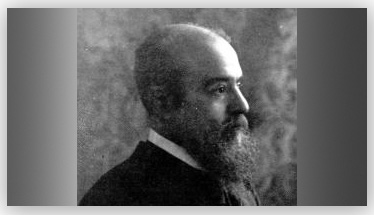
“We can group socialists and protectionists under the name of restrictionists, whilst those who want to base the distribution of wealth solely on free competition can be called liberationists…
“Thus restrictionists are divided into two types: socialists, who through the intervention of the state, wish to change the distribution of wealth in favour of the less rich; and the others, who, even if they are sometimes not completely conscious of what they are doing, favour the rich — these are the supporters of commercial protectionism and social organisation of a military type.”
Vilfredo Pareto, “Socialism and Freedom,” 1891.
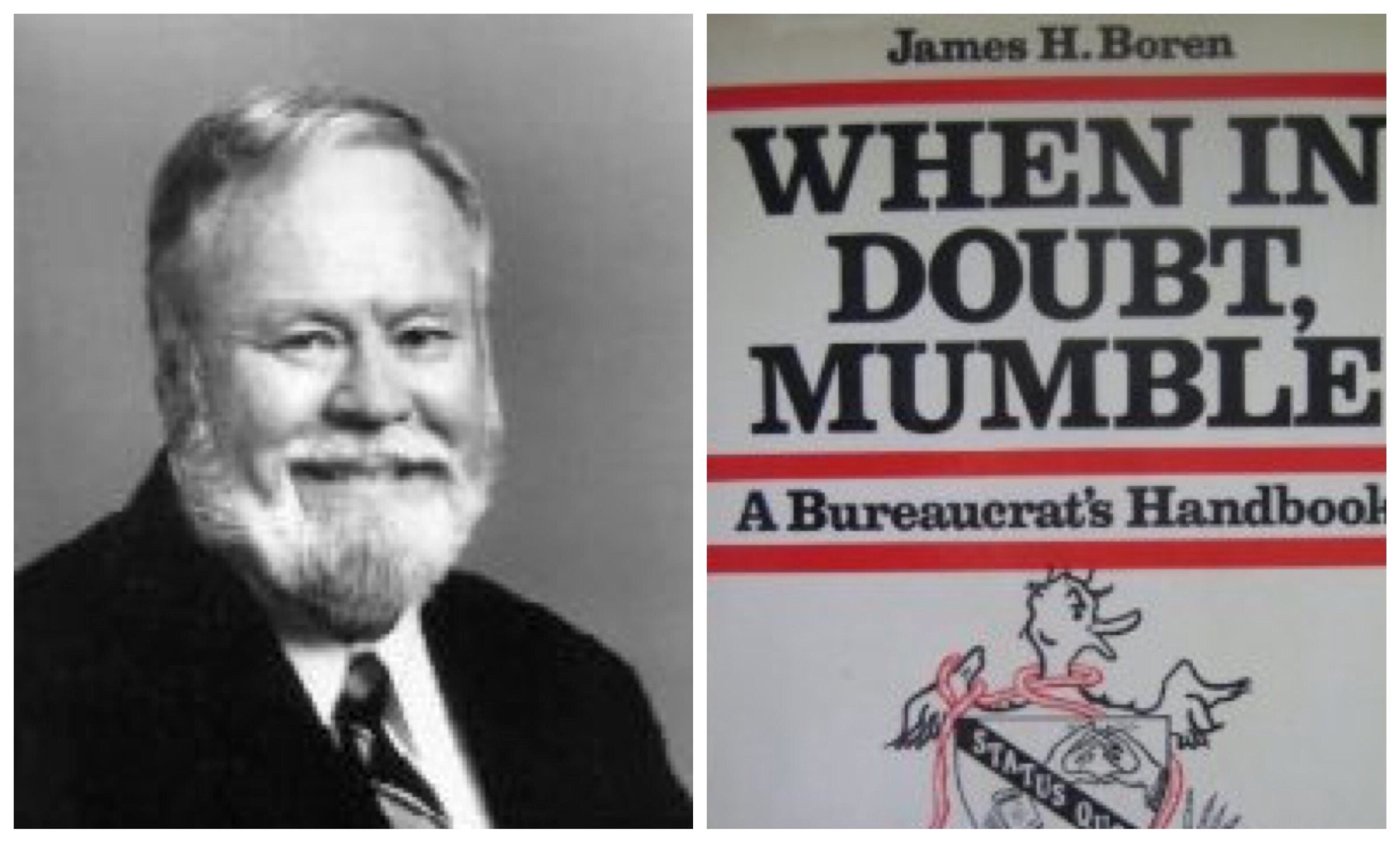
“Bureaucracy is the epoxy that greases the wheels of progress.”
James H. Boren, in When in Doubt, Mumble: A Bureaucrat’s Handbook (1972).
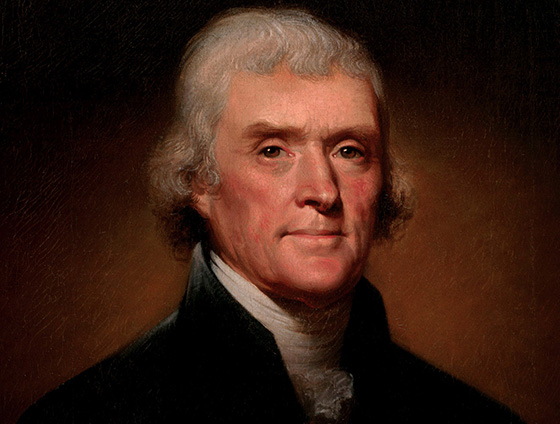
“The basis of our government being the opinion of the people, the very first object should be to keep that right; and were it left to me to decide whether we should have a government without newspapers, or newspapers without a government, I should not hesitate a moment to prefer the latter. But I should mean that every man should receive those papers and be capable of reading them.”
Thomas Jefferson, Letter to Colonel Edward Carrington (16 January 1787).
“…he [King George III] has waged cruel war against human nature itself, violating its most sacred rights of life & liberty in the persons of a distant people who never offended him, captivating & carrying them into slavery in another hemisphere, or to incur miserable death in their transportation thither. This piratical warfare, the opprobrium of infidel powers; is the warfare of the Christian king of Great Britain. determined to keep open a market where MEN should be bought & sold he has prostituted his negative for suppressing every legislative attempt to prohibit or to restrain this execrable commerce: and that this assemblage of horrors might want no fact of distinguished die, he is now exciting those very people to rise in arms among us, and to purchase that liberty of which he has deprived them, by murdering the people upon whom he also obtruded them: thus paying off former crimes committed against the liberties of one people, with crimes which he urges them to commit against the lives of another.”
Thomas Jefferson, from the original draft of the Declaration of Independence (July 3, 1776), known as the ‘anti-slavery clause,’ this section was removed from the Declaration at the behest of representatives of South Carolina.