Democracy does not attach men strongly to each other; but it places their habitual intercourse upon an easier footing.
Categories
Alexis de Tocqueville
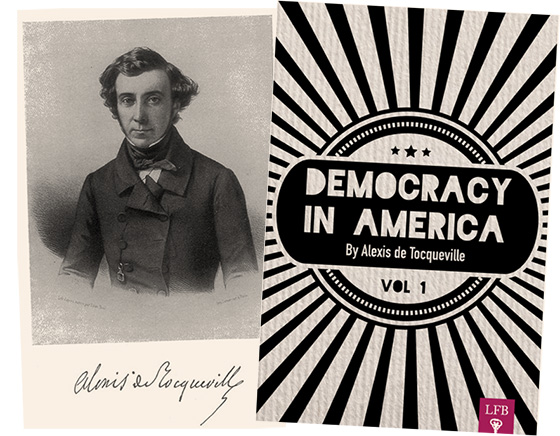
Democracy does not attach men strongly to each other; but it places their habitual intercourse upon an easier footing.
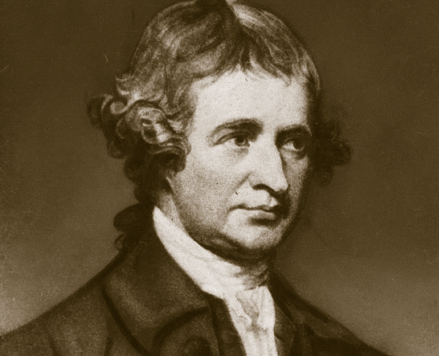
“When bad men combine, the good must associate; else they will fall one by one, an unpitied sacrifice in a contemptible struggle.”
Edmund Burke, “Thoughts on the Cause of the Present Discontents” (1770).
“Whenever a separation is made between liberty and justice, neither, in my opinion, is safe.”
Edmund Burke,
Letter to M. de Menonville (October 1789).
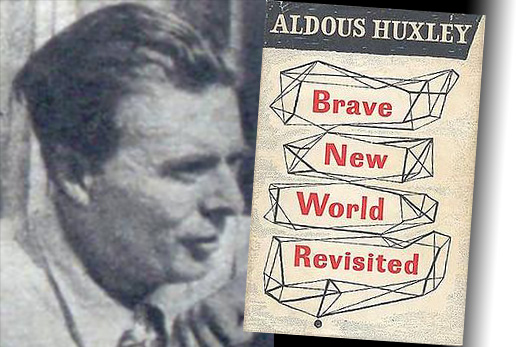
“Propaganda in favor of action that is consonant with enlightened self-interest appeals to reason by means of logical arguments based upon the best available evidence fully and honestly set forth. Propaganda in favor of action dictated by the impulses that are below self-interest offers false, garbled or incomplete evidence, avoids logical argument and seeks to influence its victims by the mere repetition of catchwords, by the furious denunciation of foreign or domestic scapegoats, and by cunningly associating the lower passions with the highest ideals, so that atrocities come to be perpetrated in the name of God and the most cynical kind of Realpolitik is treated as a matter of religious principle and patriotic duty.”
Aldous Huxley, Brave New World Revisited (1958), chapter four, p. 33.
“We’re going to look back at this moment, 2015, as like the fever pitch of insanity — before somebody stands up, someone with maybe more credibility than Donald Trump, and says ‘whoa, whoa, whoa: not all 320 million of you can be victims at the same time.’”
Tucker Carlson, The Greg Gutfeld Show (FNC), July 26, 2015.
“A good parson once said, that where mystery begins, religion ends. Cannot I say, as truly at least, of human laws, that where mystery begins, justice ends?”
Edmund Burke, A Vindication of Natural Society (1756).”
“A brave people will certainly prefer liberty, accompanied with a virtuous poverty, to a depraved and wealthy servitude.”
Edmund Burke, Reflections on the Revolution in France (1790).
“However hard they try, men cannot create a social organism, they can only create an organization. In the process of trying to create an organism they will merely create a totalitarian despotism.”
Aldous Huxley, Brave New World Revisited (1958), chapter three, p. 24.
“The people never give up their liberties but under some delusion.”
Edmund Burke, speech in Buckinghamshire, England, 1784.
“Liberty, as we all know, cannot flourish in a country that is permanently on a war footing, or even a near war footing. Permanent crisis justifies permanent control of everybody and everything by the agencies of central government.”
Aldous Huxley, Brave New World Revisited (1958), chapter one, p. 14.