Categories
Thought

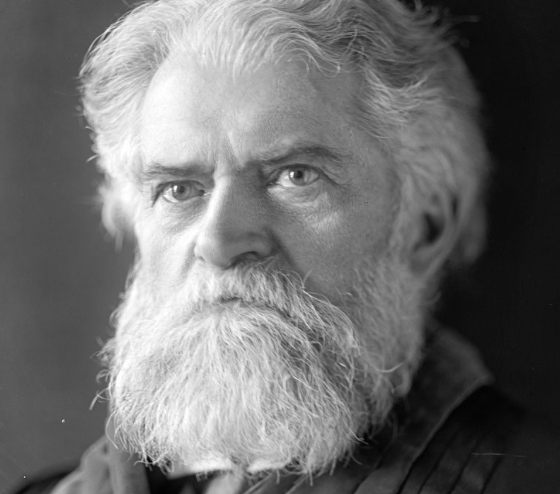
Vilfredo Pareto

“We can group socialists and protectionists under the name of restrictionists, whilst those who want to base the distribution of wealth solely on free competition can be called liberationists…

“Thus restrictionists are divided into two types: socialists, who through the intervention of the state, wish to change the distribution of wealth in favour of the less rich; and the others, who, even if they are sometimes not completely conscious of what they are doing, favour the rich — these are the supporters of commercial protectionism and social organisation of a military type.”


Vilfredo Pareto, “Socialism and Freedom,” 1891.

Categories
Thought

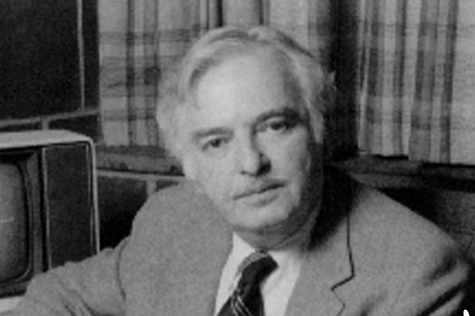
James H. Boren

“Bureaucracy is the epoxy that greases the wheels of progress.”


James H. Boren, in When in Doubt, Mumble: A Bureaucrat’s Handbook (1972).

Categories
Thought

Thomas Jefferson

“The basis of our government being the opinion of the people, the very first object should be to keep that right; and were it left to me to decide whether we should have a government without newspapers, or newspapers without a government, I should not hesitate a moment to prefer the latter. But I should mean that every man should receive those papers and be capable of reading them.”


Thomas Jefferson, Letter to Colonel Edward Carrington (16 January 1787).

Categories
Thought

Thomas Jefferson

“…he [King George III] has waged cruel war against human nature itself, violating its most sacred rights of life & liberty in the persons of a distant people who never offended him, captivating & carrying them into slavery in another hemisphere, or to incur miserable death in their transportation thither. This piratical warfare, the opprobrium of infidel powers; is the warfare of the Christian king of Great Britain. determined to keep open a market where MEN should be bought & sold he has prostituted his negative for suppressing every legislative attempt to prohibit or to restrain this execrable commerce: and that this assemblage of horrors might want no fact of distinguished die, he is now exciting those very people to rise in arms among us, and to purchase that liberty of which he has deprived them, by murdering the people upon whom he also obtruded them: thus paying off former crimes committed against the liberties of one people, with crimes which he urges them to commit against the lives of another.”


Thomas Jefferson, from the original draft of the Declaration of Independence (July 3, 1776), known as the ‘anti-slavery clause,’ this section was removed from the Declaration at the behest of representatives of South Carolina.

Categories
Thought

Thomas Jefferson

“Our liberty depends on the freedom of the press, and that cannot be limited without being lost.”


Thomas Jefferson, Letter to Dr. James Currie (28 January 1786).

Categories
Thought

Thomas Jefferson

“It is an axiom in my mind, that our liberty can never be safe but in the hands of the people themselves. . . .”


Thomas Jefferson, Letter to George Washington (January 4, 1786).

Categories
Thought

Dietrich Bonhoeffer

“Fanatics think that their single-minded principles qualify them to do battle with the powers of evil; but like a bull they rush at the red cloak instead of the person who is holding it; they exhaust themselves and are beaten. They get entangled in non-essentials and fall into the trap set by cleverer people.”


Dietrich Bonhoeffer, Letters and Papers from Prison (1967; 1997), p. 4.

Categories
Thought

Thomas Jefferson

“When the representative body have lost the confidence of their constituents, when they have notoriously made sale of their most valuable rights, when they have assumed to themselves powers which the people never put into their hands, then indeed their continuing in office becomes dangerous to the state, and calls for an exercise of the power of dissolution.”


Thomas Jefferson “A Summary View of the Rights of British America” (1774).

Categories
Thought

Dietrich Bonhoeffer

“The great masquerade of evil has played havoc with all our ethical concepts. For evil to appear disguised as light, charity, historical necessity or social justice is quite bewildering to anyone brought up on our traditional ethical concepts, while for the Christian who bases his life on the Bible, it merely confirms the fundamental wickedness of evil. The ‘reasonable’ people’s failure is obvious. With the best intentions and a naive lack of realism, they think that with a little reason they can bend back into position the framework that has got out of joint.”


Dietrich Bonhoeffer, Letters and Papers from Prison (1967; 1997), p. 4.

Categories
Thought

Dietrich Bonhoeffer

“Civil courage, in fact, can grow only out of the free responsibility of free men.”


Dietrich Bonhoeffer, Letters and Papers from Prison (1967; 1997), p. 5.