“However deep you dig a well it affords no refuge in the time of flood.”
Ernest Bramah, Kai Lung Unrolls His Mat, “The Story of Tong So, the Averter of Calamities” (1928)

“However deep you dig a well it affords no refuge in the time of flood.”
Ernest Bramah, Kai Lung Unrolls His Mat, “The Story of Tong So, the Averter of Calamities” (1928)
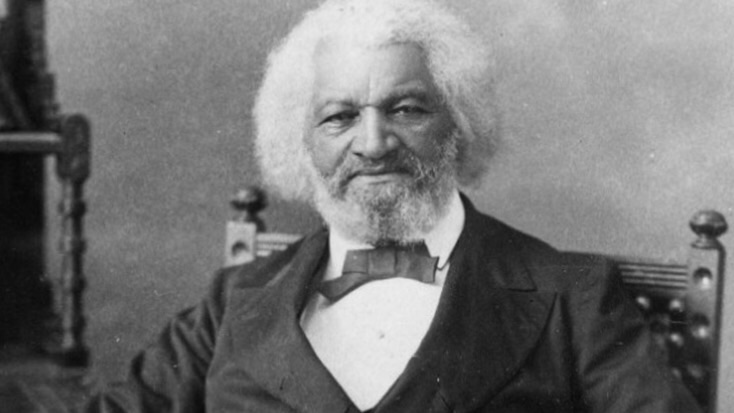
“I had very strangely supposed, while in slavery, that few of the comforts, and scarcely any of the luxuries, of life were enjoyed at the north, compared with what were enjoyed by the slaveholders of the south. I probably came to this conclusion from the fact that northern people owned no slaves. I supposed that they were about upon a level with the non-slaveholding population of the south. I knew they were exceedingly poor, and I had been accustomed to regard their poverty as the necessary consequence of their being non-slaveholders. I had somehow imbibed the opinion that, in the absence of slaves, there could be no wealth, and very little refinement. And upon coming to the north, I expected to meet with a rough, hard-handed, and uncultivated population, living in the most Spartan-like simplicity, knowing nothing of the ease, luxury, pomp, and grandeur of southern slaveholders. Such being my conjectures, any one acquainted with the appearance of New Bedford may very readily infer how palpably I must have seen my mistake.”
Frederick Douglass, Narrative of the Life of Frederick Douglass, 1845

“A journey of a thousand leagues starts with a single step.”
Lao Tzu, Tao Te Ching, Ch. 64, line 12
“Slaves sing most when they are most unhappy. The songs of the slave represent the sorrows of his heart; and he is relieved by them, only as an aching heart is relieved by its tears. At least, such is my experience. I have often sung to drown my sorrow, but seldom to express my happiness. Crying for joy, and singing for joy, were alike uncommon to me while in the jaws of slavery. The singing of a man cast away upon a desolate island might be as appropriately considered as evidence of contentment and happiness, as the singing of a slave; the songs of the one and of the other are prompted by the same emotion.”
Frederick Douglass, Narrative of the Life of Frederick Douglass, 1845

“We must not confound liberty with anarchy. Liberty is the reciprocal respect for personal rights, according to certain fixed rules known by the name of law. Anarchy is the privilege of some and the spoliation of others, according to the caprices and arbitrary will of the cunning and the violent, and the feebleness and lack of energy of the timorous.”
“[T]here are men who look upon social revolution as a kind of fairyland.”

‘Nothing can serve as a substitute for an ideology that enhances human life by fostering social cooperation — least of all lies, whether they be called “tactics,” “diplomacy,” or “compromise.” If men will not, from a recognition of social necessity, voluntarily do what must be done if society is to be maintained and general well-being advanced, no one can lead them to the right path by any cunning stratagem or artifice.’
Ludwig von Mises, Liberalism, first published in German as Liberalismus, 1927, and in English as The Free and Prosperous Commonwealth, 1962.
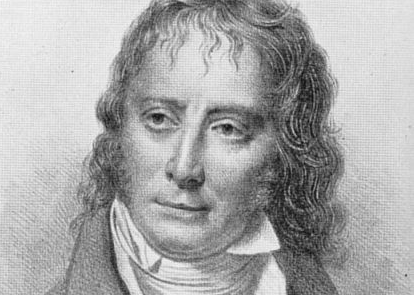
“Political liberty, by submitting to all the citizens, without exception, the care and assessment of their most sacred interests, enlarges their spirit, ennobles their thoughts, and establishes among them a kind of intellectual equality that forms the glory and power of a people.”
Benjamin Constant The Liberty of the Ancients Compared with That of the Moderns, 1819
The idea of defending, as integral parts of our Empire, countries 10,000 miles off, like Australia, which neither pay a shilling to our revenue . . . nor afford us any exclusive trade . . . is about as quixotic a specimen of national folly as was ever exhibited.
Richard Cobden, a note to Edward Ellice, 1856.
[C]ommerce inspires in men a vivid love of individual independence. Commerce supplies their needs, satisfies their desires, without the intervention of the authorities. This intervention is almost always — and I do not know why I say almost — this intervention is indeed always a trouble and an embarrassment. Every time collective power wishes to meddle with private speculations, it harasses the speculators. Every time governments pretend to do our own business, they do it more incompetently and expensively than we would.
Benjamin Constant The Liberty of the Ancients Compared with That of the Moderns (1819).