“When both parties agree, grab your wallet.”
John Stossel, February 19, 2016

“When both parties agree, grab your wallet.”
John Stossel, February 19, 2016

There weren’t ever hearings on any judicial nomination until the 1930s.
Kevin Gutzman, February 17, 2016

I do not like the idea of happyness — it is too momentary — I would say that I was always busy and interested in something — interest has more meaning to me than the idea of happyness.
Georgia O’Keeffe, a corrective note marked in Anita Pollitzer’s mss. biography of the artist.
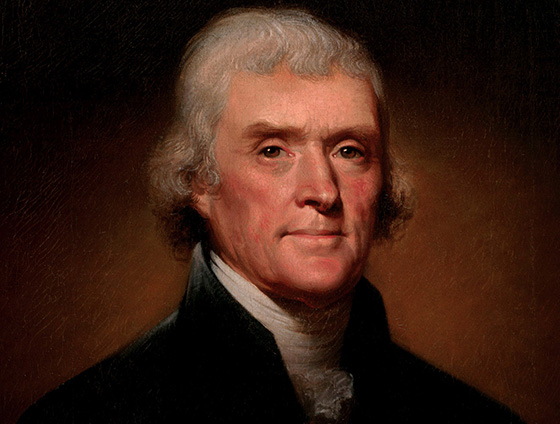
Resolved, That the several States composing the United States of America, are not united under the principle of unlimited submission to their general government; but that, by a compact under the style and title of a Constitution for the United States, and of amendments thereto, they constituted a general government for special purposes — delegated to that government certain definite powers, reserving, each State to itself, the residuary mass of right to their own self-government, and that whensoever the general government assumes undelegated powers, its acts are unauthoritative, void, and of no force. . . .
Thomas Jefferson, Kentucky Resolutions (November 1798).
Anyone with any degree of mental toughness ought to be able to exist without the things they like most for a few months at least.
Georgia O’Keeffe, letter to Anita Pollitzer (December 1915)
There is a moral in the ‘Nominalist and Realist’ that will prove all sums. It runs something like this: No matter how sincere and confidential men are in trying to know or assuming that they do know each other’s mood and habits of thought, the net result leaves a feeling that all is left unsaid; for the reason of their incapacity to know each other, though they use the same words. They go on from one explanation to another but things seem to stand about as they did in the beginning ‘because of that vicious assumption.’ But we would rather believe that music is beyond any analogy to word language and that the time is coming, but not in our lifetime, when it will develop possibilities unconceivable now, — a language, so transcendent, that its heights and depths will be common to all mankind.
Charles Ives, in Essays Before a Sonata (1920).

“[T]here is a tendency in descendants to be like their progenitors, and yet a tendency also in descendants to differ from their progenitors. The work of nature in making generations is a patchwork — part resemblance, part contrast. In certain respects each born generation is not like the last born; and in certain other respects it is like the last. But the peculiarity of arrested civilisation is to kill out varieties at birth almost; that is, in early childhood, and before they can develop. The fixed custom which public opinion alone tolerates is imposed on all minds, whether it suits them or not. In that case the community feel that this custom is the only shelter from bare tyranny, and the only security for what they value.”
Walter Bagehot, Physics and Politics (1872).
“The great difficulty which history records is not that of the first step, but that of the second step. What is most evident is not the difficulty of getting a fixed law, but getting out of a fixed law; not of cementing (as upon a former occasion phrased it) a cake of custom, but of breaking the cake of custom; not of making the first preservative habit, but of breaking through it, and reaching something better.”
Walter Bagehot, Physics and Politics (1872).

“[T]here are three great disturbers of monetary standards: Governmental policies — especially but not exclusively in war time; banking policies usually linked with the Governmental; and fluctuations in gold production.”
Irving Fisher, The Money Illusion (1928).
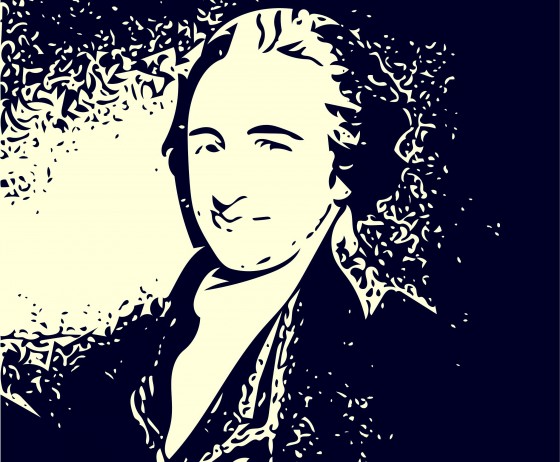
“Some writers have so confounded society with government, as to leave little or no distinction between them; whereas they are not only different, but have different origins. Society is produced by our wants, and government by our wickedness; the former promotes our happiness positively by uniting our affections, the latter negatively by restraining our vices. The one encourages intercourse, the other creates distinctions. The first is a patron, the last a punisher.”
Tom Paine, Common Sense (1776).