Opposition may become sweet to a man when he has christened it persecution.
George Eliot, Scenes of Clerical Life, 1858.
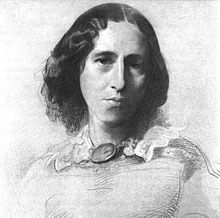
Opposition may become sweet to a man when he has christened it persecution.
George Eliot, Scenes of Clerical Life, 1858.

Nor during the Age of Innovation have the poor gotten poorer, as people are always saying. On the contrary, the poor have been the chief beneficiaries of modern capitalism. It is an irrefutable historical finding, obscured by the logical truth that the profits from innovation go in the first act mostly to the bourgeois rich.
Deirdre N. McCloskey, Bourgeois Dignity: Why Economics Can’t Explain the Modern World (2010).
The blessed work of helping the world forward, happily does not wait to be done by perfect men.
George Eliot, Scenes of Clerical Life, 1858.

An army is a diversion of energy from the productive life of a nation.
Isabel Paterson, The God of the Machine, 1943.
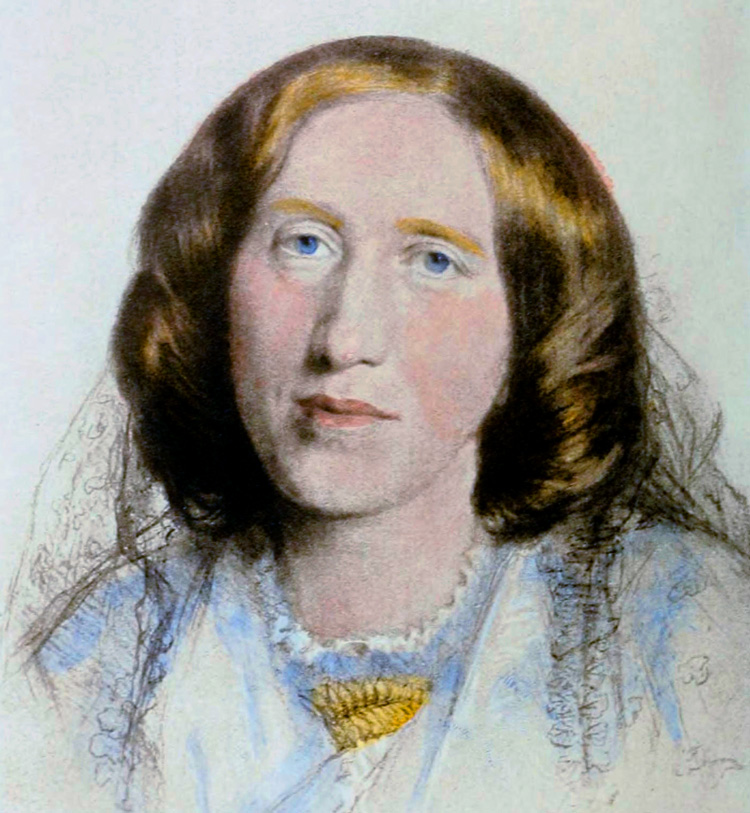
Nice distinctions are troublesome. It is so much easier to say that a thing is black, than to discriminate the particular shade of brown, blue, or green, to which it really belongs. It is so much easier to make up your mind that your neighbour is good for nothing, than to enter into all the circumstances that would oblige you to modify that opinion.
George Eliot, Scenes of Clerical Life, 1858.
The change in rhetoric has constituted a revolution in how people view themselves and how they view the middle class, the Bourgeois Revaluation. People have become tolerant of markets and innovation.
Deirdre N. McCloskey, Bourgeois Dignity: Why Economics Can’t Explain the Modern World (2010).
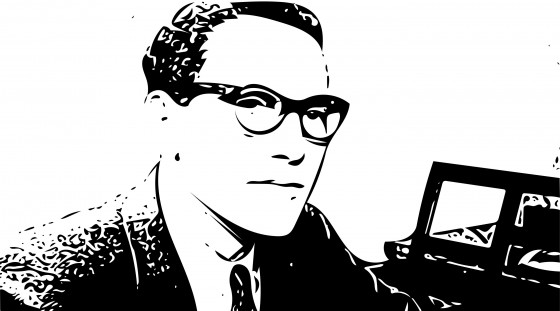
Things I once thought were funny are scary now. I often feel like a resident of Pompeii who has been asked for some humorous comments on lava.
Tom Lehrer, Tom Lehrer, People (1982).
The vices of modernism come from the master vice of Pride, the vice so characteristic of an actual or wannabe aristocracy. It is prideful overreaching to think that social engineering can work, that a smart lad at a blackboard can outwit the wisdom of the world or the ages, that a piece of machinery like statistical significance can tell you how big or small a number is.

When men take it in their heads to-day, to hang gamblers, or burn murderers, they should recollect, that, in the confusion usually attending such transactions, they will be as likely to hang or burn some one who is neither a gambler nor a murderer as one who is; and that, acting upon the example they set, the mob of to-morrow, may, and probably will, hang or burn some of them by the very same mistake. And not only so; the innocent, those who have ever set their faces against violations of law in every shape, alike with the guilty, fall victims to the ravages of mob law; and thus it goes on, step by step, till all the walls erected for the defense of the persons and property of individuals, are trodden down, and disregarded.
Abraham Lincoln, address to the Young Men’s Lyceum of Springfield, Illinois (January 27, 1838).
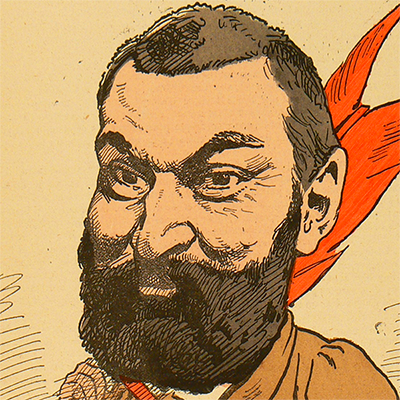
“Doubtless, it is easy to construct a system without taking into account the complex questions which present themselves, and then to declare that, according to this system, it is all right.”
Yves Guyot, The Tyranny of Socialism, 1894