The word “beauty” is as easy to use as the word “degenerate.” Both come in handy when one does or does not agree with you.
Charles Ives, Essays Before a Sonata (1920), p. 77.
Categories
Charles Ives

The word “beauty” is as easy to use as the word “degenerate.” Both come in handy when one does or does not agree with you.
Charles Ives, Essays Before a Sonata (1920), p. 77.

President Abraham Lincoln, according to Gore Vidal’s historical novel, Lincoln, addressing his Secretary of Treasury’s “personal desire to have printed on […] bank notes […] ‘In God we Trust’”:
“Well,” said Lincoln, getting to his feet, “if you are going to put a Biblical tag on the greenback, I would suggest that of Peter and John: ‘Silver and gold have I none; but such as I have give I thee.’”
Gore Vidal, Lincoln (1984), chapter six.
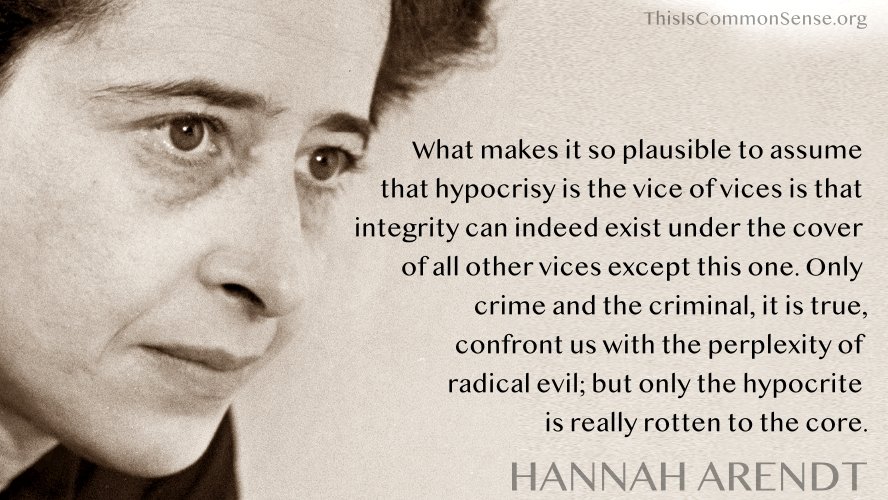
What makes it so plausible to assume that hypocrisy is the vice of vices is that integrity can indeed exist under the cover of all other vices except this one. Only crime and the criminal, it is true, confront us with the perplexity of radical evil; but only the hypocrite is really rotten to the core.
Hannah Arendt, On Revolution (1963), ch. 2.
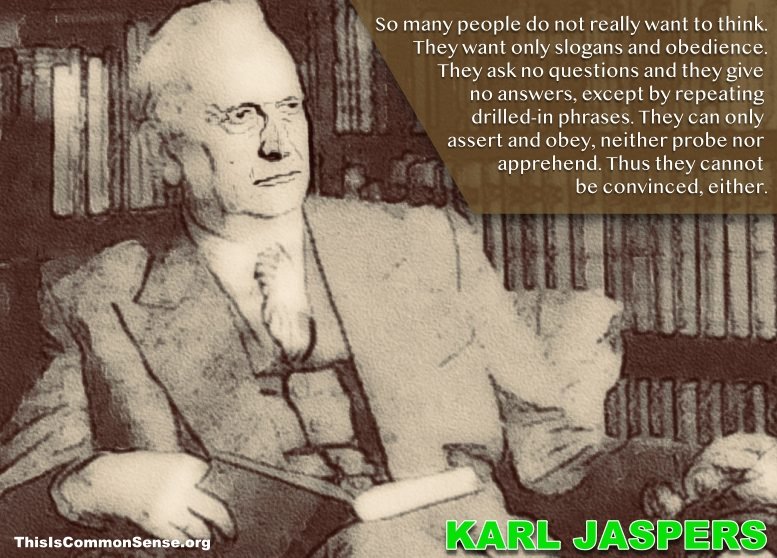
We are sorely deficient in talking with each other and listening to each other. We lack mobility, criticism and self-criticism. We incline to doctrinism. What makes it worse is that so many people do not really want to think. They want only slogans and obedience. They ask no questions and they give no answers, except by repeating drilled-in phrases. They can only assert and obey, neither probe nor apprehend. Thus they cannot be convinced, either.
Karl Jaspers, The Question of German Guilt (1947), E.B. Ashton, translator.
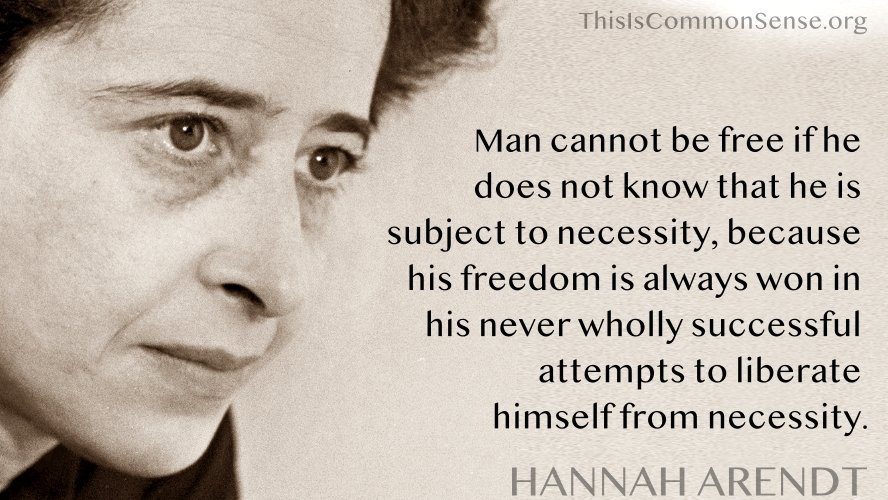
Man cannot be free if he does not know that he is subject to necessity, because his freedom is always won in his never wholly successful attempts to liberate himself from necessity.
Hannah Arendt, The Human Condition (1958), part 3, chapter 16.
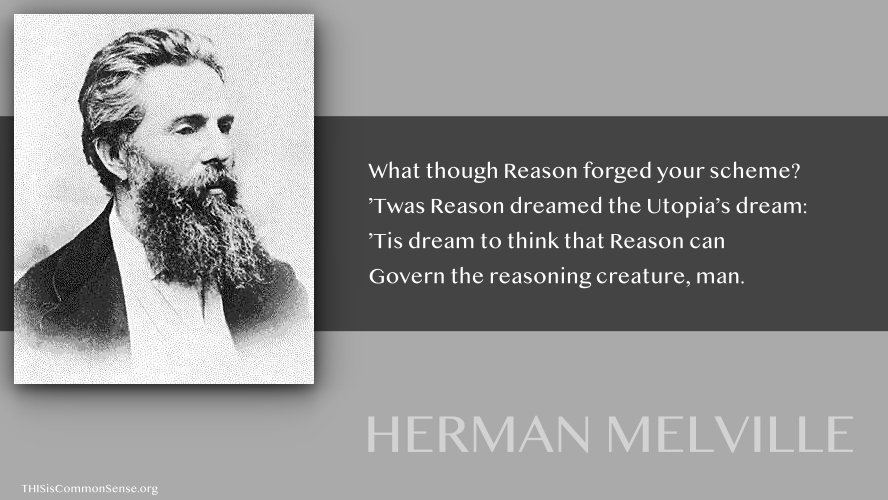
What though Reason forged your scheme?
Herman Melville, the complete epigram titled “A Reasonable Constitution” in Collected Poems of Herman Melville, Howard P. Vincent Ed. (Chicago 1947).
’Twas Reason dreamed the Utopia’s dream:
’Tis dream to think that Reason can
Govern the reasoning creature, man.

No man thinks there is much ado about nothing when the ado is about himself.
Anthony Trollope, The Bertrams (1859), Ch. 27.

Nothing so aggravates an earnest person as a passive resistance.
Herman Melville, “Bartleby the Scrivener,” in Putnam’s Magazine (November and December 1853 ); revised to final form in The Piazza Tales (1856).

Everyone is more or less mad on one point.
Rudyard Kipling, “On the Strength of a Likeness” in Plain Tales from the Hills (1889).

It is better to fail in originality, than to succeed in imitation. He who has never failed somewhere, that man can not be great. Failure is the true test of greatness.
Herman Melville, “Hawthorne and His Mosses,” in The Literary World (August 17 & 24, 1850).