Categories
Thought

Graham Greene

In a mad world it always seems simpler to obey.


Graham Greene, Our Man in Havana (1958).

Categories
Thought

John C. Calhoun

It is harder to preserve than to obtain liberty.


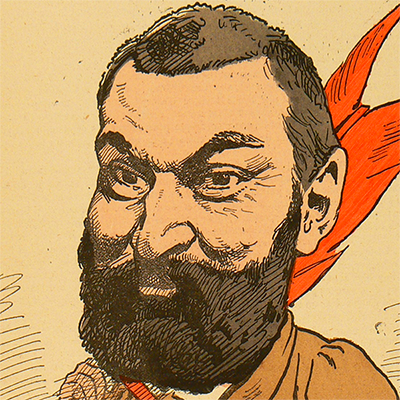
John Caldwell Calhoun, speech in the U. S. Senate (1848). Calhoun’s image (above), a detail from a portrait by George Peter Alexander Healy.

Categories
Thought

Stephen Cox

It takes imagination to identify an economic principle. It takes still more imagination to follow the implications of the principle outside the context of commercial activity and explore its psychological, social, and political meanings.


Stephen Cox, in Cox and Paul Cantor, Literature and the Economics of Liberty: Spontaneous Order in Culture (2010).

Categories
Thought

Chelsea Clinton

Even during my father’s 1984 gubernatorial campaign, it was, ‘Do you want to grow up and be governor one day?’ ‘No. I am four.’

Categories
Thought

John C. Calhoun

The interval between the decay of the old and the formation and establishment of the new constitutes a period of transition which must always necessarily be one of uncertainty, confusion, error, and wild and fierce fanaticism.


John Caldwell Calhoun, A Disquisition on Government (1851), p. 90. Calhoun’s image (above), a detail from a portrait by George Peter Alexander Healy.

Categories
Thought

Proverbs 26: 11

As a dog returneth to his vomit, so a fool returneth to his folly.

Categories
Thought

David Stockman

[T]he only consistent way forward for America at this late stage of the game is a return to free markets, fiscal rectitude, sound money, constitutional liberty, non-intervention abroad, minimalist government at home and decentralized political rule. Unfortunately, that is not about to happen anytime soon — even if by some miracle Donald Trump is elected President. But . . . the tide is turning against the failed Wall Street/Washington bipartisan consensus. I call this insurrection the ‘revolt of the rubes’ in Flyover America.

This uprising against the rule of the financial and political elites has counterparts abroad among those who voted for Brexit in the UK, against Merkel in the recent German elections in her home state, and among the growing tide of anti-Brussels sentiment reflected in polls throughout the EC.

Needless to say, the political upheaval now underway is largely an inchoate reaction to the policy failures and arrogant pretensions of the establishment rulers. Like Donald Trump himself, it does not reflect a coherent programmatic alternative.

But my contention is that liberation from our current ruinous policy regime has to start somewhere — and that’s why the Trump candidacy is so important. He represents a raw insurgency of attack, derision, impertinence, and repudiation.

If that leads to throwing out the beltway careerists, pettifoggers, hypocrites, ideologues, racketeers, power seekers and snobs who have brought about the current ruin then at least the decks will be cleared.


David Stockman, “It Won’t Be Long Now — The End Game of Central Banking Is Nigh,” 2016/09/08. Image: detail of his forthcoming book.

Categories
Thought

Ernest Bramah

However deep you dig a well it affords no refuge in the time of flood.


Ernest Bramah, “The Story of Tong So, the Averter of Calamities,” Kai Lung Unrolls His Mat (1928). Pictured: detail of the cover of the 1974 Ballantine edition of the quoted book.

Categories
Thought

J. H. Levy

Socialism is essentially inimical to family life, which it regards as a bourgeois institution — to use its own favorite anathema. Socialism would make motherhood a State business or profession, would pay women for this sexual function, and deprive fathers of all status or recognition.

J. H. Levy, The Outcome of Individualism, Third Edition (1892); detail of a portrait, above, courtesy (by Creative Commons license) of the National Portrait Gallery, London, after a portrait by Joseph Solomon (photograph, 1901), © National Portrait Gallery, London.
Categories
Thought

Dr. Johnson

Example is always more efficacious than precept.


Samuel Johnson, The History of Rasselas, Prince of Abissinia (1759), Chapter 29.