When we see men of worth, we should think of equaling them; when we see men of a contrary character, we should turn inwards and examine ourselves.
Master Kong, The Analects, fourth chapter, James Legge translation (1893).
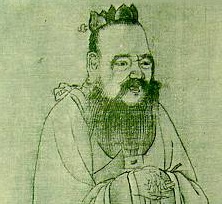
When we see men of worth, we should think of equaling them; when we see men of a contrary character, we should turn inwards and examine ourselves.
Master Kong, The Analects, fourth chapter, James Legge translation (1893).
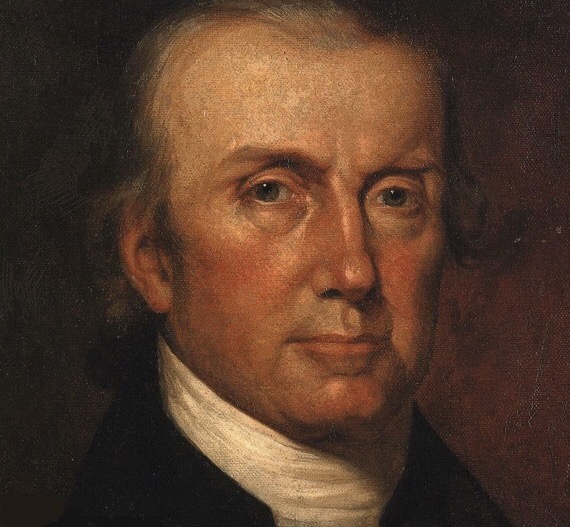
We must reason from a comparison between general or universal facts, and not from a contemplation of temporary exceptions, to come at truth; and when we discover that an absolute power over property, though occasionally exercised for the attainment of praise-worthy ends, is yet constantly attended by general evils, infinitely outweighing such particular benefits; we forbear to draw our conclusion from the partial cases, or decide erroneously.
John Taylor of Caroline, Construction Construed, and Constitutions Vindicated (1820).

Officialism is habitually slow. When non-governmental agencies are dilatory, the public has its remedy: it ceases to employ them and soon finds quicker ones. Under this discipline all private bodies are taught promptness. But for delays in State-departments there is no such easy cure. . . . [O]fficialism is stupid. Under the natural course of things each citizen tends towards his fittest function. Those who are competent to the kind of work they undertake, succeed, and, in the average of cases, are advanced in proportion to their efficiency; while the incompetent, society soon finds out, ceases to employ, forces to try something easier, and eventually turns to use. But it is quite otherwise in State-organizations. Here, as every one knows, birth, age, backstairs intrigue, and sycophancy, determine the selections rather than merit.
Herbert Spencer, “Specialized Administration,” Westminster Review (July 1853).
To study and not think is a waste. To think and not study is dangerous.
Master Kong, The Analects, second chapter.
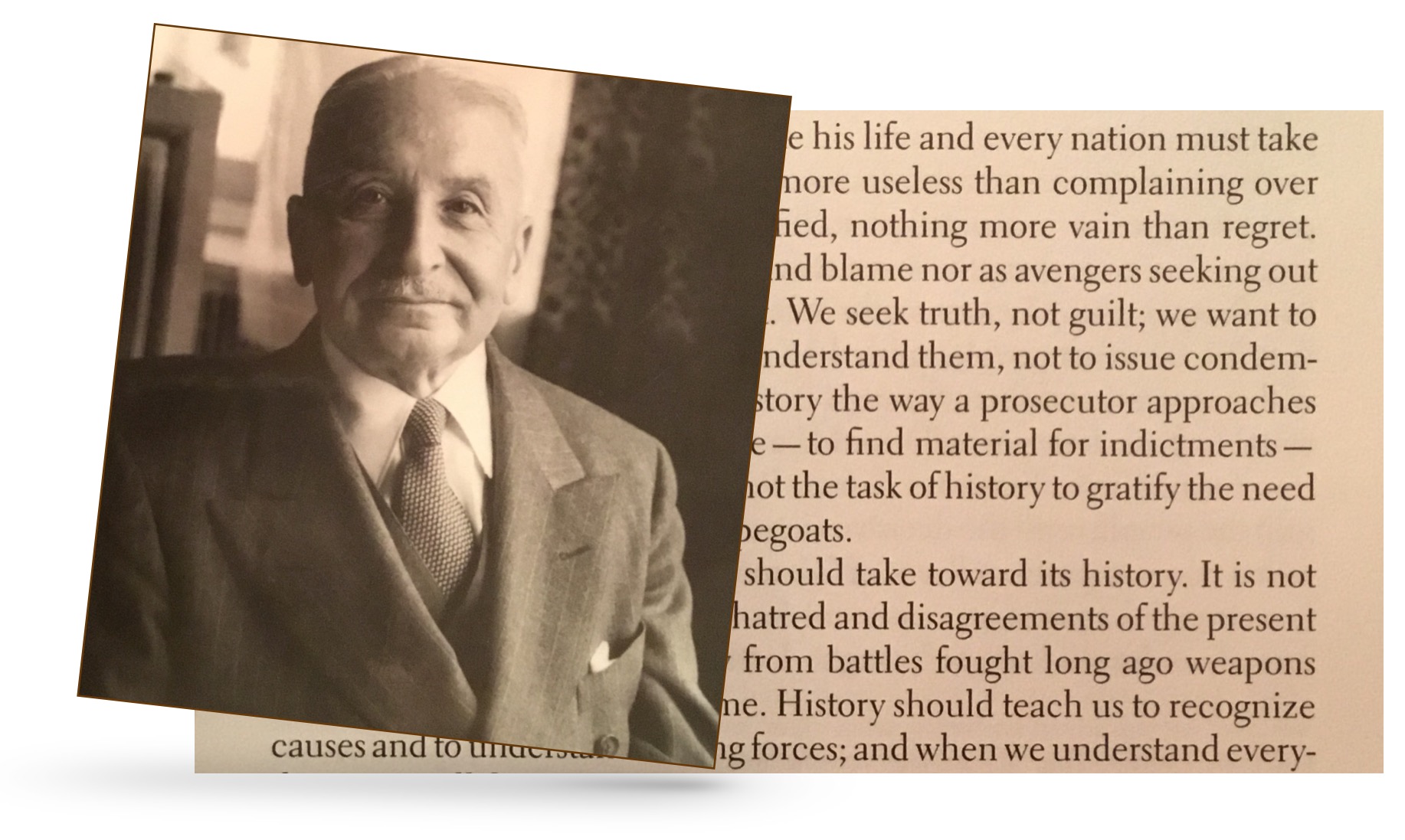
Neither as judges allotting praise and blame nor as avengers seeking out the guilty should we face the past. We seek truth, not guilt; we want to know how things came about to understand them, not to issue condemnations. Whoever approaches history the way a prosecutor approaches the documents of a criminal case — to find material for indictments — had better stay away from it. It is not the task of history to gratify the needs of the masses for heroes and scapegoats.
Ludwig von Mises, Nation, State, and Economy, Leland B. Yeager, trans. (1919, 1983).
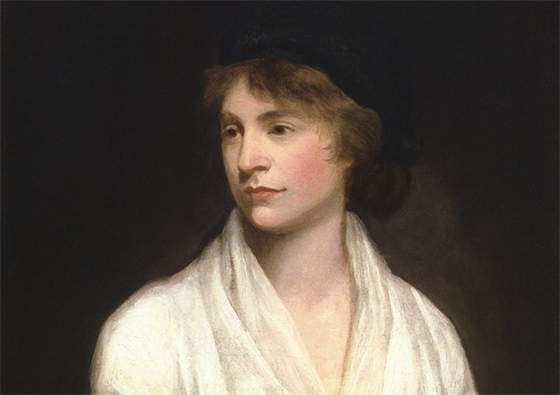
Mary Wollstonecraft, A Vindicaton of the Rights of Woman (1792), chapter 4.
Men . . . submit every where to oppression, when they have only to lift up their heads to throw off the yoke; yet, instead of asserting their birthright, they quietly lick the dust and say, let us eat and drink, for to-morrow we die. Women, I argue from analogy, are degraded by the same propensity to enjoy the present moment; and, at last, despise the freedom which they have not sufficient virtue to struggle to attain.
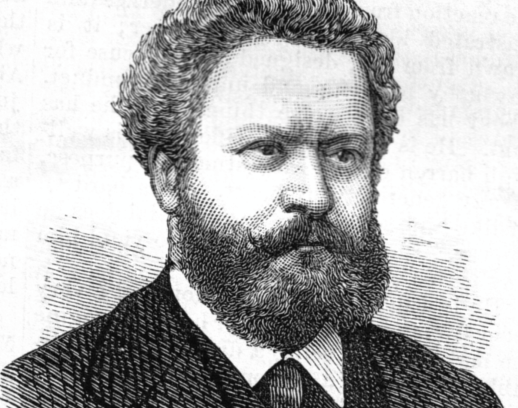
Man is a divine creature, because he is the final product of the creation, because Nature has formed nothing more intelligent and more capable of improvement than he. Each of us enters at birth into the heritage of a sovereignty which renders his person inviolable. In principle, if not in fact, we are all equal, because we all share the same august character. We are all free-born in this sense, that no one has a title to subject another to his will by force.
Edmond About, Handbook of Social Economy; or, The Worker’s A B C, (New York: D. Appleton & Co., translated from the final French edition, 1873), p. 3.
Surely there can be but one rule of right, if morality has an eternal foundation, and whoever sacrifices virtue, strictly so called, to present convenience, or whose duty is to act in such a manner, lives only for the passing day, and cannot be an accountable creature.
Mary Wollstonecraft, A Vindicaton of the Rights of Woman (1792).
Whoso remembers that, among quite simple phenomena, causes produce effects which are sometimes utterly at variance with anticipation, will see how frequently this must happen among complex phenomena. That a balloon is made to rise by the same force which makes a stone fall; that the melting of ice may be greatly retarded by wrapping the ice in a blanket; that the simplest way of setting potassium on fire is to throw it into the water; are truths which those who know only the outside aspect of things would regard as manifest falsehoods. And, if, when the factors are few and simple, the results may be so absolutely opposed to seeming probability, much more will they be often thus opposed when the factors are many and involved. The saying of the French respecting political events, that “it is always the unexpected which happens” — a saying which they have been abundantly re-illustrating of late — is one which legislators, and those who urge on schemes of legislation, should have ever in mind.
Herbert Spencer, “Specialized Administration,” The Fortnightly Review(December 1871).
Mary Wollstonecraft, from Hints originally intended to have been placed in the second part of A Vindicaton of the Rights of Woman (1792).
I am more and more convinced, that poetry is the first effervescence of the imagination, and the forerunner of civilization.