Whatever deficiencies the leaders of the American Revolution may have had, reticence, fortunately, was not one of them.
Bernard Bailyn, The Ideological Origins of the American Revolution, Chapter I, THE LITERATURE OF LIBERTY, p. 302.
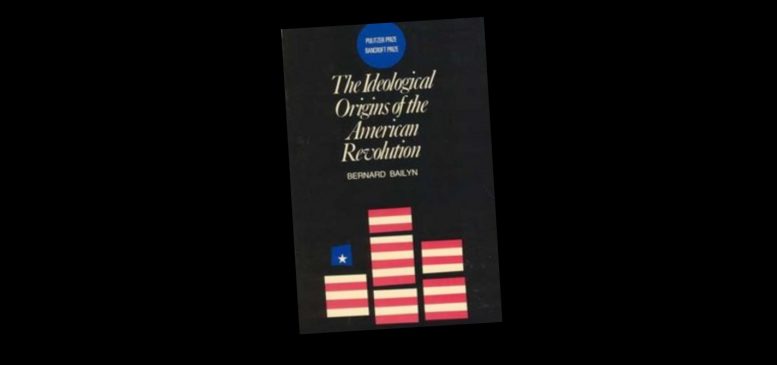
Whatever deficiencies the leaders of the American Revolution may have had, reticence, fortunately, was not one of them.
Bernard Bailyn, The Ideological Origins of the American Revolution, Chapter I, THE LITERATURE OF LIBERTY, p. 302.

Herbert Spencer, Principles of Ethics, Vol. 2, Part V: “Negative Beneficence” (see this page for the complete passage).
A form of selfishness occasionally displayed, and rightly condemned, is that of men who display without bounds their remarkable conversational powers. . . . One who monopolizes conversation loses more by moral reprobation than he gains by intellectual approbation.
In no obvious sense was the American Revolution undertaken as a social revolution.
Bernard Bailyn, The Ideological Origins of the American Revolution, Chapter VI, THE CONTAGION OF LIBERTY, p. 302.
Herbert Spencer, Principles of Ethics, Vol. 2, Part IV: “Justice” (1891), Chapter 5, “The Idea of Justice.”
Sympathy which, a generation ago, was taking the shape of justice, is relapsing into the shape of generosity; and the generosity is exercised by inflicting injustice. Daily legislation betrays little anxiety that each shall have that which belongs to him, but great anxiety that he shall have that which belongs to somebody else. For while no energy is expended in so reforming our judicial administration that everyone may obtain and enjoy all he has earned, great energy is shown in providing for him and others benefits which they have not earned. Along with that miserable laissez-faire which calmly looks on while men ruin themselves in trying to enforce by law their equitable claims, there goes activity in supplying them, at other men’s cost, with gratis novel-reading!

I’ve studied totalitarianism. I’ve often wondered how societies slide into The Big Lie. And I know it has something to do with sins of omission.
Jordan Peterson, on the Mark Steyn Show. The full context of this quotation regards his fracas with the University of Toronto, where he teaches, regarding his refusal to abide by the proposed law to regulate speech regarding “gendered” pronouns, many of them recently invented:
I had an interesting example of that when the U of T wrote me the first letter, because they claimed that they had received a lot of letters stating that my comments about the pronouns had contributed to an unsafe environment at the U of T, that they had received letters from people who had been threatened — these were transsexual people, hypothetically — but they didn’t at all mention that they had received hundreds of letters from people supporting me, and also a petition with several thousand signatures. . . . I’ve studied totalitarianism. I’ve often wondered how societies slide into The Big Lie. And I know it has something to do with sins of omission. And that was a really good example. Because when they wrote me the letter they didn’t say, ‘You know, we’ve received opinions on both sides of this, and we’ve come to a judicious decision’ — omitting completely to note that far more people had written in support of me than had written to criticize me. That’s institutional corruption.

‘Ms.’ took time to be absorbed. But this political agitation to change common speech: are you kidding me? People shouldn’t be putting up with this for one second. What kind of nonsense is this? Absolute nonsense. These people who are searching for their identit[ies], and want to impose on others? That’s not my philosophy as a libertarian. That is an invasion and an intrusion into other people’s personal rights. Excuse us, the English language is owned by everyone; it was created by great artists — Chaucer and Shakespeare and Wordsworth and Joyce, and so on. How dare you, you sniveling little maniac[s], tell us how we’re going to use pronouns!
Camille Paglia, on being asked about Prof. Jordan Peterson’s refusal to use modish pronouns for those who have concocted new gender identities, and about Canada’s Bill C-16, which would enforce the use of such pronouns, treating refusal as “hate speech.” (A few “OKs” and “You knows” removed.)
The alternative to negotiation is war. And that happens at the individual level and at the social level. If you can’t talk to people and you have a difference of opinion with them, then they’re your enemies. And combative speech is the replacement for actual combat. Real speech is very troublesome and difficult because it can unglue people psychologically. Better that then actual violence. Or, it’s partly: better that than tyranny and slavery — because those are really the alternatives.
Jordan Peterson, on the Mark Steyn Show, discussing the current attacks on free speech.

There’s no trick to being a humorist when you have the whole government working for you.
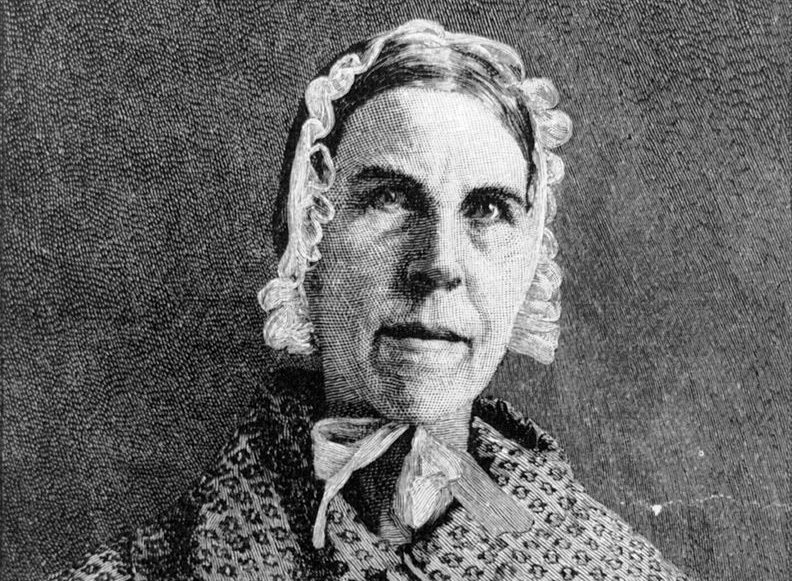
Had Adam tenderly reproved his wife, and endeavored to lead her to repentance instead of sharing in her guilt, I should be much more ready to accord to man that superiority which he claims; but as the facts stand disclosed by the sacred historian, it appears to me that to say the least, there was as much weakness exhibited by Adam as by Eve. They both fell from innocence, and consequently from happiness, but not from equality.
“Anything whatever can be made ridiculous; to see this side of it, and nothing more, is to become the mere jester, whose claim to be regarded as the ideal moralist is certainly very slight. But between a too solemn sense of high importance, and that conviction of the intrinsic smallness of everything in particular which some of our satirists have displayed, there is a middle ground.”
Arthur Kenyon Rogers, The Theory of Ethics (New York: The Macmillan Company, 1922).